Witolien
Buddleja saligna · Accepted scientific name
Scientific literature: Very Sparse (22 studies) · ★☆☆☆☆
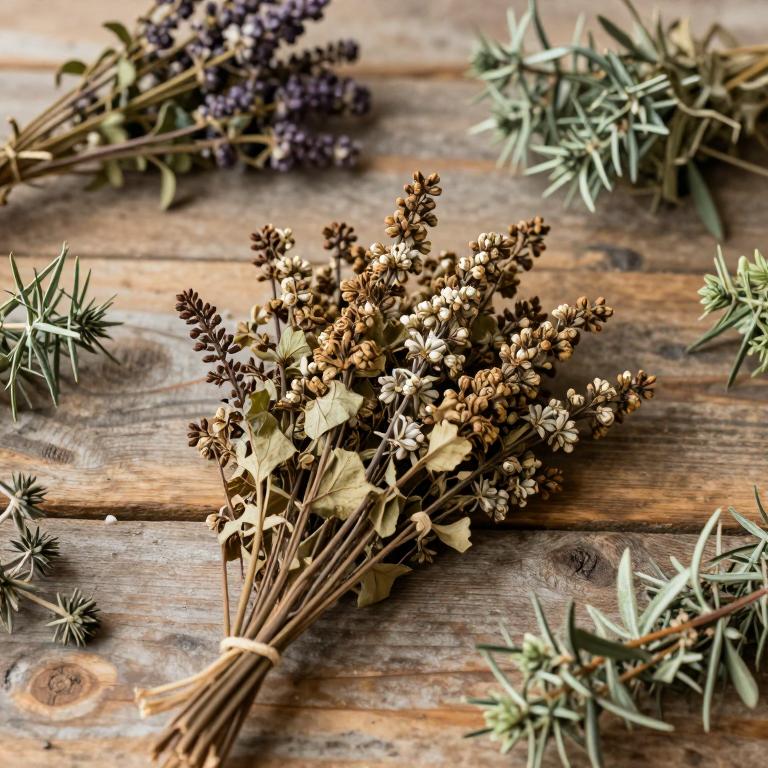
Witolien, scientifically known as Buddlejia saligna, is a versatile medicinal shrub prized for its diverse therapeutic properties. Renowned in traditional healing practices, this plant offers significant potential in treating various ailments. Exploring its biochemical profile reveals vital compounds that contribute to its role in modern pharmacological research and wellness.
Names and Synonyms
Common Names
- False Olive Sagewood
- False-Olive
- Mock Olive
- Olive Buddleja
- Olive Sagewood
- Wild Elder
Scientific Names
Accepted name
Buddleja salignaSynonyms
- Nuxia saligna
- Chilianthus oleaceus
- Scoparia arborea
- Semnos paniculata
- Chilianthus arboreus
- Callicarpa paniculata
Regional and Traditional Names
Spanish:
- Chilianthus oleaceus
- Semnos paniculata
- Chilianthus arboreus
- Nuxia saligna
- Scoparia arborea
- Buddleja salicifolia
Sources: Wikidata, Catalogue of Life
Taxonomical Classification
This plant belongs to the kingdom Plantae and is classified under the phylum Streptophyta within the class Equisetopsida. As a member of the subclass Magnoliidae and the order Lamiales, it is further categorized under the family Scrophulariaceae. Finally, its taxonomic identity is defined by the genus Buddleja, specifically as the species Buddleja saligna.
| Rank | Classification |
|---|---|
| Kingdom | Plantae |
| Phylum | Streptophyta |
| Class | Equisetopsida |
| Subclass | Magnoliidae |
| Order | Lamiales |
| Family | Scrophulariaceae |
| Genus | Buddleja |
Sources: The World Checklist of Vascular Plants (WCVP)
Distribution
This plant is primarily distributed throughout several key regions of Southern Africa. It can be found growing within the Cape Provinces and the KwaZulu-Natal region. Additionally, its presence is noted in the Free State and the Northern Provinces. Beyond these areas, the species also extends into South Tropical Africa, specifically in Zimbabwe. Together, these locations define the diverse geographical range of Buddleja saligna.
| Region | Area |
|---|---|
| South Tropical Africa | Zimbabwe |
| Southern Africa | Cape Provinces |
| Southern Africa | KwaZulu-Natal |
| Southern Africa | Free State |
| Southern Africa | Northern Provinces |
| Southwestern U.S.A. | California |
Sources: The World Checklist of Vascular Plants (WCVP)
Botanical Identification
Ecology
The ecology of Buddleja saligna is characterized by its ability to inhabit a diverse range of altitudinal gradients, demonstrating significant environmental adaptability. This species is found across a broad vertical span, ranging from low-lying areas at an elevation of 40 m AMSL to higher mountainous terrains reaching a maximum of 1873 m AMSL. This wide elevational range suggests that the plant can thrive in varied microclimates, ranging from warmer, lowland subtropical conditions to cooler, montane environments. Such distribution typically indicates a tolerance for diverse soil compositions and varying moisture regimes found throughout these different topographical layers.
- Elevational range max:
- 1873 m AMSL
- Elevational range min:
- 40 m AMSL
Life history
The life history of Buddleja saligna is characterized by its status as a perennial organism, allowing it to persist in its environment through multiple growing seasons. As a long-lived woody species, it does not follow the rapid turnover of annuals or the two-year cycle of biennials, but rather establishes a stable presence within its habitat. Throughout its life cycle, the plant undergoes continuous cycles of vegetative growth and reproductive phases, often responding to seasonal shifts to produce flowering structures. This perennial nature enables the species to develop extensive root systems and structural complexity over time, facilitating its long-term survival and ability to withstand varying environmental conditions across its lifespan.
- Lifecycle :
- perennial
Morphology
The morphology of Buddleja saligna is characterized by a woody growth form, manifesting primarily as a self-supporting shrub. It exhibits a versatile habitat range, being capable of thriving in terrestrial, aquatic, and semiaquatic environments. As a non-parasitic species, it functions as an independent organism rather than an epiphyte, maintaining a terrestrial life strategy. The plant's stature is variable, with a height that can range from a minimum of 0.5 m to a maximum of 7 m.
- Aquatic :
- terrestrial
- Climber :
- self-supporting
- Epiphyte :
- terrestrial
- Growth form :
- shrub
- Parasite :
- independent
- Plant height max:
- 7 m
- Plant height min:
- 0.5 m
- Woodiness :
- woody
Reproduction
Reproduction in Buddleja saligna is facilitated through the production of minute seeds that play a critical role in its dispersal and colonization capabilities. The seeds are characterized by an extremely lightweight profile, with a documented mean seed mass of 4e-05 g. The variation in individual seed weight is minimal, ranging from a minimum mass of 3e-05 g to a maximum mass of 5e-05 g. This low mass suggests that the seeds are likely adapted for wind or water dispersal, allowing the plant to spread effectively across its natural habitat.
- Seed mass max:
- 5e-05 g
- Seed mass mean:
- 4e-05 g
- Seed mass min:
- 3e-05 g
Sources: Global Inventory of Floras and Traits (GIFT)
Plant Parts
Buddleja saligna has 2 reported plant parts identified across 3 scientific publications and several other databases that are studied for medicinal purposes. The most consistently reported plant part include leaf, stem.
| Plant part | Supporting sources | Consensus |
|---|---|---|
| Leaf | 2 supporting sources | ★☆☆☆☆ |
| Stem | 1 supporting sources | ★☆☆☆☆ |
Leaf
- Journal of biomolecular structure & dynamics
- BMC complementary and alternative medicine
Stem
- BMC complementary and alternative medicine
Chemicals
Buddleja saligna has 9 reported phytochemicals identified across 3 scientific publications and several other databases. The most consistently reported chemicals include -Spinasterol, Betulonic acid, OLEANOLIC ACID, Oleanolic acid 3-acetate, Proanthocyanidins.
| Chemical | Supporting sources | Consensus |
|---|---|---|
| -Spinasterol | 1 supporting sources | ★☆☆☆☆ |
| Betulonic acid | 1 supporting sources | ★☆☆☆☆ |
| OLEANOLIC ACID | 1 supporting sources | ★☆☆☆☆ |
| Oleanolic acid 3-acetate | 1 supporting sources | ★☆☆☆☆ |
| Proanthocyanidins | 1 supporting sources | ★☆☆☆☆ |
| Terpenoids | 1 supporting sources | ★☆☆☆☆ |
| Ursolic acid | 1 supporting sources | ★☆☆☆☆ |
| betulone | 1 supporting sources | ★☆☆☆☆ |
| flavonols | 1 supporting sources | ★☆☆☆☆ |
-Spinasterol
- Journal of enzyme inhibition and medicinal chemistry
Betulonic acid
- Journal of enzyme inhibition and medicinal chemistry
OLEANOLIC ACID
- Journal of biomolecular structure & dynamics
Oleanolic acid 3-acetate
- Journal of biomolecular structure & dynamics
Proanthocyanidins
- BMC complementary and alternative medicine
Terpenoids
- Journal of enzyme inhibition and medicinal chemistry
Ursolic acid
- Journal of biomolecular structure & dynamics
betulone
- Journal of enzyme inhibition and medicinal chemistry
flavonols
- BMC complementary and alternative medicine
Activities
Buddleja saligna has 3 reported activities identified across 3 scientific publications and several other databases. The most consistently reported activities include Antibacterial, Antioxidant, Antiproliferative.
| Activity | Supporting sources | Consensus |
|---|---|---|
| Antibacterial | 1 supporting sources | ★☆☆☆☆ |
| Antioxidant | 1 supporting sources | ★☆☆☆☆ |
| Antiproliferative | 1 supporting sources | ★☆☆☆☆ |
Antibacterial
- BMC complementary and alternative medicine
Antioxidant
- BMC complementary and alternative medicine
Antiproliferative
- Journal of cancer research and clinical oncology
Conditions
Buddleja saligna has 4 reported investigations on conditions identified across 3 scientific publications and several other databases. The most consistently reported conditions include Plasmodium falciparum, angiogenesis, antidiabetic, cell proliferation.
| Condition | Supporting sources | Consensus |
|---|---|---|
| Plasmodium falciparum | 1 supporting sources | ★☆☆☆☆ |
| Angiogenesis | 1 supporting sources | ★☆☆☆☆ |
| Antidiabetic | 1 supporting sources | ★☆☆☆☆ |
| Cell proliferation | 1 supporting sources | ★☆☆☆☆ |
Plasmodium falciparum
- Journal of enzyme inhibition and medicinal chemistry
Angiogenesis
- Journal of cancer research and clinical oncology
Antidiabetic
- Journal of enzyme inhibition and medicinal chemistry
Cell proliferation
- Journal of cancer research and clinical oncology
Preparations
Buddleja saligna has 1 reported preparations identified across 3 scientific publications and several other databases. The most consistently reported preparations include methanol extracts of the leaves and stems.
| Preparation | Supporting sources | Consensus |
|---|---|---|
| Methanol extracts of the leaves and stems | 1 supporting sources | ★☆☆☆☆ |
Methanol extracts of the leaves and stems
- BMC complementary and alternative medicine