Buchanania lanzan
Buchanania lanzan · Accepted scientific name
Scientific literature: Very Sparse (8 studies) · ★☆☆☆☆
Buchanania lanzaan, scientifically known as Buchanania lanzaan, is a versatile medicinal tree native to South and Southeast Asia. Renowned for its therapeutic properties, its fruits, bark, and leaves are used in traditional medicine to treat digestive issues, skin ailments, and inflammation, offering significant bioactive potential for modern pharmacology.
- Family
- Anacardiaceae
- Native range
- Asia-Temperate
- Parts used
- Not available
- Common names
- Not available
- Scientific synonyms
- Mangifera Silvestris · Buchanania Lanzan Var. Palodensis · 3 more
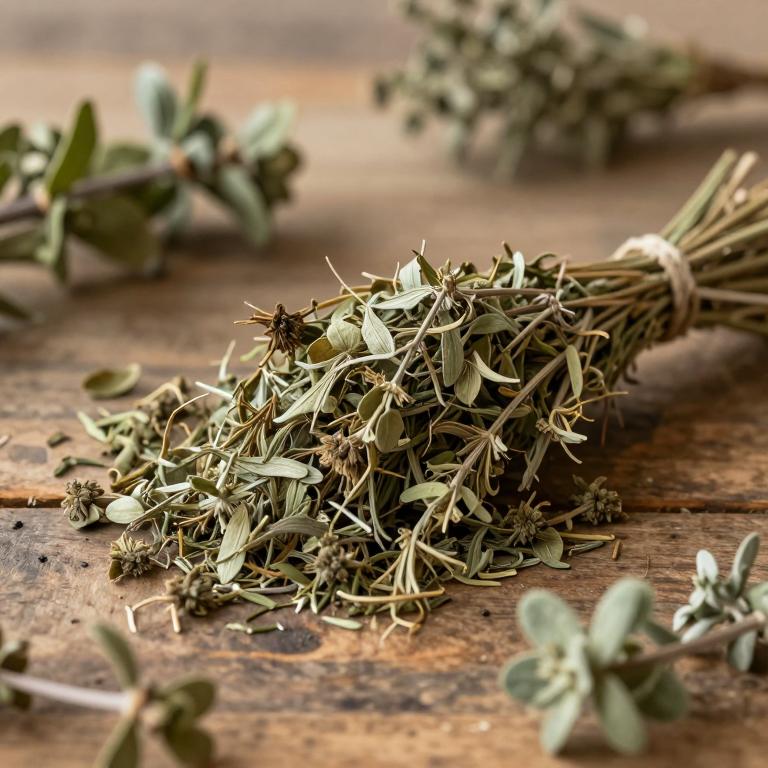
Names and Synonyms
Scientific Names
Accepted name
Buchanania lanzanSynonyms
- Mangifera silvestris
- Buchanania lanzan var. palodensis
- Spondias elliptica
- Lanzana solitaria
- Buchanania latifolia
Regional and Traditional Names
German:
- Charoli
Sources: Wikidata
Taxonomical Classification
This plant, Buchanina lanzaan, belongs to the kingdom Plantae and the phylum Streptophyta. Within the class Equisetopsida and subclass Magnoliidae, it is classified under the order Sapindales and the family Anacardiaceae. Its taxonomic hierarchy concludes within the genus Buchanina.
| Rank | Classification |
|---|---|
| Kingdom | Plantae |
| Phylum | Streptophyta |
| Class | Equisetopsida |
| Subclass | Magnoliidae |
| Order | Sapindales |
| Family | Anacardiaceae |
| Genus | Buchanania |
Sources: The World Checklist of Vascular Plants (WCVP)
Distribution
This plant exhibits a specific geographical range across parts of Asia. In China, its distribution is noted in the South-Central regions as well as on Hainan island. Moving towards the Indian Subcontinent, it can be found growing within the borders of Bangladesh. The species is also widely documented across various parts of India. Finally, its presence extends further north into the mountainous terrain of Nepal.
| Region | Area |
|---|---|
| China | China South-Central |
| China | Hainan |
| Indian Subcontinent | Bangladesh |
| Indian Subcontinent | India |
| Indian Subcontinent | Nepal |
| Indian Subcontinent | West Himalaya |
| Indo-China | Cambodia |
| Indo-China | Laos |
| Indo-China | Myanmar |
| Indo-China | Thailand |
Sources: The World Checklist of Vascular Plants (WCVP)
Chemicals
Buchanania lanzan has 6 reported phytochemicals identified across 0 scientific publications and several other databases. The most consistently reported chemicals include 2-Hydroxy-5-methylbenzaldehyde, 2-hydroxy-1-(hydroxymethyl)ethyl ester, 8-octadecenoic acid methyl ester, catechol, hexadecenoic acid methyl ester.
| Chemical | Supporting sources | Consensus |
|---|---|---|
| 2-Hydroxy-5-methylbenzaldehyde | 1 supporting sources | ★☆☆☆☆ |
| 2-hydroxy-1-(hydroxymethyl)ethyl ester | 1 supporting sources | ★☆☆☆☆ |
| 8-octadecenoic acid methyl ester | 1 supporting sources | ★☆☆☆☆ |
| catechol | 1 supporting sources | ★☆☆☆☆ |
| hexadecenoic acid methyl ester | 1 supporting sources | ★☆☆☆☆ |
| n-Hexadecanoic acid | 1 supporting sources | ★☆☆☆☆ |
2-Hydroxy-5-methylbenzaldehyde
- Journal of ethnopharmacology
2-hydroxy-1-(hydroxymethyl)ethyl ester
- Journal of ethnopharmacology
8-octadecenoic acid methyl ester
- Journal of ethnopharmacology
catechol
- Journal of ethnopharmacology
hexadecenoic acid methyl ester
- Journal of ethnopharmacology
n-Hexadecanoic acid
- Journal of ethnopharmacology
Conditions
Buchanania lanzan has 2 reported investigations on conditions identified across 0 scientific publications and several other databases. The most consistently reported conditions include Gram-negative bacteria, Gram-positive bacteria.
| Condition | Supporting sources | Consensus |
|---|---|---|
| Gram-negative bacteria | 1 supporting sources | ★☆☆☆☆ |
| Gram-positive bacteria | 1 supporting sources | ★☆☆☆☆ |
Gram-negative bacteria
- Molecules (Basel, Switzerland)
Gram-positive bacteria
- Molecules (Basel, Switzerland)