Mama Cadela
Brosimum gaudichaudii · Accepted scientific name
Scientific literature: Very Sparse (9 studies) · ★☆☆☆☆
Mama Cadeela, scientifically known as Brosimum gaudichauidii, is a remarkable medicinal plant native to the Amazon rainforest. Highly valued in traditional folk medicine, it is frequently utilized for its potent anti-inflammatory and antimicrobial properties. This versatile species offers significant pharmacological potential for treating various ailments and promoting overall wellness.
- Family
- Moraceae
- Native range
- Southern America
- Parts used
- Leaf · Root
- Common names
- Mama Cadela
- Scientific synonyms
- Piratinera Gaudichaudii · Brosimum Gaudichaudii F. Longifolium · 5 more
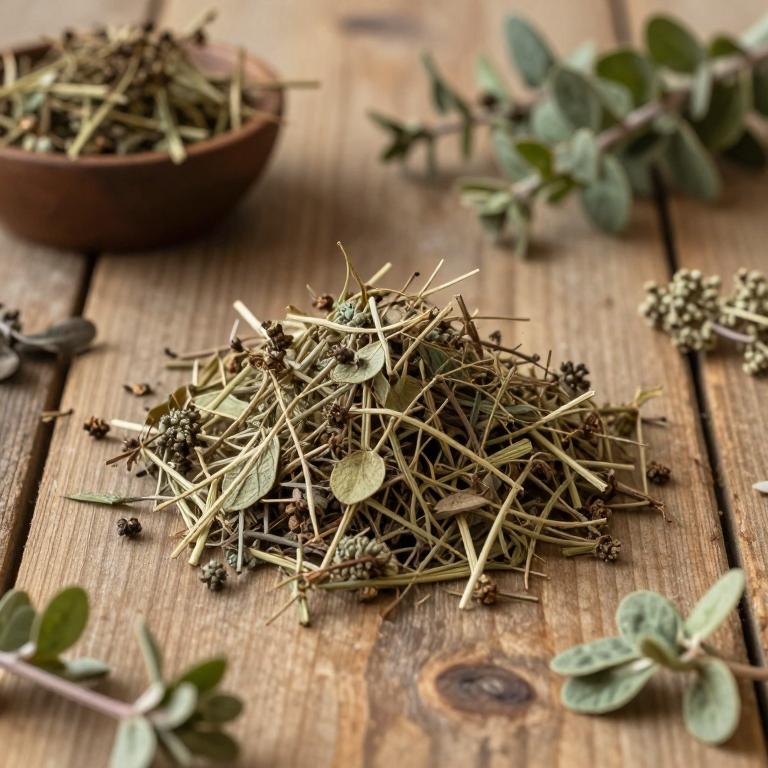
Names and Synonyms
Common Names
- Mama Cadela
Scientific Names
Accepted name
Brosimum gaudichaudiiSynonyms
- Piratinera gaudichaudii
- Brosimum gaudichaudii f. longifolium
- Brosimum pusillum
- Piratinera glaucifolia
- Brosimum gaudichaudii f. macrophyllum
- Brosimum gaudichaudii f. parvifolium
- Brosimum glaucifolium
Sources: Wikidata, Catalogue of Life
Taxonomical Classification
This plant belongs to the kingdom Plantae and the phylum Streptophyta, situated within the class Equisetopsida and subclass Magnoliidae. It is classified under the order Rosales and the family Moraceae. Finally, it is identified by the genus Brosimum, specifically as the species Brosimum gaudichaudii.
| Rank | Classification |
|---|---|
| Kingdom | Plantae |
| Phylum | Streptophyta |
| Class | Equisetopsida |
| Subclass | Magnoliidae |
| Order | Rosales |
| Family | Moraceae |
| Genus | Brosimum |
Sources: The World Checklist of Vascular Plants (WCVP)
Distribution
This plant is widely distributed across various regions of the South American continent. Its presence is notably recorded in Bolivia, representing its reach into Western South America. Within Brazil, the species exhibits a broad range that includes the North and Northeast territories. Furthermore, it can be found spanning the West-Central and Southeast regions of the country. This extensive coverage demonstrates the plant's ability to thrive in diverse Brazilian environments.
| Region | Area |
|---|---|
| Western South America | Bolivia |
| Brazil | Brazil West-Central |
| Brazil | Brazil Northeast |
| Brazil | Brazil Southeast |
| Brazil | Brazil North |
| Brazil | Brazil South |
| Southern South America | Paraguay |
Sources: The World Checklist of Vascular Plants (WCVP)
Botanical Identification
Ecology
The ecology of Brosimum gaudichaudii is characterized by its presence in diverse landscapes, including anthropized areas (Área Antrópica), Cerrado (latu sensu), and the Amazonian Savanna (Savana Amazônica). This species thrives in low-lying terrains, occupying an elevational range that extends from sea level (0 m AMSL) up to a maximum altitude of 200 m AMSL.
- Elevational range max:
- 200 m AMSL
- Elevational range min:
- 0 m AMSL
- Habitat :
- Área Antrópica, Cerrado (lato sensu), Savana Amazônica
Life history
The life history of Brosimum gaudichaudii is characterized by a perennial lifecycle, allowing the individual to persist in its ecosystem for many years. Throughout its developmental stages, the plant exhibits a deciduous nature, shedding its foliage as part of its seasonal biological rhythm.
- Deciduousness :
- deciduous
- Lifecycle :
- perennial
Morphology
The morphology of Brosimum gaudichaudii is characterized by a woody growth form that manifests primarily as a tree, though it can also present in a shrub-like habit. This species is a self-supporting plant, lacking any climbing or vine-like tendencies, and it functions as an independent organism rather than a parasite. It is a strictly terrestrial species, showing no aquatic, semiaquatic, or epiphytic characteristics. In terms of stature, the plant exhibits significant vertical growth, with an average height of approximately 6 meters, though it is capable of reaching a maximum height of up to 18 meters.
- Aquatic :
- terrestrial
- Climber :
- self-supporting
- Epiphyte :
- terrestrial
- Growth form :
- tree
- Growth form :
- shrub
- Parasite :
- independent
- Plant height max:
- 18 m
- Plant height mean:
- 6 m
- Woodiness :
- woody
Physiology
The physiology of Brosimum gaudicchauidii is characterized by a C3 photosynthetic pathway, a common metabolic strategy in many tropical woody species where carbon fixation occurs primarily through the enzyme RuBisCO during the Calvin cycle. Furthermore, this species does not function as a nitrogen fixer, meaning it lacks the specialized symbiotic relationship with diazotrophic bacteria required to convert atmospheric nitrogen into bioavailable forms, relying instead on the uptake of nitrogenous compounds from the soil through its root system.
- Nitrogen fixer :
- no
- Photosynthetic pathway :
- C3
Reproduction
The reproduction of Brosimum gaudichaudii is characterized by the development of fruits that possess a fleshy texture, a trait that often facilitates dispersal through biotic agents. The seeds produced by this species are remarkably consistent in size, exhibiting a uniform seed volume with both a minimum and maximum value of 4800 mm³. Consequently, the mean seed volume is precisely 4800 mm³, indicating a highly standardized reproductive output in terms of seed dimensions within its ecological niche.
- Fruit dryness :
- fleshy
- Seed volume max:
- 4800 mm³
Sources: Global Inventory of Floras and Traits (GIFT)
Plant Parts
Brosimum gaudichaudii has 2 reported plant parts identified across 2 scientific publications and several other databases that are studied for medicinal purposes. The most consistently reported plant part include leaf, root.
| Plant part | Supporting sources | Consensus |
|---|---|---|
| Leaf | 1 supporting sources | ★☆☆☆☆ |
| Root | 1 supporting sources | ★☆☆☆☆ |
Leaf
- Frontiers in plant science
Root
- Frontiers in plant science
Chemicals
Brosimum gaudichaudii has 4 reported phytochemicals identified across 2 scientific publications and several other databases. The most consistently reported chemicals include Psoralen, Bergapten, Furanocoumarin, Furocoumarins.
| Chemical | Supporting sources | Consensus |
|---|---|---|
| Psoralen | 2 supporting sources | ★☆☆☆☆ |
| Bergapten | 1 supporting sources | ★☆☆☆☆ |
| Furanocoumarin | 1 supporting sources | ★☆☆☆☆ |
| Furocoumarins | 1 supporting sources | ★☆☆☆☆ |
Psoralen
- Frontiers in plant science
- Journal of ethnopharmacology
Bergapten
- Journal of ethnopharmacology
Furanocoumarin
- Frontiers in plant science
Furocoumarins
- Journal of ethnopharmacology
Conditions
Brosimum gaudichaudii has 1 reported investigations on conditions identified across 2 scientific publications and several other databases. The most consistently reported conditions include vitiligo.
| Condition | Supporting sources | Consensus |
|---|---|---|
| Vitiligo | 1 supporting sources | ★☆☆☆☆ |
Vitiligo
- Journal of ethnopharmacology