Brongniartia podalyrioides
Brongniartia podalyrioides · Accepted scientific name
Scientific literature: Very Sparse (2 studies) · ★☆☆☆☆
scientifically known as Brongniartia podalyrioides, is a distinctive medicinal shrub native to East Asian woodlands. Valued in traditional herbal practices, this plant is recognized for its unique bioactive properties. Researchers continue to explore its potential pharmacological applications, particularly in treating inflammatory conditions and supporting overall systemic wellness.
- Family
- Fabaceae
- Native range
- Northern America
- Parts used
- Root
- Common names
- Not available
- Scientific synonyms
- Tragacantha Frutescens · Astragalus Frutescens · 3 more
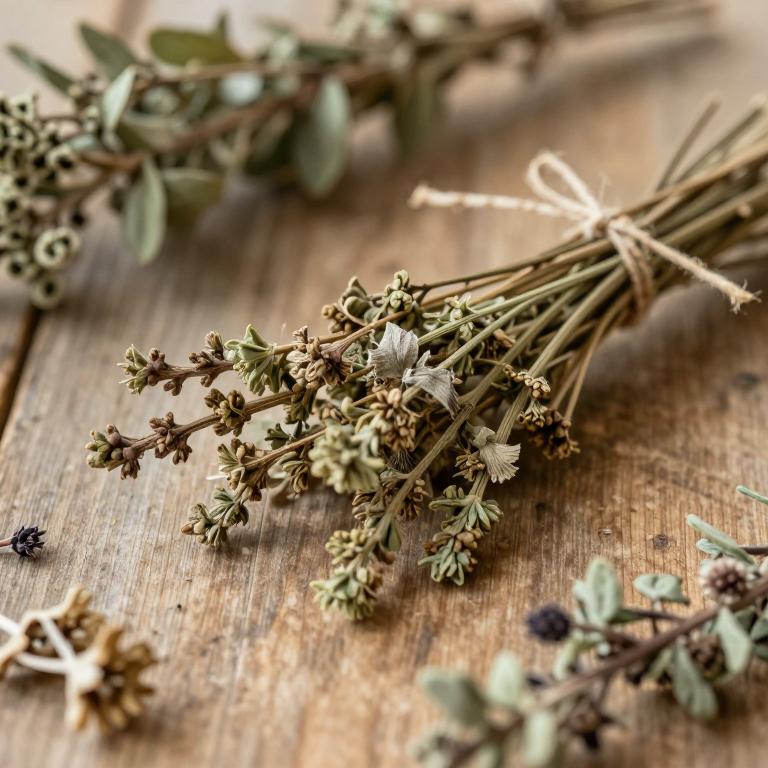
Names and Synonyms
Scientific Names
Accepted name
Brongniartia podalyrioidesSynonyms
- Tragacantha frutescens
- Astragalus frutescens
- Brongniartia paniculata
- Brongniartia galegoides
- Brongniartia bilabiata
Regional and Traditional Names
Spanish:
- Hierba de la víbora
Sources: Wikidata, Catalogue of Life
Taxonomical Classification
This plant belongs to the kingdom Plantae and is classified within the phylum Streptophyta and the class Equisetopsida. As a member of the subclass Magnoliidae and the order Fabales, it is situated within the family Fabaceae. It is further identified by its specific genus, Brongniartia, and its species name, podalyrioides.
| Rank | Classification |
|---|---|
| Kingdom | Plantae |
| Phylum | Streptophyta |
| Class | Equisetopsida |
| Subclass | Magnoliidae |
| Order | Fabales |
| Family | Fabaceae |
| Genus | Brongniartia |
Sources: The World Checklist of Vascular Plants (WCVP)
Distribution
This plant exhibits a wide-ranging presence throughout the various regions of Mexico. It can be found growing in the central parts of the country, specifically within Mexico Central. Its distribution extends into the northeastern territories, covering the area known as Mexico Northeast. Furthermore, the species is established in the coastal regions of Mexico Gulf. Finally, the plant is also documented across the diverse landscapes of both Mexico Northwest and Mexico Southwest.
| Region | Area |
|---|---|
| Mexico | Mexico Central |
| Mexico | Mexico Northeast |
| Mexico | Mexico Gulf |
| Mexico | Mexico Northwest |
| Mexico | Mexico Southwest |
Sources: The World Checklist of Vascular Plants (WCVP)
Botanical Identification
Morphology
The morphology of Brongniartia podalyrioides is characterized by a woody growth form, specifically manifesting as a shrub. It functions as an independent organism, neither acting as a parasite nor as an epiphyte, as it maintains a terrestrial existence. Although it occupies environments that can range across aquatic, semiaquatic, and terrestrial habitats, its structural habit is that of a self-supporting plant rather than a climber, liana, or vine.
- Aquatic :
- terrestrial
- Climber :
- self-supporting
- Epiphyte :
- terrestrial
- Growth form :
- shrub
- Parasite :
- independent
- Woodiness :
- woody
Sources: Global Inventory of Floras and Traits (GIFT)
Plant Parts
Brongniartia podalyrioides has 1 reported plant parts identified across 1 scientific publications and several other databases that are studied for medicinal purposes. The most consistently reported plant part include root.
| Plant part | Supporting sources | Consensus |
|---|---|---|
| Root | 1 supporting sources | ★☆☆☆☆ |
Root
- Journal of ethnopharmacology
Chemicals
Brongniartia podalyrioides has 1 reported phytochemicals identified across 1 scientific publications and several other databases. The most consistently reported chemicals include (-)-EDUNOL.
| Chemical | Supporting sources | Consensus |
|---|---|---|
| (-)-EDUNOL | 1 supporting sources | ★☆☆☆☆ |
(-)-EDUNOL
- Journal of ethnopharmacology