coffee bush
Breynia oblongifolia · Accepted scientific name
Scientific literature: Very Sparse (10 studies) · ★☆☆☆☆
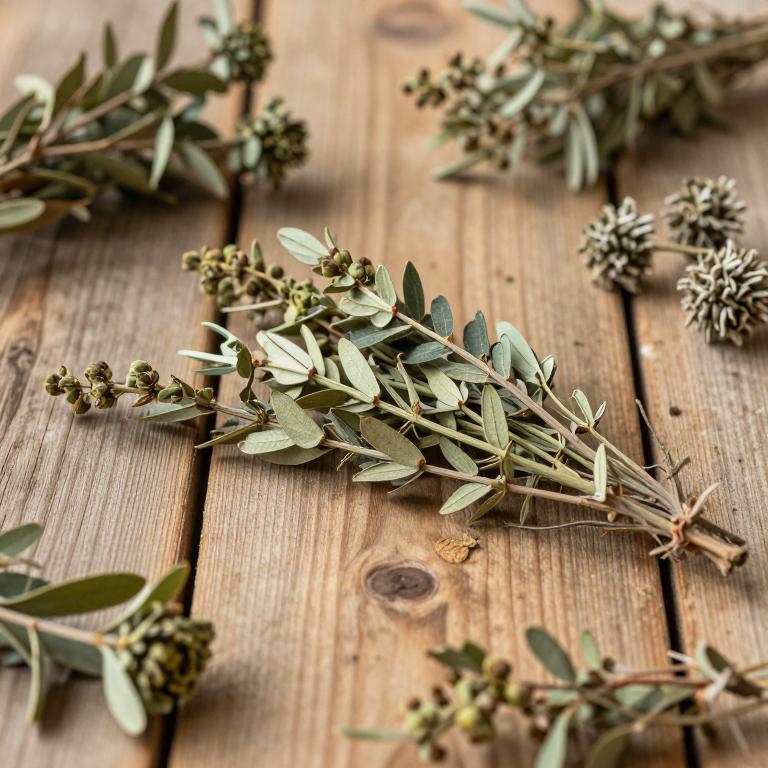
Coffee bush, scientifically known as Breynia oblongifolia, is a versatile medicinal shrub native to tropical regions. Renowned for its antioxidant properties, it is frequently utilized in traditional healing practices to treat skin ailments and inflammation. This resilient plant offers significant pharmacological potential for developing modern natural therapeutic treatments.
- Family
- Phyllanthaceae
- Native range
- Asia-Tropical
- Parts used
- Not available
- Common names
- Coffee Bush
- Scientific synonyms
- Melanthesa Rhamnoides Var. Oblongifolia
Names and Synonyms
Common Names
- coffee bush
Scientific Names
Accepted name
Breynia oblongifoliaSynonyms
- Melanthesa rhamnoides var. oblongifolia
Sources: Wikidata, Catalogue of Life
Taxonomical Classification
This plant belongs to the kingdom Plantae and is classified within the phylum Streptophyta and class Equisetopsida. Within the subclass Magnoliidae, it is positioned under the order Malpighiales and the family Phyllanthaceae. Finally, it is identified as a member of the genus Breynia.
| Rank | Classification |
|---|---|
| Kingdom | Plantae |
| Phylum | Streptophyta |
| Class | Equisetopsida |
| Subclass | Magnoliidae |
| Order | Malpighiales |
| Family | Phyllanthaceae |
| Genus | Breynia |
Sources: The World Checklist of Vascular Plants (WCVP)
Distribution
This plant exhibits a broad geographical range spanning several distinct regions across the Indo-Pacific. Within the Malesia zone, its presence is noted throughout the Lesser Sunda Islands. The species also extends into Papuasia, where it can be found in New Guinea. In Australia, its distribution covers significant portions of the northern and eastern territories. Specifically, it inhabits the Northern Territory, Queensland, and New South Wales.
| Region | Area |
|---|---|
| Malesia | Lesser Sunda Is. |
| Papuasia | New Guinea |
| Australia | New South Wales |
| Australia | Northern Territory |
| Australia | Queensland |
Sources: The World Checklist of Vascular Plants (WCVP)
Botanical Identification
Life history
The life history of Breynia oblongifolia is characterized by its perennial growth habit and its classification through distinct botanical life forms. Primarily functioning as a phanerophyte, the plant maintains its photosynthetic organs on elevated branches above the soil surface, allowing it to establish a woody structure capable of enduring various environmental conditions. Depending on the specific ecological niche and the height of its persistent buds, its growth strategy can also align with the traits of a nanophanerophyte, where the woody stems are kept relatively low to the ground. This perennial nature ensures long-term survival in its habitat, utilizing its structural height to optimize light interception while maintaining a robust reproductive cycle typical of woody shrubs.
- Life form :
- nanophanerophyte
- Life form :
- phanerophyte
Morphology
The morphology of Breynia oblongifolia is characterized by a woody growth form, specifically functioning as a self-supporting shrub. This species exhibits a terrestrial habitat preference, distinguishing it from aquatic or epiphytic life forms. As a non-parasitic organism, it maintains an independent existence without relying on host plants. In terms of structural dimension, the plant reaches a maximum height of approximately 3 meters, maintaining a robust, self-supporting stature rather than behaving as a liana, vine, or climbing entity.
- Aquatic :
- terrestrial
- Climber :
- self-supporting
- Epiphyte :
- terrestrial
- Growth form :
- shrub
- Parasite :
- independent
- Plant height max:
- 3 m
- Woodiness :
- woody
Physiology
The physiology of Breynia oblongifolia is characterized by a C3 photosynthetic pathway, which dictates its carbon fixation processes and metabolic efficiency in varying light environments. The plant's vegetative structure features leaves with specific morphological dimensions that facilitate gas exchange and light interception, typically ranging in length from a minimum of 2 cm to a maximum of 3 cm. Complementing this longitudinal growth, the leaf width varies between a minimum of 1 cm and a maximum of 1.5 cm, defining the overall surface area available for photosynthetic activity and transpiration.
- Leaf length max:
- 3 cm
- Leaf length min:
- 2 cm
- Leaf width max:
- 1.5 cm
- Leaf width min:
- 1 cm
- Photosynthetic pathway :
- C3
Reproduction
The reproduction of Breynia oblongifolia is characterized by the production of fruit classified as a berry. These fruits are indehiscent, meaning they do not split open at maturity to release their contents, instead relying on the complete breakdown or consumption of the fleshy fruit structure. The seeds produced within these fruits are notably consistent in size, with a measured seed mass of 0.00566 g, a value that represents the mean, minimum, and maximum mass recorded for the species.
- Dehiscence :
- indehiscent
- Fruit type :
- berry
- Seed mass mean:
- 0.00566 g
Sources: Global Inventory of Floras and Traits (GIFT)
Chemicals
Breynia oblongifolia has 2 reported phytochemicals identified across 0 scientific publications and several other databases. The most consistently reported chemicals include Flavonoids, Saponins.
| Chemical | Supporting sources | Consensus |
|---|---|---|
| Flavonoids | 1 supporting sources | ★☆☆☆☆ |
| Saponins | 1 supporting sources | ★☆☆☆☆ |
Flavonoids
- BMC complementary medicine and therapies
Saponins
- BMC complementary medicine and therapies
Activities
Breynia oblongifolia has 1 reported activities identified across 0 scientific publications and several other databases. The most consistently reported activities include Antioxidant.
| Activity | Supporting sources | Consensus |
|---|---|---|
| Antioxidant | 1 supporting sources | ★☆☆☆☆ |
Antioxidant
- BMC complementary medicine and therapies
Conditions
Breynia oblongifolia has 2 reported investigations on conditions identified across 0 scientific publications and several other databases. The most consistently reported conditions include inflammation, wounds.
| Condition | Supporting sources | Consensus |
|---|---|---|
| Inflammation | 1 supporting sources | ★☆☆☆☆ |
| Wounds | 1 supporting sources | ★☆☆☆☆ |
Inflammation
- BMC complementary medicine and therapies
Wounds
- BMC complementary medicine and therapies
Preparations
Breynia oblongifolia has 2 reported preparations identified across 0 scientific publications and several other databases. The most consistently reported preparations include crude extracts, ethanol extract.
| Preparation | Supporting sources | Consensus |
|---|---|---|
| Crude extracts | 1 supporting sources | ★☆☆☆☆ |
| Ethanol extract | 1 supporting sources | ★☆☆☆☆ |
Crude extracts
- BMC complementary medicine and therapies
Ethanol extract
- BMC complementary medicine and therapies