Brassica cretica subsp. cretica
Brassica cretica subsp. cretica · Accepted scientific name
Scientific literature: Very Sparse (14 studies) · ★☆☆☆☆
, scientifically known as Brassica cretica subsp. cretica, is a resilient wild crucifer native to the Mediterranean region. Renowned for its distinctive leafy greens, this subspecies is valued in traditional herbalism for its nutritional density and bioactive compounds, offering potential therapeutic benefits in supporting digestive health and reducing inflammation.
- Family
- Brassicaceae
- Native range
- Europe
- Parts used
- Not available
- Common names
- Not available
- Scientific synonyms
- Brassica Cretica Var. Nivea · Brassica Oleracea Subvar. Nivea · 11 more
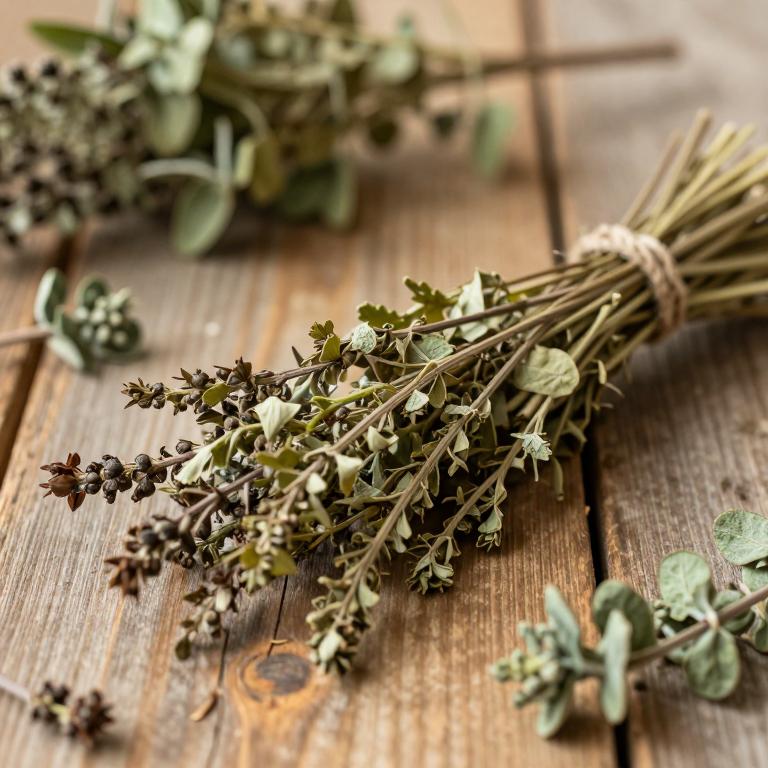
Names and Synonyms
Scientific Names
Accepted name
Brassica cretica subsp. creticaSynonyms
- Brassica cretica var. nivea
- Brassica oleracea subvar. nivea
- Brassica oleracea convar. botrytis
- Brassica oleracea stirps botrytis
- Brassica botrytis
- Brassica oleracea subsp. botrytis
- Brassica oleracea proles botrytis
- Brassica cretica subsp. nivea
- Brassica cretica convar. botrytis
- Brassica oleracea var. nivea
- Brassica leucantha
- Brassica nivea
- Brassica oleracea var. botrytis
Regional and Traditional Names
French:
- Chou sauvage de Crète
Sources: Wikidata, Catalogue of Life
Taxonomical Classification
This plant belongs to the kingdom Plantae and the phylum Streptophyta, falling under the class Equisetopsida and subclass Magnoliidae. Within the order Brassicales and family Brassicaceae, it is classified under the genus Brassica. Specifically, it is identified as the subspecies Brassica cretica subsp. cretica.
| Rank | Classification |
|---|---|
| Kingdom | Plantae |
| Phylum | Streptophyta |
| Class | Equisetopsida |
| Subclass | Magnoliidae |
| Order | Brassicales |
| Family | Brassicaceae |
| Genus | Brassica |
Sources: The World Checklist of Vascular Plants (WCVP)
Distribution
This plant exhibits a wide distribution across several key regions of Southeastern and Eastern Europe and Western Asia. In Southeastern Europe, its presence is noted specifically in Greece and on the island of Kriti. Its range extends into Eastern Europe, where it can be found in Krym. Moving toward Western Asia, the species is distributed throughout the East Aegean Is. region. Finally, the geographical reach of this subspecies includes the areas of Lebanon and Syria.
| Region | Area |
|---|---|
| Southeastern Europe | Greece |
| Southeastern Europe | Kriti |
| Eastern Europe | Krym |
| Western Asia | East Aegean Is. |
| Western Asia | Lebanon-Syria |
| Western Asia | Palestine |
| Western Asia | Türkiye |
| Indian Subcontinent | Bangladesh |
| Indian Subcontinent | East Himalaya |
| Indo-China | Vietnam |
Sources: The World Checklist of Vascular Plants (WCVP)
Chemicals
Brassica cretica subsp. cretica has 12 reported phytochemicals identified across 0 scientific publications and several other databases. The most consistently reported chemicals include 1H-Indole-3-acetonitrile, 9,12,15-Octadecatrienoic acid, Flavonoids, Glucobrassicin, Glucosinolates.
| Chemical | Supporting sources | Consensus |
|---|---|---|
| 1H-Indole-3-acetonitrile | 1 supporting sources | ★☆☆☆☆ |
| 9,12,15-Octadecatrienoic acid | 1 supporting sources | ★☆☆☆☆ |
| Flavonoids | 1 supporting sources | ★☆☆☆☆ |
| Glucobrassicin | 1 supporting sources | ★☆☆☆☆ |
| Glucosinolates | 1 supporting sources | ★☆☆☆☆ |
| POTASSIUM | 1 supporting sources | ★☆☆☆☆ |
| Phenols | 1 supporting sources | ★☆☆☆☆ |
| Sinigrin | 1 supporting sources | ★☆☆☆☆ |
| flavonols | 1 supporting sources | ★☆☆☆☆ |
| methyl 9-cis,11-trans-octadecadienoate | 1 supporting sources | ★☆☆☆☆ |
1H-Indole-3-acetonitrile
- BMC plant biology
9,12,15-Octadecatrienoic acid
- BMC plant biology
Flavonoids
- BMC plant biology
Glucobrassicin
- Plants (Basel, Switzerland)
Glucosinolates
- Data in brief
POTASSIUM
- BMC plant biology
Phenols
- BMC plant biology
Sinigrin
- Plants (Basel, Switzerland)
flavonols
- Food chemistry
methyl 9-cis,11-trans-octadecadienoate
- BMC plant biology
Activities
Brassica cretica subsp. cretica has 2 reported activities identified across 0 scientific publications and several other databases. The most consistently reported activities include Anticholinergic, Antioxidant.
| Activity | Supporting sources | Consensus |
|---|---|---|
| Anticholinergic | 1 supporting sources | ★☆☆☆☆ |
| Antioxidant | 1 supporting sources | ★☆☆☆☆ |
Anticholinergic
- Plant foods for human nutrition (Dordrecht, Netherlands)
Antioxidant
- Plant foods for human nutrition (Dordrecht, Netherlands)