Malay jewelvine
Brachypterum scandens · Accepted scientific name
Scientific literature: Very Sparse (14 studies) · ★☆☆☆☆
Malay jewelvine, scientifically known as Brachypterum scandens, is a climbing medicinal plant cherished in traditional Southeast Asian practices. Renowned for its vibrant foliage and therapeutic properties, it is often utilized to treat skin ailments, inflammation, and digestive issues. This versatile vine offers significant potential for modern pharmacological research and wellness.
- Family
- Fabaceae
- Native range
- Africa
- Parts used
- Stem
- Common names
- Malay Jewelvine
- Scientific synonyms
- Derris Scandens · Derris Scandens Var. Saharanpurensis · 13 more
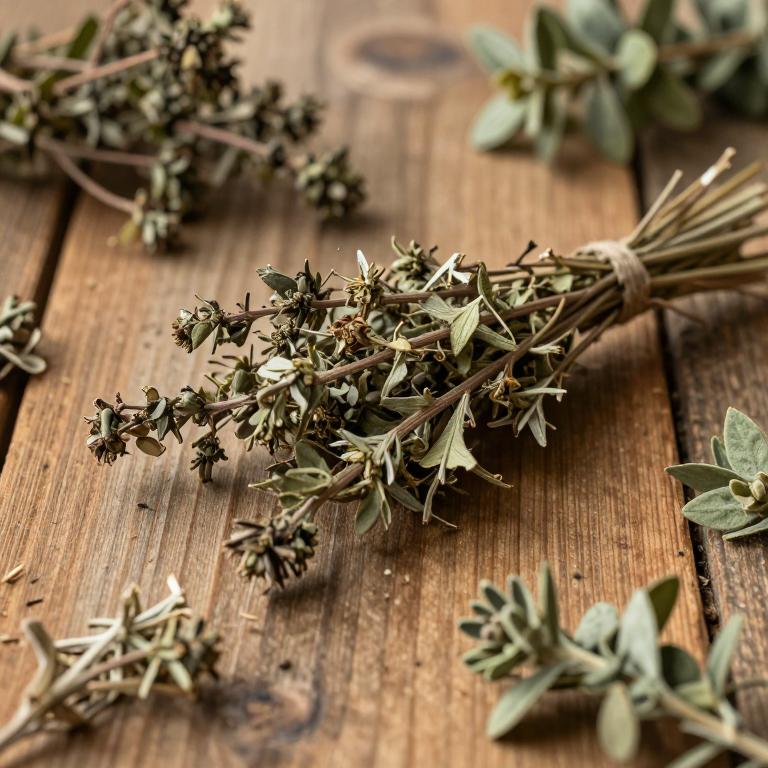
Names and Synonyms
Common Names
- Malay jewelvine
Scientific Names
Accepted name
Brachypterum scandensSynonyms
- Derris scandens
- Derris scandens var. saharanpurensis
- Solori scandens var. saharanpurensis
- Galedupa frutescens
- Derris scandens var. shanicus
- Derris timorensis var. saharanpurensis
- Millettia litoralis
- Brachypterum timorense
- Dalbergia scandens
- Dalbergia venusta
- Dalbergia timoriensis
- Deguelia timoriensis
- Derris scandens var. toppinii
- Derris timorensis
- Solori scandens
Sources: Catalogue of Life
Taxonomical Classification
This plant belongs to the kingdom Plantae and is classified under the phylum Streptophyta and the class Equisetopsida. Within the subclass Magnoliidae, it falls under the order Fabales and the family Fabaceae. Its taxonomic identity is further defined by its placement in the genus Brachypterum.
| Rank | Classification |
|---|---|
| Kingdom | Plantae |
| Phylum | Streptophyta |
| Class | Equisetopsida |
| Subclass | Magnoliidae |
| Order | Fabales |
| Family | Fabaceae |
| Genus | Brachypterum |
Sources: The World Checklist of Vascular Plants (WCVP)
Distribution
This plant exhibits a diverse geographical distribution spanning across several distinct regions. In the Western Indian Ocean, it can be found growing in Mauritius and Réunion. Its range extends to East Asia, specifically within the South-Central regions of China. Within the Indian Subcontinent, the species is documented in the state of Assam. Additionally, it is also known to inhabit parts of Bangladesh.
| Region | Area |
|---|---|
| Western Indian Ocean | Mauritius |
| Western Indian Ocean | Réunion |
| China | China South-Central |
| Indian Subcontinent | Assam |
| Indian Subcontinent | Bangladesh |
| Indian Subcontinent | India |
| Indian Subcontinent | Nepal |
| Indian Subcontinent | Pakistan |
| Indian Subcontinent | Sri Lanka |
| Indian Subcontinent | West Himalaya |
Sources: The World Checklist of Vascular Plants (WCVP)
Botanical Identification
Morphology
The morphology of Brachypterum scandens is characterized by a woody structure that exhibits a shrub-like growth form. This plant functions as a liana, acting as an obligatory climber that relies on external support to ascend. While its growth habit is climbing, it maintains a terrestrial existence rather than being an epiphyte, occupying land-based habitats across aquatic, semiaquatic, and terrestrial environments. Furthermore, the species is an independent organism, showing no parasitic tendencies toward its host plants.
- Aquatic :
- terrestrial
- Climber :
- liana
- Climber :
- obligatory
- Epiphyte :
- terrestrial
- Growth form :
- shrub
- Parasite :
- independent
- Woodiness :
- woody
Physiology
The physiology of Brachypterum scandens is characterized by a metabolic framework consistent with the C3 photosynthetic pathway. Within this process, the plant utilizes the enzyme Ribulose-1,5-bisphosphate carboxylase/oxygenase (RuBisCO) to fix atmospheric carbon dioxide directly into a three-carbon compound, 3-phosphoglycerate, during the initial stages of the Calvin cycle. This C3 pathway implies that the plant conducts carbon fixation during the day within the mesophyll cells, relying on the standard enzymatic mechanism without the specialized anatomical adaptations found in C4 plants or the nocturnal acid storage typical of CAM plants. Consequently, its physiological efficiency and water-use strategy are intrinsically linked to this C3 metabolic route, influencing its gas exchange patterns and energy assimilation rates.
- Photosynthetic pathway :
- C3
Sources: Global Inventory of Floras and Traits (GIFT)
Plant Parts
Brachypterum scandens has 1 reported plant parts identified across 1 scientific publications and several other databases that are studied for medicinal purposes. The most consistently reported plant part include stem.
| Plant part | Supporting sources | Consensus |
|---|---|---|
| Stem | 1 supporting sources | ★☆☆☆☆ |
Stem
- Journal of ethnopharmacology
Chemicals
Brachypterum scandens has 9 reported phytochemicals identified across 1 scientific publications and several other databases. The most consistently reported chemicals include Flavonoids, Dalpanitin, LIGNIN, Lupeol, Saponins.
| Chemical | Supporting sources | Consensus |
|---|---|---|
| Flavonoids | 2 supporting sources | ★☆☆☆☆ |
| Dalpanitin | 1 supporting sources | ★☆☆☆☆ |
| LIGNIN | 1 supporting sources | ★☆☆☆☆ |
| Lupeol | 1 supporting sources | ★☆☆☆☆ |
| Saponins | 1 supporting sources | ★☆☆☆☆ |
| Steroids | 1 supporting sources | ★☆☆☆☆ |
| Vicenin 3 | 1 supporting sources | ★☆☆☆☆ |
| cellulose | 1 supporting sources | ★☆☆☆☆ |
| genistein | 1 supporting sources | ★☆☆☆☆ |
Flavonoids
- Ayu
- Journal of ethnopharmacology
Dalpanitin
- Journal of ethnopharmacology
LIGNIN
- International journal of biological macromolecules
Lupeol
- Journal of advanced pharmaceutical technology & research
Saponins
- Ayu
Steroids
- Ayu
Vicenin 3
- Journal of ethnopharmacology
cellulose
- International journal of biological macromolecules
genistein
- Journal of advanced pharmaceutical technology & research
Activities
Brachypterum scandens has 2 reported activities identified across 1 scientific publications and several other databases. The most consistently reported activities include Antibacterial, Antimicrobial.
| Activity | Supporting sources | Consensus |
|---|---|---|
| Antibacterial | 1 supporting sources | ★☆☆☆☆ |
| Antimicrobial | 1 supporting sources | ★☆☆☆☆ |
Antibacterial
- Journal of ethnopharmacology
Antimicrobial
- Journal of ethnopharmacology
Preparations
Brachypterum scandens has 11 reported preparations identified across 1 scientific publications and several other databases. The most consistently reported preparations include 50% ethanolic extract, Crude extracts, absolute ethanolic extract, compounded herbal recipe, ethanolic extract.
| Preparation | Supporting sources | Consensus |
|---|---|---|
| 50% ethanolic extract | 1 supporting sources | ★☆☆☆☆ |
| Crude extracts | 1 supporting sources | ★☆☆☆☆ |
| Absolute ethanolic extract | 1 supporting sources | ★☆☆☆☆ |
| Compounded herbal recipe | 1 supporting sources | ★☆☆☆☆ |
| Ethanolic extract | 1 supporting sources | ★☆☆☆☆ |
| Ethanolic extracts | 1 supporting sources | ★☆☆☆☆ |
| Methanol extracts | 1 supporting sources | ★☆☆☆☆ |
| Plant extracts | 1 supporting sources | ★☆☆☆☆ |
| Poison fish | 1 supporting sources | ★☆☆☆☆ |
| Single crude medication | 1 supporting sources | ★☆☆☆☆ |
50% ethanolic extract
- Journal of advanced pharmaceutical technology & research
Crude extracts
- Journal of ethnopharmacology
Absolute ethanolic extract
- Journal of advanced pharmaceutical technology & research
Compounded herbal recipe
- Journal of advanced pharmaceutical technology & research
Ethanolic extract
- Journal of advanced pharmaceutical technology & research
Ethanolic extracts
- Journal of advanced pharmaceutical technology & research
Methanol extracts
- Journal of ethnopharmacology
Plant extracts
- Plants (Basel, Switzerland)
Poison fish
- Journal of ethnobiology and ethnomedicine
Single crude medication
- Journal of advanced pharmaceutical technology & research