Brachypterum eriocarpum
Brachypterum eriocarpum · Accepted scientific name
Scientific literature: Very Sparse (8 studies) · ★☆☆☆☆
Brachypterum eriocarpum, scientifically known as Brachypterum eriocarpum, is a unique medicinal plant valued for its diverse therapeutic properties. Found in specific ecological niches, it is traditionally utilized in folk medicine to treat various ailments. Exploring its chemical constituents offers promising insights into developing modern pharmacological treatments and natural remedies.
- Family
- Fabaceae
- Native range
- Asia-Temperate
- Parts used
- Stem
- Common names
- Not available
- Scientific synonyms
- Solori Eriocarpa · Solori Pseudorobusta · 3 more
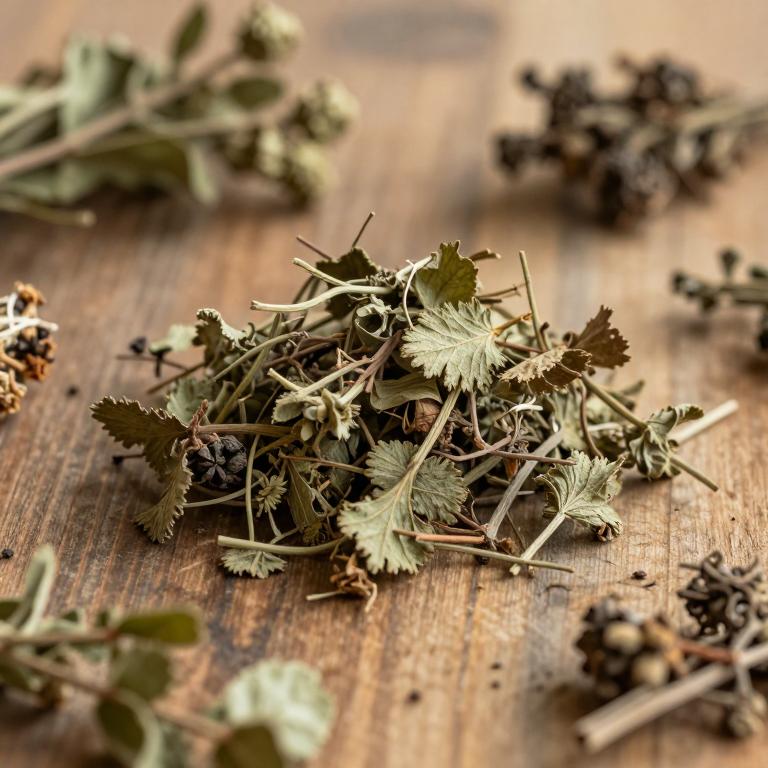
Names and Synonyms
Scientific Names
Accepted name
Brachypterum eriocarpumSynonyms
- Solori eriocarpa
- Solori pseudorobusta
- Brachypterum pseudorobustum
- Derris pseudorobusta
- Derris eriocarpa
Sources: Wikidata
Taxonomical Classification
This plant belongs to the kingdom Plantae and is classified under the phylum Streptophyta and class Equisetopsida. Within the subclass Magnoliidae, it is situated in the order Fabales and the family Fabaceae. Its specific taxonomic designation is within the genus Brachypterum, identifying it as Brachypterum eriocarpum.
| Rank | Classification |
|---|---|
| Kingdom | Plantae |
| Phylum | Streptophyta |
| Class | Equisetopsida |
| Subclass | Magnoliidae |
| Order | Fabales |
| Family | Fabaceae |
| Genus | Brachypterum |
Sources: The World Checklist of Vascular Plants (WCVP)
Distribution
This plant exhibits a wide geographical range across several distinct regions of Asia. In China, its presence is noted in both the South-Central and Southeast territories. Its distribution extends into the Indian Subcontinent, specifically within the regions of Assam and the East Himalaya. Furthermore, the species can be found within the Indo-China region, particularly in Laos. Collectively, these locations highlight the plant's ability to thrive in diverse subtropical and montane environments.
| Region | Area |
|---|---|
| China | China South-Central |
| China | China Southeast |
| Indian Subcontinent | Assam |
| Indian Subcontinent | East Himalaya |
| Indo-China | Laos |
| Indo-China | Myanmar |
| Indo-China | Vietnam |
Sources: The World Checklist of Vascular Plants (WCVP)
Plant Parts
Brachypterum eriocarpum has 1 reported plant parts identified across 2 scientific publications and several other databases that are studied for medicinal purposes. The most consistently reported plant part include stem.
| Plant part | Supporting sources | Consensus |
|---|---|---|
| Stem | 2 supporting sources | ★☆☆☆☆ |
Stem
- Fitoterapia
- Journal of Asian natural products research
Chemicals
Brachypterum eriocarpum has 5 reported phytochemicals identified across 2 scientific publications and several other databases. The most consistently reported chemicals include 4'-hydroxy-5,7-dimethoxy-6-(3-methyl-2-butenyl) isoflavone, Alpinumisoflavone, Robustic acid, Robustin, robustone.
| Chemical | Supporting sources | Consensus |
|---|---|---|
| 4'-hydroxy-5,7-dimethoxy-6-(3-methyl-2-butenyl) isoflavone | 1 supporting sources | ★☆☆☆☆ |
| Alpinumisoflavone | 1 supporting sources | ★☆☆☆☆ |
| Robustic acid | 1 supporting sources | ★☆☆☆☆ |
| Robustin | 1 supporting sources | ★☆☆☆☆ |
| robustone | 1 supporting sources | ★☆☆☆☆ |
4'-hydroxy-5,7-dimethoxy-6-(3-methyl-2-butenyl) isoflavone
- Fitoterapia
Alpinumisoflavone
- American journal of translational research
Robustic acid
- Journal of Asian natural products research
Robustin
- Journal of Asian natural products research
robustone
- Journal of Asian natural products research
Activities
Brachypterum eriocarpum has 1 reported activities identified across 2 scientific publications and several other databases. The most consistently reported activities include Antimicrobial.
| Activity | Supporting sources | Consensus |
|---|---|---|
| Antimicrobial | 1 supporting sources | ★☆☆☆☆ |
Antimicrobial
- Fitoterapia