Brachypodium hybridum
Brachypodium hybridum · Accepted scientific name
Scientific literature: Very Sparse (0 studies) · ★☆☆☆☆
Brachypodium hybridum serves as a vital model organism in plant biology research due to its well-characterized genome. Understanding its germination processes requires precise control over the physical state of the seeds used in experiments. Researchers must carefully select between various seed preparations, including husked, demembraned, dehusked-membraned, or dehusked-demembraned forms. Each of these preparation methods can significantly influence the speed and uniformity of early seedling development. Consequently, selecting the appropriate seed condition is essential for achieving reproducible results in developmental studies.
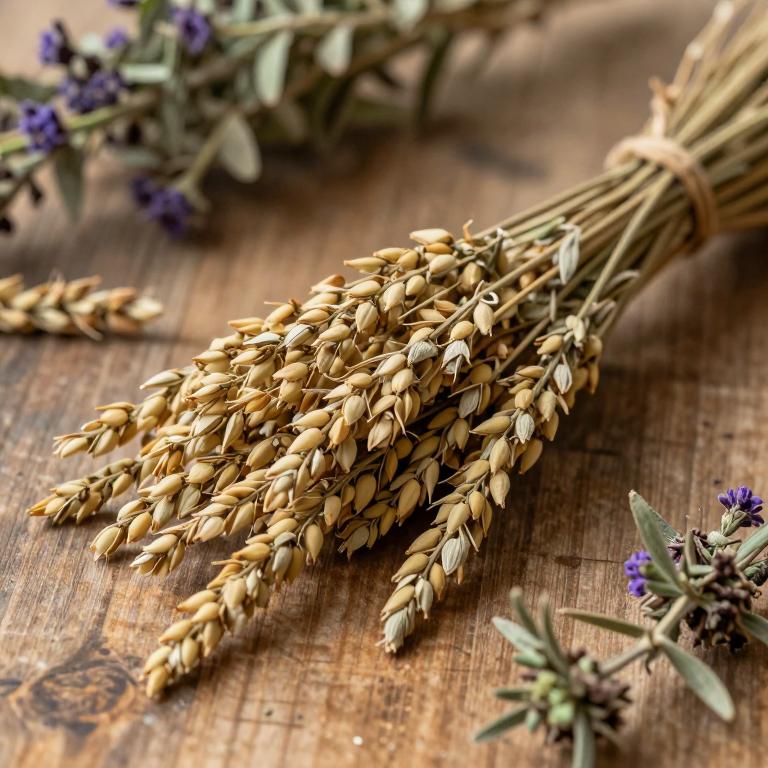
- Synonyms
- Brachypodium Asperum · Brachypodium Distachyon F. Pentastachyon · 18 more
- Common names
- Not available
- Family
- Poaceae
- Distribution
- Not available
- Plant Parts
- Not available
Classification
Common Names
Brachypodium hybridum is a unique botanical species recognized by several different names depending on the region. It is frequently referred to by its scientific designation, but it also carries the common name Brachypode hybride. In certain local contexts, you may encounter this plant known as kattaraluste. These varying names highlight the diverse linguistic ways that people identify this specific greenery. Understanding these relationships helps enthusiasts better categorize and discuss the plant in various settings.
Sources: Catalogue of Life (COL)
Synonyms
Brachypodium hybridum is a complex botanical subject that is frequently identified by several different scientific synonyms. Taxonomists have historically referred to this species as Brachypodium asperum in various botanical contexts. It is also closely associated with several forms of Brachypodium distachyon, including the varieties f. pentastachyon and f. platystachyon. Furthermore, the plant has been classified under the subspecies Brachypodium distachyon subsp. asperum. Even more specific designations, such as the subvariety Brachypodium distachyon subvar. asperum, reflect the intricate nomenclature used to describe its lineage.
Sources: The World Checklist of Vascular Plants (WCVP)
Taxonomy
Brachypodium hybridum is a fascinating species that belongs to the kingdom Plantae. Within this vast kingdom, it is specifically classified under the class Equisetopsida. This plant is a member of the Poales order, showcasing its distinct evolutionary lineage. It further belongs to the widely recognized family Poaceae, which includes many essential grasses. Finally, its specific biological identity is defined by its placement within the genus Brachypodium.
| Rank | Classification |
|---|---|
| Kingdom | Plantae |
| Phylum | Streptophyta |
| Class | Equisetopsida |
| Subclass | Magnoliidae |
| Order | Poales |
| Family | Poaceae |
| Genus | Brachypodium |
Sources: The World Checklist of Vascular Plants (WCVP)
Distribution
Geographic Regions
Brachypodium hybridum is a plant species with a diverse geographical presence spanning several key regions. Its primary distribution is centered throughout Africa, including specific reaches in Northern Africa such as Algeria, Libya, and Morocco. Beyond the mainland, the species extends its range into the Macaronesia region and the Canary Islands. It also maintains a presence in the Middle Atlantic Ocean, specifically appearing on the island of St. Helena. This wide-ranging habitat highlights the plant's ability to thrive across both continental and oceanic landscapes.
Sources: The World Checklist of Vascular Plants (WCVP)
Identification
Biological Activities
Compounds
Conditions
Brachypodium hybridum exhibits specific physiological responses influenced by the presence of husks and membranes on its grains. The inner membrane plays a major role in increasing the final germination of the species. While the husks do not significantly change the germination rate, they primarily serve to enhance seedling growth. Research shows that removing the inner membrane results in a significant reduction in both germination traits and seedling development. Ultimately, the structural components of the grain act to regulate germination behavior and promote more robust seedling growth.
Preparations
Brachypodium hybridum is prepared as husked, dehusked-membraned, and dehusked-demembraned for various germination assessments. Researchers also utilized grains where Brachypodium hybridum is prepared as dehusked-demembraned to test the effects of dormancy regulating compounds. Additionally, the study examined grains where Brachypodium hybridum is prepared as dehusked-membraned to observe how red-rich light influences germination. The experimental design further included samples where Brachypodium hybridum is prepared as husked-membraned to compare traits against demembraned versions. These different preparation methods, including grains that are demembraned, allowed for a clear distinction between the roles of the husk and the inner membrane.