Brachychiton populneum
Brachychiton populneus · Accepted scientific name
Scientific literature: Very Sparse (11 studies) · ★☆☆☆☆
Brachychiton populneus, scientifically known as Brachychiton populneus, is a versatile evergreen tree prized for its medicinal properties. Often called the Kurrajong, its leaves and bark contain bioactive compounds used in traditional medicine to treat inflammation, skin ailments, and digestive issues, making it a significant botanical resource in herbal pharmacology.
- Family
- Malvaceae
- Native range
- Europe
- Parts used
- Flower · Leaf
- Common names
- Bottletree · Kurrajong · 1 more
- Scientific synonyms
- Poecilodermis Populnea
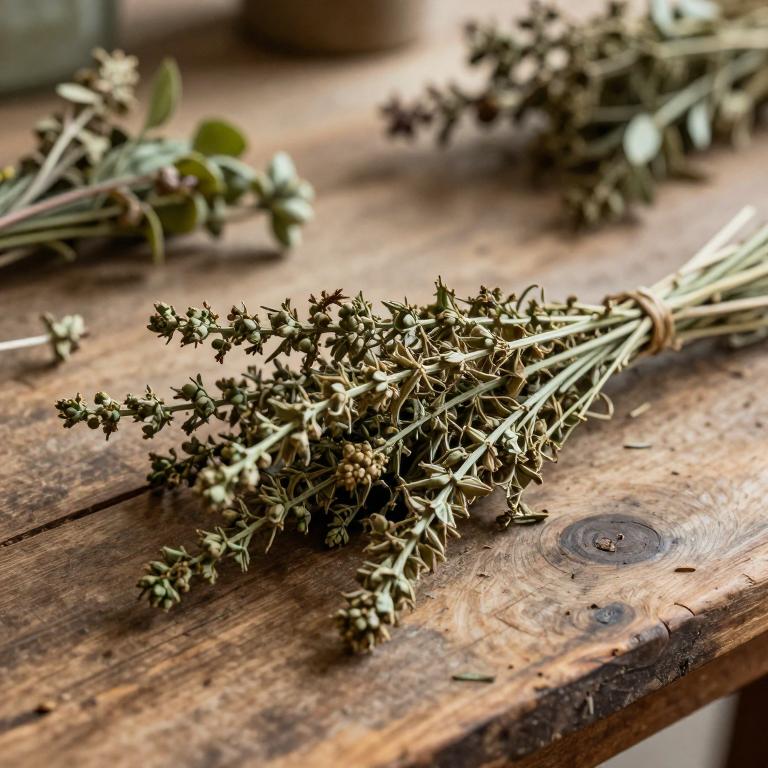
Names and Synonyms
Common Names
- bottletree
- kurrajong
- lacebark kurrajong
Scientific Names
Accepted name
Brachychiton populneusSynonyms
- Poecilodermis populnea
Regional and Traditional Names
Spanish:
- Brachychiton populneum
- árbol botella
- braquiquito
- kurrajong
- Brachichito
German:
- Pappelblättriger Brachychiton
- Brachychiton populneum
- Kurrajong-Flaschenbaum
French:
- Brachychiton populneum
- Brachychiton à feuilles de peuplier
Sources: Wikidata, Catalogue of Life
Taxonomical Classification
This plant belongs to the kingdom Plantae and is classified under the phylum Streptophyta within the class Equisetopsida. Following the subclass Magnoliidae, it is situated in the order Malvales and the family Malvaceae. Finally, it is identified by the genus Brachychiton, specifically as the species Brachychiton populneus.
| Rank | Classification |
|---|---|
| Kingdom | Plantae |
| Phylum | Streptophyta |
| Class | Equisetopsida |
| Subclass | Magnoliidae |
| Order | Malvales |
| Family | Malvaceae |
| Genus | Brachychiton |
Sources: The World Checklist of Vascular Plants (WCVP)
Distribution
This plant exhibits a wide-ranging geographical distribution that spans several continents and diverse climates. In Southwestern Europe, its presence can be specifically noted within the borders of Spain. Its range extends into Western Asia, where it is found among the East Aegean Islands. Within the Indian Subcontinent, the species is established in Pakistan. Finally, the plant has successfully spread to Australia, occurring in both New South Wales and Queensland.
| Region | Area |
|---|---|
| Southwestern Europe | Spain |
| Western Asia | East Aegean Is. |
| Indian Subcontinent | Pakistan |
| Australia | New South Wales |
| Australia | Queensland |
| Australia | Victoria |
| Southwestern U.S.A. | California |
| Caribbean | Trinidad-Tobago |
| Western South America | Ecuador |
Sources: The World Checklist of Vascular Plants (WCVP)
Botanical Identification
Ecology
The ecology of Brachychiton populneus is characterized by its ability to thrive in diverse, often arid or semi-arid environments where it serves as a hardy component of the landscape. This species demonstrates significant adaptability to varying environmental conditions, ranging from dry savannahs to rocky slopes. A defining aspect of its ecological distribution is its vertical positioning within mountainous or hilly terrains, where it maintains an elevational range that reaches a mean of 1500 m AMSL. This ability to inhabit higher altitudes suggests a physiological resilience to fluctuating temperature gradients and varying moisture availability. Its presence in these zones often dictates local microhabitats, providing shade and structural complexity that support various insect and avian life within its specific altitudinal niche.
- Elevational range mean:
- 1500 m AMSL
Life history
The life history of Brachychiton populneus is characterized by its nature as a perennial species, allowing it to persist in its environment over many years. Throughout its growth stages, the plant maintains an evergreen habit, retaining its foliage across different seasons rather than shedding it seasonally.
- Deciduousness :
- evergreen
- Lifecycle :
- perennial
Morphology
The morphology of Brachychiton populneus is characterized by its growth form as a woody tree that functions as an independent organism, meaning it is neither a parasite nor an epiphyte, but rather a terrestrial plant. It exhibits a self-supporting structure, lacking the climbing habits of vines or lianas. In terms of stature, the plant reaches significant dimensions, with a height typically ranging from a minimum of 3 m to a maximum of 20 m, maintaining an average plant height of approximately 18 m.
- Aquatic :
- terrestrial
- Climber :
- self-supporting
- Epiphyte :
- terrestrial
- Growth form :
- tree
- Parasite :
- independent
- Plant height max:
- 20 m
- Plant height mean:
- 18 m
- Plant height min:
- 3 m
- Woodiness :
- woody
Physiology
The physiology of Brachychiton populneus is characterized by specific morphological and metabolic parameters that govern its growth and resource acquisition. The plant utilizes a C3 photosynthetic pathway, a standard metabolic mechanism for carbon fixation that dictates its efficiency in varying light and temperature conditions. Its foliage exhibits measurable variability in dimensions, with leaf lengths ranging from a minimum of 5 cm to a maximum of 10 cm. Furthermore, the species does not function as a nitrogen fixer, meaning it relies on the availability of nitrogen within the soil rather than establishing symbiotic relationships to convert atmospheric nitrogen into a usable form.
- Leaf length max:
- 10 cm
- Leaf length min:
- 5 cm
- Nitrogen fixer :
- no
- Photosynthetic pathway :
- C3
Reproduction
The reproduction of Brachychiton populneus is characterized by the development of specialized fruit structures and specific seed morphological traits. The plant produces fruit categorized as a follicle, which serves as the vessel for its progeny. Within these fruits, the seeds exhibit a measurable range of mass, reflecting natural biological variation. The individual seed mass varies from a minimum of 0.0586 g to a maximum of 0.19 g, with the average seed mass recorded at approximately 0.111338333333333 g.
- Fruit type :
- follicle
- Seed mass max:
- 0.19 g
- Seed mass mean:
- 0.111338333333333 g
- Seed mass min:
- 0.0586 g
Sources: Global Inventory of Floras and Traits (GIFT)
Plant Parts
Brachychiton populneus has 3 reported plant parts identified across 3 scientific publications and several other databases that are studied for medicinal purposes. The most consistently reported plant part include flower, leaf, seed.
| Plant part | Supporting sources | Consensus |
|---|---|---|
| Flower | 1 supporting sources | ★☆☆☆☆ |
| Leaf | 1 supporting sources | ★☆☆☆☆ |
| Seed | 1 supporting sources | ★☆☆☆☆ |
Flower
- Inflammopharmacology
Leaf
- Inflammopharmacology
Seed
- Inflammopharmacology
Chemicals
Brachychiton populneus has 4 reported phytochemicals identified across 3 scientific publications and several other databases. The most consistently reported chemicals include SYRINGIC ACID, Salvianolic acid B, caffeic acid, trans-Ferulic Acid.
| Chemical | Supporting sources | Consensus |
|---|---|---|
| SYRINGIC ACID | 1 supporting sources | ★☆☆☆☆ |
| Salvianolic acid B | 1 supporting sources | ★☆☆☆☆ |
| caffeic acid | 1 supporting sources | ★☆☆☆☆ |
| trans-Ferulic Acid | 1 supporting sources | ★☆☆☆☆ |
SYRINGIC ACID
- Inflammopharmacology
Salvianolic acid B
- Inflammopharmacology
caffeic acid
- Inflammopharmacology
trans-Ferulic Acid
- Inflammopharmacology
Activities
Brachychiton populneus has 2 reported activities identified across 3 scientific publications and several other databases. The most consistently reported activities include Antioxidant, Neuroprotective.
| Activity | Supporting sources | Consensus |
|---|---|---|
| Antioxidant | 1 supporting sources | ★☆☆☆☆ |
| Neuroprotective | 1 supporting sources | ★☆☆☆☆ |
Antioxidant
- Inflammopharmacology
Neuroprotective
- Inflammopharmacology
Conditions
Brachychiton populneus has 2 reported investigations on conditions identified across 3 scientific publications and several other databases. The most consistently reported conditions include antioxidant, neuroprotective effects.
| Condition | Supporting sources | Consensus |
|---|---|---|
| Antioxidant | 1 supporting sources | ★☆☆☆☆ |
| Neuroprotective effects | 1 supporting sources | ★☆☆☆☆ |
Antioxidant
- Inflammopharmacology
Neuroprotective effects
- Inflammopharmacology
Preparations
Brachychiton populneus has 1 reported preparations identified across 3 scientific publications and several other databases. The most consistently reported preparations include leaf methanol extract.
| Preparation | Supporting sources | Consensus |
|---|---|---|
| Leaf methanol extract | 1 supporting sources | ★☆☆☆☆ |
Leaf methanol extract
- Inflammopharmacology