Bowdichia virgilioides
Bowdichia virgilioides · Accepted scientific name
Scientific literature: Very Sparse (34 studies) · ★☆☆☆☆
Bowdichia virgilioides, scientifically known as Bowdichia virgilioides, is a resilient medicinal shrub native to the diverse landscapes of Africa. Renowned for its therapeutic potential, this plant is traditionally utilized in various herbal remedies to address diverse ailments, offering a natural resource of significant interest to ethnobotanical research.
- Family
- Fabaceae
- Native range
- Southern America
- Parts used
- Root · Stem
- Common names
- Not available
- Scientific synonyms
- Sebipira Virgilioides · Bowdichia Virgilioides Var. Glabrata · 18 more
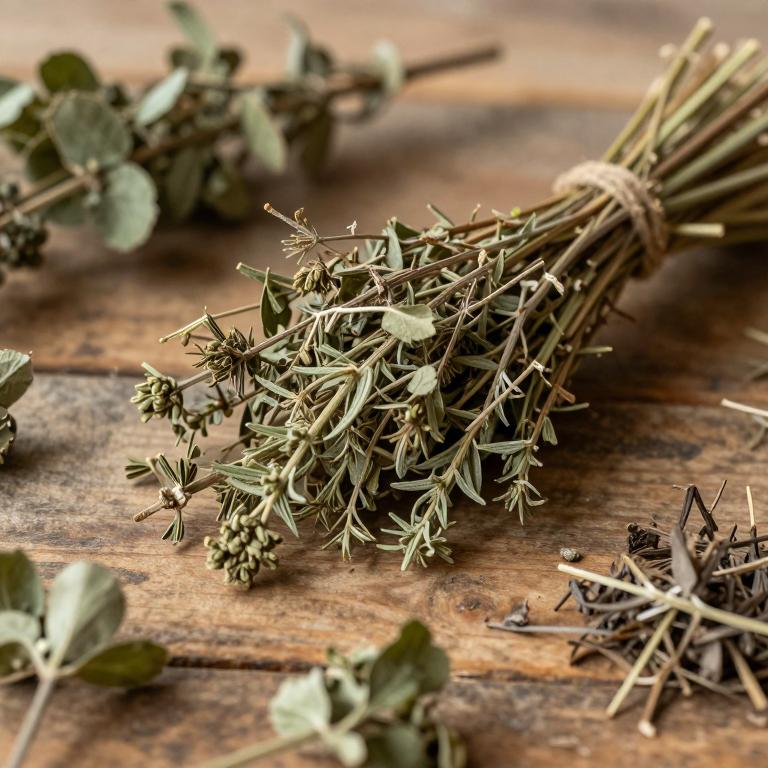
Names and Synonyms
Scientific Names
Accepted name
Bowdichia virgilioidesSynonyms
- Sebipira virgilioides
- Bowdichia virgilioides var. glabrata
- Bowdichia virgilioides var. tomentosa
- Bowdichia virgilioides f. villosa
- Sebipira major
- Sebipira ferruginea
- Bowdichia parvifolia
- Bowdichia pubescens
- Bowdichia kuhlmannii
- Bowdichia major
- Bowdichia major var. fruticosa
- Bowdichia brevipes
- Bowdichia densiflora
- Bowdichia ferruginea
- Bowdichia floribunda
- Bowdichia virgilioides var. ferruginea
- Bowdichia virgilioides f. ferruginea
- Bowdichia virgilioides f. major
- Bowdichia virgilioides var. pubescens
- Bowdichia sebipira
Regional and Traditional Names
Spanish:
- alcornoque
- alcornoque sabanero
- cornoco
- omonoes
- sucupira
Sources: Wikidata, Catalogue of Life
Taxonomical Classification
This plant, Bowdichia virgilioides, belongs to the kingdom Plantae and the phylum Streptophyta. It is classified under the class Equisetopsida and subclass Magnoliidae, falling within the order Fabales. Finally, it is a member of the family Fabaceae and the genus Bowdichia.
| Rank | Classification |
|---|---|
| Kingdom | Plantae |
| Phylum | Streptophyta |
| Class | Equisetopsida |
| Subclass | Magnoliidae |
| Order | Fabales |
| Family | Fabaceae |
| Genus | Bowdichia |
Sources: The World Checklist of Vascular Plants (WCVP)
Distribution
This plant exhibits a broad geographical distribution spanning several regions of the Americas. In Central America, its presence is specifically documented within the borders of Costa Rica. Moving into Northern South America, it can be found inhabiting the territories of Guyana, Suriname, and Venezuela. Furthermore, the species extends its reach into Western South America, where it is located in Bolivia. Together, these locations highlight the diverse tropical environments where the species thrives.
| Region | Area |
|---|---|
| Central America | Costa Rica |
| Northern South America | Guyana |
| Northern South America | Suriname |
| Northern South America | Venezuela |
| Western South America | Bolivia |
| Western South America | Colombia |
| Western South America | Peru |
| Brazil | Brazil West-Central |
| Brazil | Brazil Northeast |
| Brazil | Brazil Southeast |
Sources: The World Checklist of Vascular Plants (WCVP)
Botanical Identification
Ecology
The ecology of Bowdichia virgilioides is characterized by its ability to thrive across a diverse array of Brazilian biomes and soil types, including Carrasco, Cerrado (latu sensu), Floresta Ciliar or Galeria, Floresta Estacional Perenifólia, Floresta Estacional Semidecidual, and Restinga. This adaptability allows the species to occupy varied environmental niches, from riparian corridors to coastal restingas and seasonal forests. Its vertical distribution is relatively broad, occurring within an elevational range that begins at 90 m AMSL and reaches a maximum of 1120 m AMSL.
- Elevational range max:
- 1120 m AMSL
- Elevational range min:
- 90 m AMSL
- Habitat :
- Carrasco, Cerrado (lato sensu), Floresta Ciliar ou Galeria, Floresta Estacional Perenifólia, Floresta Estacional Semidecidual, Restinga
Life history
The life history of Bocconia virgilioides is characterized by its status as a perennial plant, allowing it to persist in its environment through multiple growing seasons. As a long-lived species, it establishes a stable presence within its ecological niche, often utilizing its robust root systems to support continued growth and reproduction over many years. This perennial nature enables the plant to withstand seasonal variations and re-emerge or continue its vegetative and reproductive cycles periodically, rather than completing its life cycle within a single year or two.
- Lifecycle :
- perennial
Morphology
The morphology of Bowdichia virgilioides is characterized by its robust growth form, which can manifest as both a shrub and a tree. It is a woody plant that reaches a maximum height of 30 meters, with a mean height typically around 20 meters. As a terrestrial species, it does not exhibit epiphytic behavior and is classified as an independent organism rather than a parasite. In terms of its structural habit, the plant is self-supporting, functioning as a self-supporting growth form rather than as a liana or a vine.
- Aquatic :
- terrestrial
- Climber :
- self-supporting
- Epiphyte :
- terrestrial
- Growth form :
- tree
- Growth form :
- shrub
- Parasite :
- independent
- Plant height max:
- 30 m
- Plant height mean:
- 20 m
- Woodiness :
- woody
Physiology
The physiology of Bowdichia virgilioides is characterized by a C3 photosynthetic pathway, which dictates its carbon fixation processes and metabolic efficiency. The plant exhibits a mean leaf size of 76.189 cm², contributing to a specific leaf area (SLA) with a mean value of 145.893 cm²/g, reflecting its leaf mass distribution and light interception strategies. Structural density is evidenced by a stem specific density (SSD) averaging 910 mg/cm³. Furthermore, the species functions as a nitrogen fixer, a critical physiological trait that enables it to enhance soil fertility and support its own nutritional requirements through biological nitrogen fixation.
- Leaf size mean:
- 76.189 cm²
- Nitrogen fixer :
- yes
- Photosynthetic pathway :
- C3
- Specific Leaf Area (SLA) mean:
- 145.893 cm²/g
- Stem specific density (SSD) mean:
- 910 mg/cm³
Reproduction
The reproduction of Bowdichia virgilioides is driven by a biotic pollination syndrome, specifically relying on insects to facilitate the transfer of pollen. This insect-mediated process ensures the successful fertilization necessary for seed development. The resulting seeds exhibit specific morphological characteristics regarding their weight, with a recorded minimum seed mass of 0.02383 g and a maximum seed mass of 0.02972 g. On average, the seed mass for this species is approximately 0.026775 g, a metric that reflects the energetic investment the plant places into its reproductive offspring to ensure successful germination and establishment.
- Pollination syndrome :
- insect
- Pollination syndrome :
- biotic
- Seed mass max:
- 0.02972 g
- Seed mass mean:
- 0.026775 g
- Seed mass min:
- 0.02383 g
Sources: Global Inventory of Floras and Traits (GIFT)
Plant Parts
Bowdichia virgilioides has 2 reported plant parts identified across 4 scientific publications and several other databases that are studied for medicinal purposes. The most consistently reported plant part include root, stem.
| Plant part | Supporting sources | Consensus |
|---|---|---|
| Root | 2 supporting sources | ★☆☆☆☆ |
| Stem | 2 supporting sources | ★☆☆☆☆ |
Root
- Fitoterapia
- Journal of intercultural ethnopharmacology
Stem
- Natural product letters
- Journal of ethnopharmacology
Chemicals
Bowdichia virgilioides has 8 reported phytochemicals identified across 4 scientific publications and several other databases. The most consistently reported chemicals include Lupeol, Isoquercetin, Lupeol acetate, Ormosanine, STIGMASTEROL.
| Chemical | Supporting sources | Consensus |
|---|---|---|
| Lupeol | 2 supporting sources | ★☆☆☆☆ |
| Isoquercetin | 1 supporting sources | ★☆☆☆☆ |
| Lupeol acetate | 1 supporting sources | ★☆☆☆☆ |
| Ormosanine | 1 supporting sources | ★☆☆☆☆ |
| STIGMASTEROL | 1 supporting sources | ★☆☆☆☆ |
| Sitosterol | 1 supporting sources | ★☆☆☆☆ |
| betulinic acid | 1 supporting sources | ★☆☆☆☆ |
| isocordoin | 1 supporting sources | ★☆☆☆☆ |
Lupeol
- Natural product letters
- Life (Basel, Switzerland)
Isoquercetin
- Life (Basel, Switzerland)
Lupeol acetate
- Natural product letters
Ormosanine
- Life (Basel, Switzerland)
STIGMASTEROL
- Natural product letters
Sitosterol
- Natural product letters
betulinic acid
- Dr. Duke
isocordoin
- Life (Basel, Switzerland)
Activities
Bowdichia virgilioides has 19 reported activities identified across 4 scientific publications and several other databases. The most consistently reported activities include Anthelmintic, AntiHIV, Antibacterial, Anticancer, Anticarcinomic.
| Activity | Supporting sources | Consensus |
|---|---|---|
| Anthelmintic | 1 supporting sources | ★☆☆☆☆ |
| AntiHIV | 1 supporting sources | ★☆☆☆☆ |
| Antibacterial | 1 supporting sources | ★☆☆☆☆ |
| Anticancer | 1 supporting sources | ★☆☆☆☆ |
| Anticarcinomic | 1 supporting sources | ★☆☆☆☆ |
| Antiedemic | 1 supporting sources | ★☆☆☆☆ |
| Antihyperglycemic | 1 supporting sources | ★☆☆☆☆ |
| Antiinflammatory | 1 supporting sources | ★☆☆☆☆ |
| Antileukemic | 1 supporting sources | ★☆☆☆☆ |
| Antimalarial | 1 supporting sources | ★☆☆☆☆ |
Anthelmintic
- Dr. Duke
AntiHIV
- Dr. Duke
Antibacterial
- Dr. Duke
Anticancer
- Dr. Duke
Anticarcinomic
- Dr. Duke
Antiedemic
- Dr. Duke
Antihyperglycemic
- Journal of intercultural ethnopharmacology
Antiinflammatory
- Dr. Duke
Antileukemic
- Dr. Duke
Antimalarial
- Dr. Duke
Conditions
Bowdichia virgilioides has 2 reported investigations on conditions identified across 4 scientific publications and several other databases. The most consistently reported conditions include hyperglycemia, malaria.
| Condition | Supporting sources | Consensus |
|---|---|---|
| Hyperglycemia | 1 supporting sources | ★☆☆☆☆ |
| Malaria | 1 supporting sources | ★☆☆☆☆ |
Hyperglycemia
- Journal of intercultural ethnopharmacology
Malaria
- Journal of ethnopharmacology
Preparations
Bowdichia virgilioides has 3 reported preparations identified across 4 scientific publications and several other databases. The most consistently reported preparations include ethanolic stembark extracts, methanolic extract of Bowdichia virgilioides root bark, stem bark.
| Preparation | Supporting sources | Consensus |
|---|---|---|
| Ethanolic stembark extracts | 1 supporting sources | ★☆☆☆☆ |
| Methanolic extract of bowdichia virgilioides root bark | 1 supporting sources | ★☆☆☆☆ |
| Stem bark | 1 supporting sources | ★☆☆☆☆ |
Ethanolic stembark extracts
- Journal of ethnopharmacology
Methanolic extract of bowdichia virgilioides root bark
- Journal of intercultural ethnopharmacology
Stem bark
- Natural product letters