Bouvardia ternifolia
Bouvardia ternifolia · Accepted scientific name
Scientific literature: Very Sparse (8 studies) · ★☆☆☆☆
, scientifically known as Bouvardia ternifolia, is a versatile medicinal shrub native to the tropical Americas. Widely used in traditional folk medicine, this plant is celebrated for its therapeutic properties, particularly in treating digestive issues, skin conditions, and inflammation. Its unique chemical profile offers significant potential for modern pharmacology.
- Family
- Not available
- Native range
- Northern America
- Parts used
- Flower · Leaf
- Common names
- Not available
- Scientific synonyms
- Not available
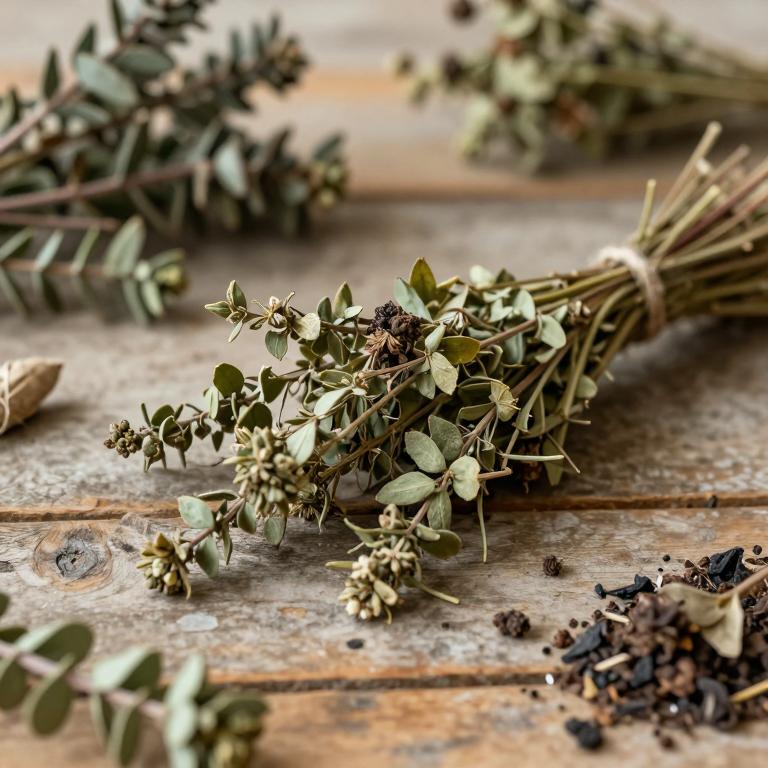
Names and Synonyms
Scientific Names
Accepted name
Bouvardia ternifoliaSources: Wikidata
Distribution
This plant is found across several distinct regions of North America. In the Southwestern United States, its presence is specifically noted in Arizona. Moving through the South-Central United States, it can be located in both New Mexico and Texas. Its range extends significantly into Mexico, where it inhabits the central regions. Finally, the species is also distributed throughout Northeastern Mexico.
| Region | Area |
|---|---|
| Southwestern U.S.A. | Arizona |
| South-Central U.S.A. | New Mexico |
| South-Central U.S.A. | Texas |
| Mexico | Mexico Central |
| Mexico | Mexico Northeast |
| Mexico | Mexico Gulf |
| Mexico | Mexico Northwest |
| Mexico | Mexico Southwest |
| Central America | Honduras |
Sources: The World Checklist of Vascular Plants (WCVP)
Botanical Identification
Life history
The life history of Bouvardia ternifolia is characterized by its status as a perennial plant, ensuring its persistence across multiple growing seasons. In terms of its structural growth habit and ecological classification, it exhibits characteristics of both a phanerophyte and a nanophanerophyte, indicating a life form where the permanent shoot system is held above the ground level, though often remaining relatively low or compact in stature.
- Life form :
- nanophanerophyte
- Life form :
- phanerophyte
- Lifecycle :
- perennial
Morphology
The morphology of Bouvardia ternifolia is characterized by its growth form as a woody shrub, exhibiting a sturdy and self-supporting structural habit. It is classified as a terrestrial plant, meaning it grows in soil rather than occupying aquatic or epiphytic niches. In terms of its climbing capacity, the plant is self-supporting and does not function as an obligatory or facultative liana or vine. Furthermore, it is an independent organism, showing no parasitic tendencies toward other plants.
- Aquatic :
- terrestrial
- Climber :
- self-supporting
- Epiphyte :
- terrestrial
- Growth form :
- shrub
- Parasite :
- independent
- Woodiness :
- woody
Sources: Global Inventory of Floras and Traits (GIFT)
Plant Parts
Bouvardia ternifolia has 4 reported plant parts identified across 4 scientific publications and several other databases that are studied for medicinal purposes. The most consistently reported plant part include flower, leaf, root, stem.
| Plant part | Supporting sources | Consensus |
|---|---|---|
| Flower | 1 supporting sources | ★☆☆☆☆ |
| Leaf | 1 supporting sources | ★☆☆☆☆ |
| Root | 1 supporting sources | ★☆☆☆☆ |
| Stem | 1 supporting sources | ★☆☆☆☆ |
Flower
- Microbial ecology
Leaf
- Microbial ecology
Root
- Microbial ecology
Stem
- Microbial ecology
Conditions
Bouvardia ternifolia has 4 reported investigations on conditions identified across 4 scientific publications and several other databases. The most consistently reported conditions include apoptosis, inflammation, neurodegenerative diseases, oxidative stress.
| Condition | Supporting sources | Consensus |
|---|---|---|
| Apoptosis | 1 supporting sources | ★☆☆☆☆ |
| Inflammation | 1 supporting sources | ★☆☆☆☆ |
| Neurodegenerative diseases | 1 supporting sources | ★☆☆☆☆ |
| Oxidative stress | 1 supporting sources | ★☆☆☆☆ |
Apoptosis
- Frontiers in pharmacology
Inflammation
- Frontiers in pharmacology
Neurodegenerative diseases
- Frontiers in pharmacology
Oxidative stress
- Frontiers in pharmacology
Preparations
Bouvardia ternifolia has 2 reported preparations identified across 4 scientific publications and several other databases. The most consistently reported preparations include hexane extract, methanol extract.
| Preparation | Supporting sources | Consensus |
|---|---|---|
| Hexane extract | 1 supporting sources | ★☆☆☆☆ |
| Methanol extract | 1 supporting sources | ★☆☆☆☆ |
Hexane extract
- Phytomedicine : international journal of phytotherapy and phytopharmacology
Methanol extract
- Phytomedicine : international journal of phytotherapy and phytopharmacology