Boscia integrifolia
Boscia integrifolia · Accepted scientific name
Scientific literature: Very Sparse (0 studies) · ★☆☆☆☆
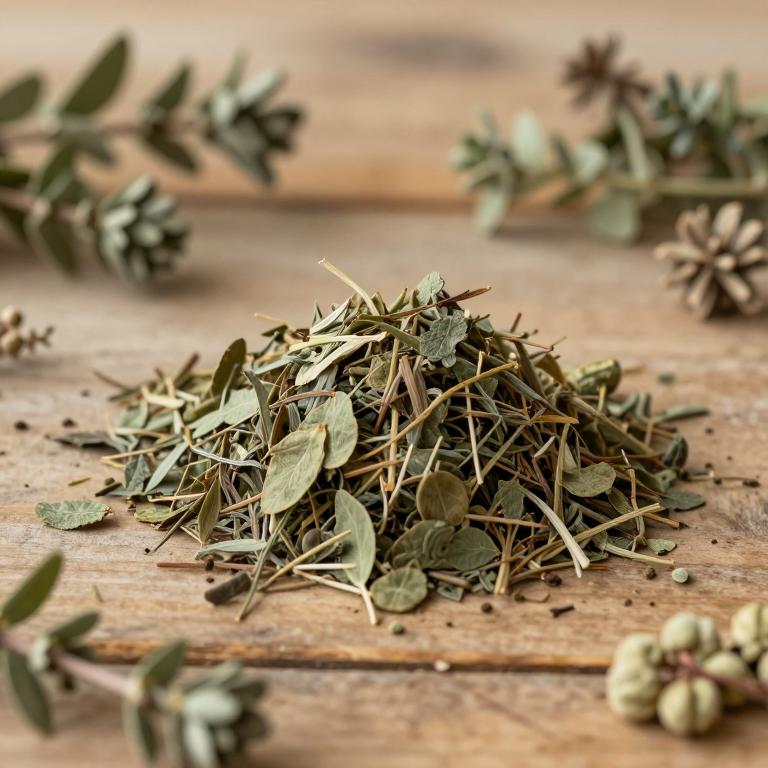
Boscia integrifolia is a resilient shrub native to the arid landscapes of Southern Africa. This plant is highly valued in traditional medicine for its diverse range of therapeutic properties. Various preparations are commonly utilized, including concentrated extracts and finely milled plant powders. These forms allow for the effective application of its bioactive compounds in different medicinal contexts. Understanding its traditional uses provides valuable insight into the botanical richness of its natural habitat.
- Synonyms
- Podoria Angustifolia · Boscia Caloneura · 10 more
- Common names
- Not available
- Family
- Capparaceae
- Distribution
- Not available
- Plant Parts
- Not available
Classification
Synonyms
Boscia integrifolia is a taxonomically complex species that has been identified under several different names throughout botanical history. It is closely associated with the synonym Boscia angustifolia, which encompasses various forms of the plant. This relationship extends to specific varieties, including Boscia angustifolia var. corymbosa and Boscia angustifolia var. reticulata. Furthermore, the species has been previously classified as Boscia caloneura and Boscia corymbosa in different scientific contexts. Understanding these overlapping synonyms is essential for accurately identifying the plant within its diverse ecological range.
Sources: The World Checklist of Vascular Plants (WCVP)
Taxonomy
Boscia integrifolia belongs to the vast kingdom Plantae, serving as a fascinating example of botanical diversity. Within this kingdom, it is classified under the class Equisetopsida and falls into the order Brassicales. The plant is further categorized into the family Capparaceae, which highlights its specific evolutionary lineage. It is a distinguished member of the genus Boscia, sharing structural characteristics with its close relatives. Through these hierarchical relationships, the biological identity of this species is clearly defined.
| Rank | Classification |
|---|---|
| Kingdom | Plantae |
| Phylum | Streptophyta |
| Class | Equisetopsida |
| Subclass | Magnoliidae |
| Order | Brassicales |
| Family | Capparaceae |
| Genus | Boscia |
Sources: The World Checklist of Vascular Plants (WCVP)
Distribution
Geographic Regions
Boscia integrifolia is a resilient species with a broad geographic footprint across the African continent. It is notably prevalent throughout East Tropical Africa, where it can be found thriving in Kenya, Tanzania, and Uganda. Beyond the eastern regions, the plant also extends its reach into Northeast Tropical Africa. Specifically, its distribution includes significant populations within the territories of Chad and Eritrea. This wide range highlights the plant's ability to adapt to various ecological niches across these diverse landscapes.
Sources: The World Checklist of Vascular Plants (WCVP)
Identification
Morphology
Boscia integrifolia is a self-supporting plant that typically takes the form of a tree. It is characterized by its modest stature, reaching a maximum height of approximately 7.5 meters. More precise measurements indicate that its growth can extend to a limit of 7.62 meters. This sturdy growth habit allows it to stand firmly within its natural habitat.
Sources: Global Inventory of Floras and Traits (GIFT)
Biological Activities
Compounds
Conditions
Boscia integrifolia is not mentioned in the provided abstract as a plant that treats α-amylase activity. Instead, the research focuses on the inhibitory effects of several other African medicinal plants, specifically Combretum glutinosum, Ziziphus mauritiana, Gymnosporia senegalensis, Boscia senegalensis, and Citrullus colocynthis. While Boscia senegalensis is identified as one of the plants used to maximize α-amylase inhibition, no data is provided regarding Boscia integrifolia. Consequently, the specific relationship between Boscia integrifolia and the treatment of α-amylase activity cannot be established from this text. The study concludes that the identified plants, rather than Boscia integrifolia, offer potential for developing hypoglycemic bakery products.
Preparations
Boscia integrifolia is prepared as extracts to maximize bioactive properties in medicinal applications. This plant is also processed into plant powders for use in functional food formulations. The extraction process specifically focuses on optimizing parameters to enhance specific biological activities. Similarly, the use of plant powders allows for the enrichment of dietary products like bread dough. These two preparation methods serve as primary ways to utilize the plant's therapeutic potential.