Pink Boronia
Boronia pinnata · Accepted scientific name
Scientific literature: Very Sparse (8 studies) · ★☆☆☆☆
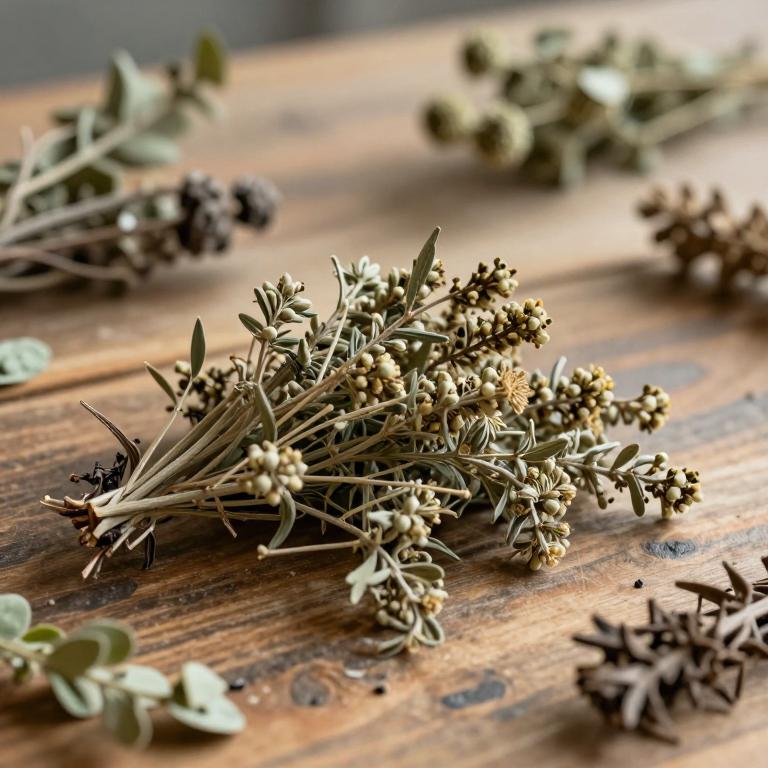
Pink Boronia, scientifically known as Boronia pinnata, is a delicate Australian shrub cherished for its fragrant, rosy blooms. Native to eastern regions, this woody perennial features pinnate leaves and striking pink flowers. Beyond its ornamental beauty, it holds traditional significance, offering a sensory connection to the unique botanical landscape.
- Family
- Rutaceae
- Native range
- Australasia
- Parts used
- Root
- Common names
- Pink Boronia
- Scientific synonyms
- Boronia Pinnata Var. Alba · Boronia Pinnata Var. Pilosa
Names and Synonyms
Common Names
- Pink Boronia
Scientific Names
Accepted name
Boronia pinnataSynonyms
- Boronia pinnata var. alba
- Boronia pinnata var. pilosa
Sources: Wikidata, Catalogue of Life
Taxonomical Classification
This plant belongs to the kingdom Plantae within the phylum Streptophyta and the class Equisetopsida. It is further classified under the subclass Magnoliidae in the order Sapindales and the family Rutaceae. Finally, its taxonomic identity is defined by the genus Boronia.
| Rank | Classification |
|---|---|
| Kingdom | Plantae |
| Phylum | Streptophyta |
| Class | Equisetopsida |
| Subclass | Magnoliidae |
| Order | Sapindales |
| Family | Rutaceae |
| Genus | Boronia |
Sources: The World Checklist of Vascular Plants (WCVP)
Distribution
This plant is a species native to the Australian continent. Specifically, its natural habitat is located within the state of New South Wales. Within this region, it can be found growing in its characteristic environmental niche. The geographical range of this medicinal herb is quite localized to this particular area. Consequently, its wild distribution is strictly limited to these specific Australian territories.
| Region | Area |
|---|---|
| Australia | New South Wales |
Sources: The World Checklist of Vascular Plants (WCVP)
Botanical Identification
Life history
The life history of Boronia pinnata is characterized by its status as a perennial plant, allowing it to persist through multiple growing seasons and establish a long-term presence in its natural habitat. Throughout its lifespan, the species maintains an evergreen habit, ensuring that its foliage remains functional and green year-round rather than shedding seasonally. This combination of a perennial lifecycle and evergreen deciduousness enables the plant to sustain continuous metabolic activity and maintain structural stability across varying environmental conditions.
- Deciduousness :
- evergreen
- Lifecycle :
- perennial
Morphology
The morphology of Boronia pinnata is characterized by its growth form as a woody shrub, exhibiting a self-supporting structure that does not rely on climbing. As a terrestrial plant, it functions as an independent organism rather than a parasite or an epiphyte. The plant typically reaches a mean height of 2 meters, with its stature ranging from a minimum of 0.5 meters to a maximum height of 1.5 meters.
- Aquatic :
- terrestrial
- Climber :
- self-supporting
- Epiphyte :
- terrestrial
- Growth form :
- shrub
- Parasite :
- independent
- Plant height max:
- 1.5 m
- Plant height mean:
- 2 m
- Plant height min:
- 0.5 m
- Woodiness :
- woody
Physiology
The physiology of Boronia pinnata is characterized by a C3 photosynthetic pathway, which dictates its metabolic approach to carbon fixation and energy production. The plant's vegetative architecture is defined by relatively small, specialized foliage, with leaf lengths ranging from a minimum of 0.6 cm to a maximum of 2 cm. These leaves are notably slender, exhibiting a width that varies between a minimum of 0.1 cm and a maximum of 0.3 cm. Furthermore, the species does not function as a nitrogen fixer, meaning it lacks the symbiotic relationship with diazotrophic bacteria necessary to convert atmospheric nitrogen into a usable form, relying instead on the availability of nitrogen within the soil substrate.
- Leaf length max:
- 2 cm
- Leaf length min:
- 0.6 cm
- Leaf width max:
- 0.3 cm
- Leaf width min:
- 0.1 cm
- Nitrogen fixer :
- no
- Photosynthetic pathway :
- C3
Reproduction
The reproduction of Boronia pinnata is characterized by a specific flowering phenology and distinct seed characteristics. The plant's flowering period is extensive and variable, typically beginning in June and continuing through until February. Regarding its reproductive output, the seeds produced by the species are exceptionally small and uniform in size; the seed mass remains constant across all recorded measurements, with a mean, maximum, and minimum value of 0.001502 g.
- Flowering time :
- Jun
- Flowering time :
- Feb
- Seed mass mean:
- 0.001502 g
Sources: Global Inventory of Floras and Traits (GIFT)
Plant Parts
Boronia pinnata has 1 reported plant parts identified across 1 scientific publications and several other databases that are studied for medicinal purposes. The most consistently reported plant part include root.
| Plant part | Supporting sources | Consensus |
|---|---|---|
| Root | 1 supporting sources | ★☆☆☆☆ |
Root
- Journal of natural products
Chemicals
Boronia pinnata has 6 reported phytochemicals identified across 1 scientific publications and several other databases. The most consistently reported chemicals include Boropinal C, Boropinan, Boropinol A, Boropinol C, Pinolinone.
| Chemical | Supporting sources | Consensus |
|---|---|---|
| Boropinal C | 1 supporting sources | ★☆☆☆☆ |
| Boropinan | 1 supporting sources | ★☆☆☆☆ |
| Boropinol A | 1 supporting sources | ★☆☆☆☆ |
| Boropinol C | 1 supporting sources | ★☆☆☆☆ |
| Pinolinone | 1 supporting sources | ★☆☆☆☆ |
| boropinic acid | 1 supporting sources | ★☆☆☆☆ |
Boropinal C
- Cancer letters
Boropinan
- Journal of natural products
Boropinol A
- Cancer letters
Boropinol C
- Cancer letters
Pinolinone
- Journal of natural products
boropinic acid
- Journal of natural products
Conditions
Boronia pinnata has 1 reported investigations on conditions identified across 1 scientific publications and several other databases. The most consistently reported conditions include cancer.
| Condition | Supporting sources | Consensus |
|---|---|---|
| Cancer | 1 supporting sources | ★☆☆☆☆ |
Cancer
- Journal of natural products