White Alling
Bontia daphnoides · Accepted scientific name
Scientific literature: Very Sparse (13 studies) · ★☆☆☆☆
White Alliing, scientifically known as Bontia daphnoides, is a remarkable medicinal plant valued for its diverse therapeutic properties. Renowned in traditional healing, it contains potent bioactive compounds used to treat various ailments. Understanding its chemical profile and applications is essential for exploring its significant potential in modern pharmacology.
- Family
- Scrophulariaceae
- Native range
- Northern America
- Parts used
- Not available
- Common names
- White Alling · Wild Olive
- Scientific synonyms
- Bontia Daphnoides Var. Minor · Regina Gallorum · 1 more
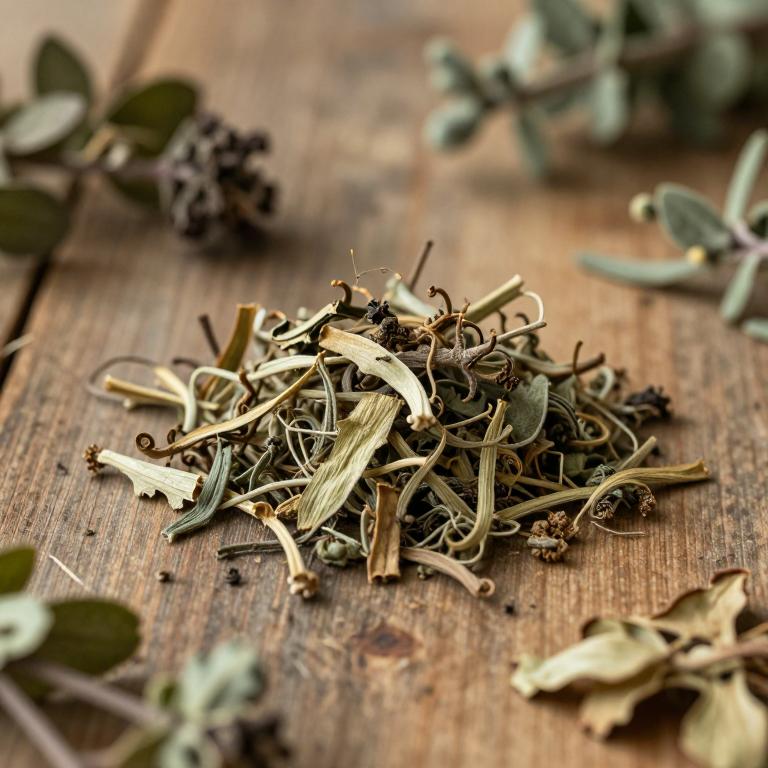
Names and Synonyms
Common Names
- White Alling
- wild olive
Scientific Names
Accepted name
Bontia daphnoidesSynonyms
- Bontia daphnoides var. minor
- Regina gallorum
- Bontia minor
Regional and Traditional Names
Spanish:
- aceituna americana
- olivo bastardo
French:
- olivier bâtard
- Olivier pays
Sources: Wikidata, Catalogue of Life
Taxonomical Classification
This plant belongs to the kingdom Plantae and is classified under the phylum Streptophyta within the class Equisetopsida. As a member of the subclass Magnoliidae and the order Lamiales, it is further categorized into the family Scrophulariaceae. Its specific taxonomic designation is placed within the genus Bontia.
| Rank | Classification |
|---|---|
| Kingdom | Plantae |
| Phylum | Streptophyta |
| Class | Equisetopsida |
| Subclass | Magnoliidae |
| Order | Lamiales |
| Family | Scrophulariaceae |
| Genus | Bontia |
Sources: The World Checklist of Vascular Plants (WCVP)
Distribution
This plant is primarily found within specific regions of the southeastern United States and the Caribbean. In North America, its distribution is notably limited to the state of Florida. Its range extends significantly into the Caribbean islands, where it can be located in the Bahamas and the Cayman Islands. Furthermore, the species is documented growing in Cuba and on the island of Aruba. These locations represent the primary geographical areas where the plant naturally occurs.
| Region | Area |
|---|---|
| Southeastern U.S.A. | Florida |
| Caribbean | Aruba |
| Caribbean | Bahamas |
| Caribbean | Cayman Is. |
| Caribbean | Cuba |
| Caribbean | Dominican Republic |
| Caribbean | Haiti |
| Caribbean | Jamaica |
| Caribbean | Leeward Is. |
| Caribbean | Netherlands Antilles |
Sources: The World Checklist of Vascular Plants (WCVP)
Botanical Identification
Life history
The life history of Bontia daphnoides is characterized by a perennial lifecycle, allowing the plant to persist in its environment over multiple growing seasons. As a long-lived species, it does not follow the rapid completion of a single season seen in annuals or the two-year cycle of biennials, but instead establishes a sustained presence through continuous vegetative growth and periodic reproductive phases. This perennial nature enables the plant to accumulate biomass and resources over time, enhancing its ability to withstand seasonal fluctuations and ensuring long-term survival within its ecological niche.
- Lifecycle :
- perennial
Morphology
The morphology of Bontia daphnoides is characterized by a growth form classified as a shrub or subshrub, exhibiting a non-woody structure throughout its development. It functions as an independent organism, neither acting as an obligatory nor facultative parasite, and maintains a terrestrial existence rather than an epiphytic or aquatic lifestyle. While its growth habit can be described as self-supporting, it lacks the specialized climbing mechanisms associated with lianas or vines, instead maintaining a stable, upright presence within its terrestrial habitat.
- Aquatic :
- terrestrial
- Climber :
- self-supporting
- Epiphyte :
- terrestrial
- Growth form :
- shrub
- Parasite :
- independent
- Woodiness :
- non-woody
Sources: Global Inventory of Floras and Traits (GIFT)
Chemicals
Bontia daphnoides has 5 reported phytochemicals identified across 0 scientific publications and several other databases. The most consistently reported chemicals include 8-Acetylharpagide, Apigenin 7-O-glucuronide, Crenatoside, Dehydromyoporone, Flavonoids.
| Chemical | Supporting sources | Consensus |
|---|---|---|
| 8-Acetylharpagide | 1 supporting sources | ★☆☆☆☆ |
| Apigenin 7-O-glucuronide | 1 supporting sources | ★☆☆☆☆ |
| Crenatoside | 1 supporting sources | ★☆☆☆☆ |
| Dehydromyoporone | 1 supporting sources | ★☆☆☆☆ |
| Flavonoids | 1 supporting sources | ★☆☆☆☆ |
8-Acetylharpagide
- RSC advances
Apigenin 7-O-glucuronide
- RSC advances
Crenatoside
- RSC advances
Dehydromyoporone
- RSC advances
Flavonoids
- RSC advances
Activities
Bontia daphnoides has 2 reported activities identified across 0 scientific publications and several other databases. The most consistently reported activities include Antidiabetic, Antioxidant.
| Activity | Supporting sources | Consensus |
|---|---|---|
| Antidiabetic | 1 supporting sources | ★☆☆☆☆ |
| Antioxidant | 1 supporting sources | ★☆☆☆☆ |
Antidiabetic
- RSC advances
Antioxidant
- RSC advances
Conditions
Bontia daphnoides has 4 reported investigations on conditions identified across 0 scientific publications and several other databases. The most consistently reported conditions include diabetes mellitus, hypertension, jaundice, oxidative stress.
| Condition | Supporting sources | Consensus |
|---|---|---|
| Diabetes mellitus | 1 supporting sources | ★☆☆☆☆ |
| Hypertension | 1 supporting sources | ★☆☆☆☆ |
| Jaundice | 1 supporting sources | ★☆☆☆☆ |
| Oxidative stress | 1 supporting sources | ★☆☆☆☆ |
Diabetes mellitus
- RSC advances
Hypertension
- Journal of ethnobiology and ethnomedicine
Jaundice
- Journal of ethnobiology and ethnomedicine
Oxidative stress
- RSC advances
Preparations
Bontia daphnoides has 2 reported preparations identified across 0 scientific publications and several other databases. The most consistently reported preparations include hydroethanolic extract of B. daphnoides aerial parts, petals.
| Preparation | Supporting sources | Consensus |
|---|---|---|
| Hydroethanolic extract of b. daphnoides aerial parts | 1 supporting sources | ★☆☆☆☆ |
| Petals | 1 supporting sources | ★☆☆☆☆ |
Hydroethanolic extract of b. daphnoides aerial parts
- RSC advances
Petals
- Fitoterapia