red kapok tree
Bombax costatum · Accepted scientific name
Scientific literature: Very Sparse (2 studies) · ★☆☆☆☆
Red kapok tree, scientifically known as Bombax costatum, is a majestic tropical species valued for its profound medicinal properties. Renowned for its large, vibrant blossoms, the tree offers various therapeutic uses, ranging from treating inflammation to managing digestive issues. Its versatile parts serve as essential elements in traditional healing.
- Family
- Malvaceae
- Native range
- Africa
- Parts used
- Not available
- Common names
- Red Kapok Tree
- Scientific synonyms
- Bombax Angulicarpum Var. Andrieui · Bombax Costatum Var. Andrieui · 6 more
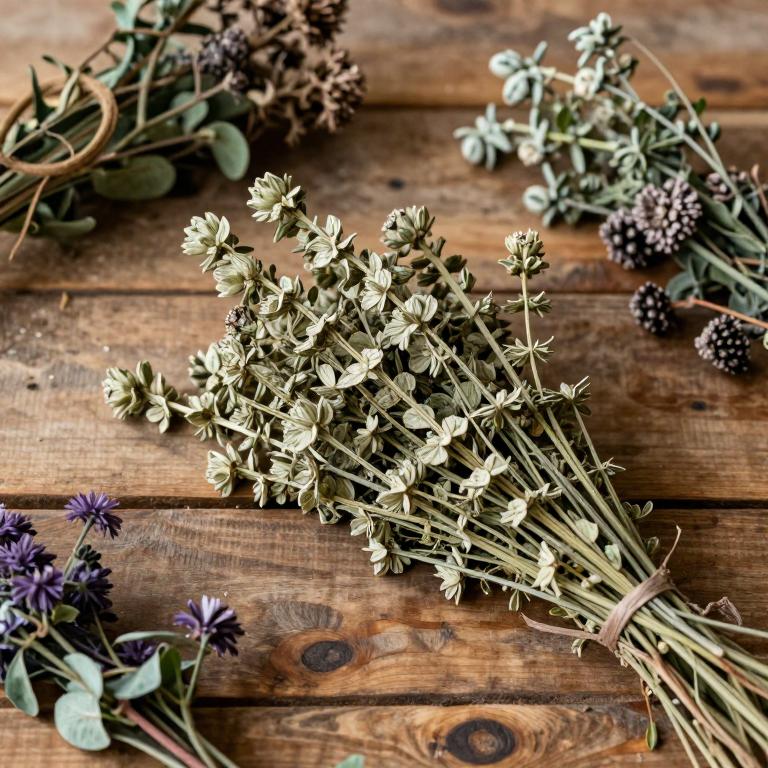
Names and Synonyms
Common Names
- red kapok tree
Scientific Names
Accepted name
Bombax costatumSynonyms
- Bombax angulicarpum var. andrieui
- Bombax costatum var. andrieui
- Bombax buonopozense var. vuilletii
- Bombax costatum var. houardii
- Bombax houardii
- Bombax andrieui
- Bombax angulicarpum var. houardii
- Bombax angulicarpum var. costatum
Sources: Wikidata, Catalogue of Life
Taxonomical Classification
This plant, Bombax costatum, belongs to the kingdom Plantae and the phylum Streptophyta. Within the class Equisetopsida and subclass Magnoliidae, it is classified under the order Malvales and the family Malvaceae. Finally, it is categorized under the genus Bombax.
| Rank | Classification |
|---|---|
| Kingdom | Plantae |
| Phylum | Streptophyta |
| Class | Equisetopsida |
| Subclass | Magnoliidae |
| Order | Malvales |
| Family | Malvaceae |
| Genus | Bombax |
Sources: The World Checklist of Vascular Plants (WCVP)
Distribution
This plant, Bombax costatum, exhibits a specific geographical distribution across the West Tropical Africa region. Its presence is documented in several countries, including Benin and Burkina Faso. The species can also be found extending through the coastal and inland territories of Gambia. Furthermore, the plant is established within the borders of Ghana. Finally, its range continues westward into Guinea-Bissau.
| Region | Area |
|---|---|
| West Tropical Africa | Benin |
| West Tropical Africa | Burkina |
| West Tropical Africa | Gambia |
| West Tropical Africa | Ghana |
| West Tropical Africa | Guinea-Bissau |
| West Tropical Africa | Guinea |
| West Tropical Africa | Ivory Coast |
| West Tropical Africa | Mali |
| West Tropical Africa | Mauritania |
| West Tropical Africa | Nigeria |
Sources: The World Checklist of Vascular Plants (WCVP)
Botanical Identification
Life history
The life history of Bombax costatum is characterized by its existence as a perennial species, allowing it to persist in its ecosystem through multiple growing seasons. As a phanerophyte, the plant maintains its photosynthetic organs on elevated structures, specifically developing into a large woody form where the buds are located well above the ground level. Its physiological rhythm is defined by a deciduous nature, meaning it undergoes a seasonal shedding of its foliage, a strategy often employed to manage water loss or respond to specific climatic shifts. Through these biological traits, the plant establishes a long-term presence in its habitat, transitioning through distinct vegetative and reproductive phases over its extended lifespan.
- Deciduousness :
- deciduous
- Life form :
- phanerophyte
- Lifecycle :
- perennial
Morphology
The morphology of Bombax costatum is characterized by a robust, woody growth form, primarily functioning as a self-supporting tree. As a terrestrial species, it is neither aquatic nor an epiphyte, growing independently without parasitic dependencies. The plant exhibits significant vertical development, with height measurements ranging from a minimum of approximately 3.05 meters to a maximum of 15.24 meters, though it can reach a mean height of 40 meters under optimal conditions. Being a self-supporting woody tree, it does not exhibit climbing habits such as lianas or vines, maintaining a stable and upright structural integrity.
- Aquatic :
- terrestrial
- Climber :
- self-supporting
- Epiphyte :
- terrestrial
- Growth form :
- tree
- Parasite :
- independent
- Plant height max:
- 15.24018532 m
- Plant height mean:
- 40 m
- Plant height min:
- 3.048037064 m
- Woodiness :
- woody
Physiology
The physiology of Bombax costatum is characterized by a standard C3 photosynthetic pathway, which governs its carbon fixation processes and metabolic efficiency under typical environmental conditions. In terms of nutrient cycling and symbiotic associations, the plant does not function as a nitrogen fixer, relying instead on the uptake of available nitrogen from the soil through its root system rather than through symbiotic relationships with diazotrophic bacteria.
- Nitrogen fixer :
- no
- Photosynthetic pathway :
- C3
Reproduction
The reproduction of Bombax costatum is characterized by the production of seeds that exhibit specific morphological and mass-related properties essential for its dispersal and germination success. Quantitative analysis of the seed characteristics reveals a relatively consistent mass profile among the produced seeds. The seed mass follows a narrow distribution, with a calculated mean mass of 0.063735 g. Within this population, the individual seed masses fluctuate between a minimum value of 0.05337 g and a maximum value of 0.0741 g. These precise mass metrics are indicative of the energetic investment made during the reproductive cycle, influencing the buoyancy and distribution patterns of the seeds within their natural habitat.
- Seed mass max:
- 0.0741 g
- Seed mass mean:
- 0.063735 g
- Seed mass min:
- 0.05337 g
Sources: Global Inventory of Floras and Traits (GIFT)
Chemicals
Bombax costatum has 2 reported phytochemicals identified across 0 scientific publications and several other databases. The most consistently reported chemicals include IRON, ZINC.
| Chemical | Supporting sources | Consensus |
|---|---|---|
| IRON | 1 supporting sources | ★☆☆☆☆ |
| ZINC | 1 supporting sources | ★☆☆☆☆ |
IRON
- Journal of agricultural and food chemistry
ZINC
- Journal of agricultural and food chemistry