Balsam Bog
Bolax gummifera · Accepted scientific name
Scientific literature: Very Sparse (3 studies) · ★☆☆☆☆
Balsam Bog, scientifically known as Bolax gummifera, is a remarkable medicinal plant revered for its potent healing properties. Renowned for its resinous exudates, it serves as a natural remedy for respiratory ailments and skin irritations. This botanical treasure offers profound therapeutic benefits, bridging traditional wisdom with modern herbal medicine.
- Family
- Apiaceae
- Native range
- Southern America
- Parts used
- Not available
- Common names
- Balsam Bog
- Scientific synonyms
- Azorella Columnifer · Hydrocotyle Gummifera · 3 more
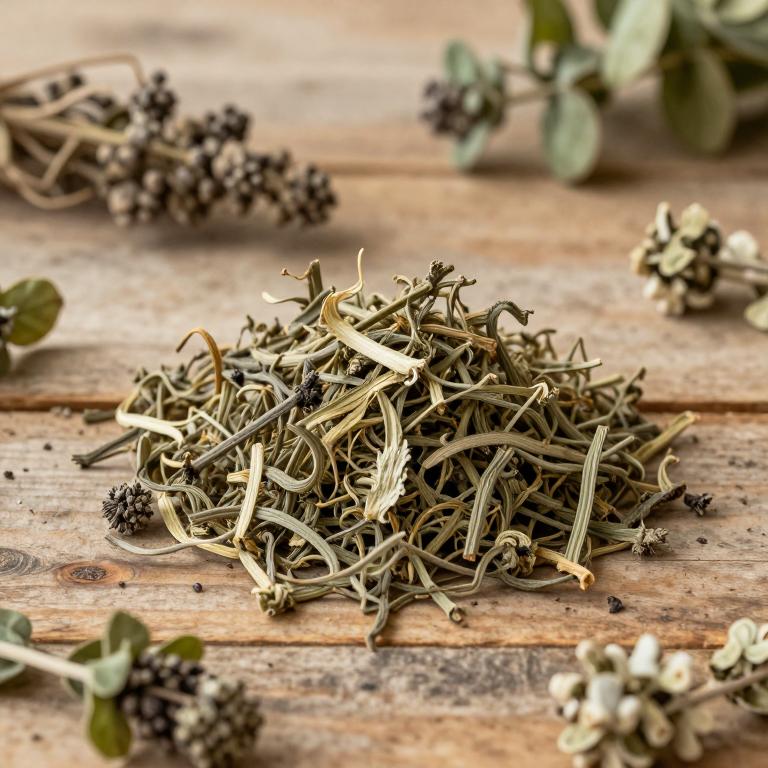
Names and Synonyms
Common Names
- Balsam Bog
Scientific Names
Accepted name
Bolax gummiferaSynonyms
- Azorella columnifer
- Hydrocotyle gummifera
- Bolax columnifera
- Caucalis gummifera
- Bolax complicata
Regional and Traditional Names
Spanish:
- Mogote
- Chareta
Sources: Wikidata, Catalogue of Life
Taxonomical Classification
This plant, known scientifically as Bolax gummifera, belongs to the kingdom Plantae and the phylum Streptophyta. It is classified under the class Equisetopsida and the subclass Magnoliidae within the order Apiales. Finally, it is a member of the family Apiaceae and falls under the genus Bolax.
| Rank | Classification |
|---|---|
| Kingdom | Plantae |
| Phylum | Streptophyta |
| Class | Equisetopsida |
| Subclass | Magnoliidae |
| Order | Apiales |
| Family | Apiaceae |
| Genus | Bolax |
Sources: The World Checklist of Vascular Plants (WCVP)
Distribution
This plant, known as Bolax gummifera, is primarily located within the southern regions of South America. Its distribution specifically extends into the southern parts of Argentina. Furthermore, it can be found throughout the southern reaches of Chile. The species also inhabits the Subantarctic Islands, particularly the Falkland Islands. Together, these areas define the limited geographical range where the plant naturally occurs.
| Region | Area |
|---|---|
| Southern South America | Argentina South |
| Southern South America | Chile South |
| Subantarctic Islands | Falkland Is. |
Sources: The World Checklist of Vascular Plants (WCVP)
Botanical Identification
Ecology
The ecology of Bolax gummifera is characterized by a vast altitudinal distribution that allows it to inhabit a diverse array of environmental conditions. It exhibits a broad elevational range, spanning from sea level at 0 m AMSL to high-altitude environments reaching a maximum of 3500 m AMSL. This extensive vertical gradient suggests that the species possesses significant ecological plasticity, enabling it to adapt to various temperature regimes, atmospheric pressures, and moisture levels found across different montane and lowland strata. Such a wide distribution facilitates its presence in multiple ecological niches, ranging from coastal or lowland plains to subalpine zones.
- Elevational range max:
- 3500 m AMSL
- Elevational range min:
- 0 m AMSL
Life history
The life history of Bolax gummifera is characterized by its nature as a perennial species, allowing the plant to persist through multiple growing seasons rather than completing its cycle within a single year. As a long-lived organism, it establishes a stable presence in its environment, undergoing various developmental stages including germination, vegetative growth, and reproductive phases over several years. This perennial lifecycle enables the plant to accumulate significant biomass and resources, which are essential for its survival and the eventual production of its characteristic resins.
- Lifecycle :
- perennial
Morphology
The morphology of Bolax gummifera is characterized by its diverse growth habits and structural adaptations. The plant exhibits a flexible ecological presence, ranging from aquatic and semiaquatic environments to terrestrial habitats. Its growth form is primarily categorized as a shrub or a herb, demonstrating a versatile physical structure. In terms of its climbing capabilities, the species is classified as a self-supporting climber, functioning as both a liana and a vine without being an obligatory climber. Structurally, the plant is non-woody in its constitution and maintains an independent lifestyle, functioning as an independent organism rather than a parasite. Furthermore, it is a terrestrial species rather than an epiphyte, grounding its biological processes within the soil of its native environment.
- Aquatic :
- terrestrial
- Climber :
- self-supporting
- Epiphyte :
- terrestrial
- Growth form :
- shrub
- Growth form :
- herb
- Parasite :
- independent
- Woodiness :
- non-woody
Reproduction
The reproduction of Bolax gummifera is characterized by a dioecious sexual reproduction strategy, meaning that individual plants are either male or female, necessitating cross-pollination between separate individuals to achieve fertilization. The plant produces seeds with a highly uniform mass, as indicated by a consistent seed mass of 0.00124 g across its minimum, mean, and maximum recorded values. Regarding the movement of its progeny, the species exhibits an anemochorous dispersal syndrome, utilizing wind as the primary mechanism to transport its lightweight seeds to new locations.
- Dispersal syndrome :
- anemochorous
- Reproduction sexual :
- dioecious
- Seed mass mean:
- 0.00124 g
Sources: Global Inventory of Floras and Traits (GIFT)
Activities
Bolax gummifera has 2 reported activities identified across 0 scientific publications and several other databases. The most consistently reported activities include Antimicrobial, Antioxidant.
| Activity | Supporting sources | Consensus |
|---|---|---|
| Antimicrobial | 1 supporting sources | ★☆☆☆☆ |
| Antioxidant | 1 supporting sources | ★☆☆☆☆ |
Antimicrobial
- Journal of ethnopharmacology
Antioxidant
- Journal of ethnopharmacology
Conditions
Bolax gummifera has 1 reported investigations on conditions identified across 0 scientific publications and several other databases. The most consistently reported conditions include wounds.
| Condition | Supporting sources | Consensus |
|---|---|---|
| Wounds | 1 supporting sources | ★☆☆☆☆ |
Wounds
- Journal of ethnopharmacology
Preparations
Bolax gummifera has 1 reported preparations identified across 0 scientific publications and several other databases. The most consistently reported preparations include crude extracts.
| Preparation | Supporting sources | Consensus |
|---|---|---|
| Crude extracts | 1 supporting sources | ★☆☆☆☆ |
Crude extracts
- Journal of ethnopharmacology