Boerhavia elegans
Boerhavia elegans · Accepted scientific name
Scientific literature: Very Sparse (18 studies) · ★☆☆☆☆
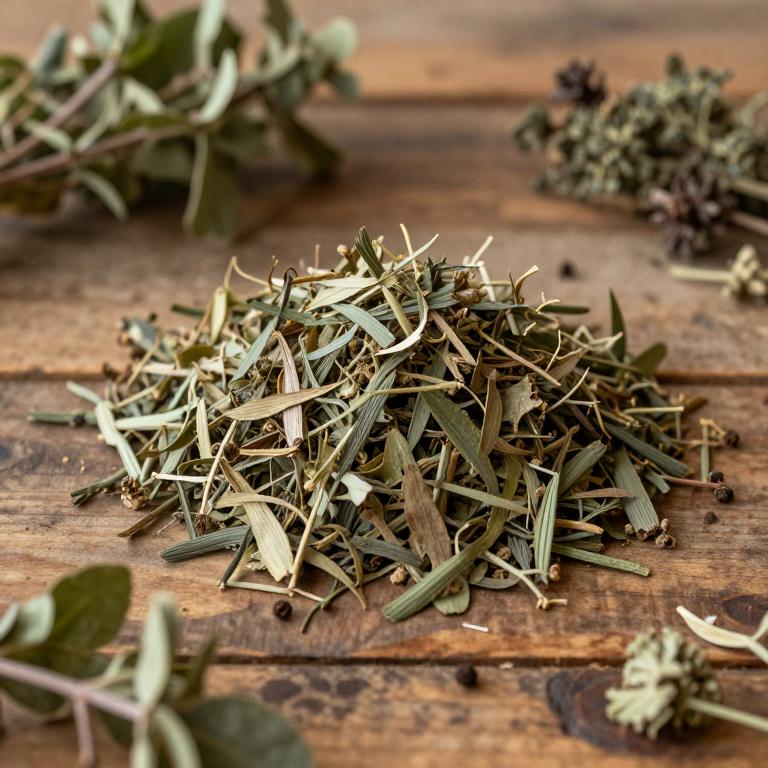
Boerhavia elegans, scientifically known as Boerhavia elegans, is a versatile medicinal herb widely recognized in traditional Ayurvedic medicine. Often referred to as Punarnava, this plant possesses remarkable rejuvenating properties. It is primarily utilized for its diuretic, anti-inflammatory, and hepatoprotective qualities, offering significant therapeutic benefits for kidney and liver health.
- Family
- Nyctaginaceae
- Native range
- Africa
- Parts used
- Leaf · Root
- Common names
- Not available
- Scientific synonyms
- Boerhavia Elegans Subsp. Stenophylla · Boerhavia Diffusa Var. Ehrenbergii · 4 more
Names and Synonyms
Scientific Names
Accepted name
Boerhavia elegansSynonyms
- Boerhavia elegans subsp. stenophylla
- Boerhavia diffusa var. ehrenbergii
- Boerhavia elegans var. stenophylla
- Boerhavia rubicunda var. stenophylla
- Boerhavia repens var. ehrenbergii
- Boerhavia repens var. elegans
Sources: Wikidata, Catalogue of Life
Taxonomical Classification
This plant belongs to the kingdom Plantae and the phylum Streptophyta, falling under the class Equisetopsida and subclass Magnoliidae. Within the order Caryophyllales, it is classified under the family Nyctaeginaceae. Finally, its specific taxonomic designation is placed within the genus Boerhavia.
| Rank | Classification |
|---|---|
| Kingdom | Plantae |
| Phylum | Streptophyta |
| Class | Equisetopsida |
| Subclass | Magnoliidae |
| Order | Caryophyllales |
| Family | Nyctaginaceae |
| Genus | Boerhavia |
Sources: The World Checklist of Vascular Plants (WCVP)
Distribution
This plant exhibits a specific geographical distribution across several regions of the African continent. In West Tropical Africa, its presence is noted within the borders of Niger. Moving toward the northeast, the species is also found throughout the territory of Chad. Its range extends further into Northeast Tropical Africa to include the nation of Djibouti. Finally, the distribution continues through Eritrea and into Somalia.
| Region | Area |
|---|---|
| West Tropical Africa | Niger |
| Northeast Tropical Africa | Chad |
| Northeast Tropical Africa | Djibouti |
| Northeast Tropical Africa | Eritrea |
| Northeast Tropical Africa | Somalia |
| Northeast Tropical Africa | Sudan-South Sudan |
| East Tropical Africa | Kenya |
| Western Asia | Iran |
| Arabian Peninsula | Gulf States |
| Arabian Peninsula | Oman |
Sources: The World Checklist of Vascular Plants (WCVP)
Botanical Identification
Life history
The life history of Boerhavia elegans is characterized by its status as a perennial plant, allowing it to persist through multiple growing seasons. In terms of its growth habit and ecological positioning, the species is classified as a chamaephyte, a life form where the permanent shoots are located close to the soil surface. This specific life form, categorized under both the chamaephyte and chamaephyte classifications, enables the plant to thrive by maintaining its regenerative structures near the ground, providing resilience against environmental fluctuations.
- Life form :
- chamaephyte
- Lifecycle :
- perennial
Morphology
The morphology of Boerhavia elegans is characterized by a prostrate or ascending herbaceous habit, typically forming mats through spreading, rooting stems. The stems are slender, cylindrical, and often exhibit a reddish tint, branching frequently to create a dense ground cover. The leaves are simple, opposite, and petiolate, displaying an elliptical to oblong shape with entire margins and acute to acuminate apices. The inflorescence is typically a small, axillary cyme consisting of numerous minute, pink to white flowers with five petals. The fruit is a characteristic schizocarp, often featuring fleshy or tuberculate structures that aid in dispersal. Regarding its ecological interaction and nutritional strategy, the plant is classified as an independent organism rather than a parasite; specifically, it is an independent species, meaning it lacks any obligatory, facultative, or parasitic dependency on host plants for its survival and nutrient acquisition.
- Parasite :
- independent
Sources: Global Inventory of Floras and Traits (GIFT)
Plant Parts
Boerhavia elegans has 4 reported plant parts identified across 7 scientific publications and several other databases that are studied for medicinal purposes. The most consistently reported plant part include leaf, root, stem, seed.
| Plant part | Supporting sources | Consensus |
|---|---|---|
| Leaf | 2 supporting sources | ★☆☆☆☆ |
| Root | 2 supporting sources | ★☆☆☆☆ |
| Stem | 2 supporting sources | ★☆☆☆☆ |
| Seed | 1 supporting sources | ★☆☆☆☆ |
Leaf
- ACS omega
- Toxics
Root
- ACS omega
- Toxics
Stem
- Analytical science advances
- Toxics
Seed
- Toxics
Chemicals
Boerhavia elegans has 10 reported phytochemicals identified across 7 scientific publications and several other databases. The most consistently reported chemicals include ARSENIC, CADMIUM, CHROMIUM, COPPER, IRON.
| Chemical | Supporting sources | Consensus |
|---|---|---|
| ARSENIC | 1 supporting sources | ★☆☆☆☆ |
| CADMIUM | 1 supporting sources | ★☆☆☆☆ |
| CHROMIUM | 1 supporting sources | ★☆☆☆☆ |
| COPPER | 1 supporting sources | ★☆☆☆☆ |
| IRON | 1 supporting sources | ★☆☆☆☆ |
| LEAD | 1 supporting sources | ★☆☆☆☆ |
| MAGNESIUM | 1 supporting sources | ★☆☆☆☆ |
| MANGANESE | 1 supporting sources | ★☆☆☆☆ |
| NICKEL | 1 supporting sources | ★☆☆☆☆ |
| ZINC | 1 supporting sources | ★☆☆☆☆ |
ARSENIC
- Toxics
CADMIUM
- Toxics
CHROMIUM
- Toxics
COPPER
- Toxics
IRON
- Toxics
LEAD
- Toxics
MAGNESIUM
- Toxics
MANGANESE
- Toxics
NICKEL
- Toxics
ZINC
- Toxics
Conditions
Boerhavia elegans has 1 reported investigations on conditions identified across 7 scientific publications and several other databases. The most consistently reported conditions include malaria.
| Condition | Supporting sources | Consensus |
|---|---|---|
| Malaria | 1 supporting sources | ★☆☆☆☆ |
Malaria
- Malaria journal
Preparations
Boerhavia elegans has 7 reported preparations identified across 7 scientific publications and several other databases. The most consistently reported preparations include Ethyl acetate fractions, butanol extract, chloroform extract, leaf hexane extracts, methanol extract.
| Preparation | Supporting sources | Consensus |
|---|---|---|
| Ethyl acetate fractions | 1 supporting sources | ★☆☆☆☆ |
| Butanol extract | 1 supporting sources | ★☆☆☆☆ |
| Chloroform extract | 1 supporting sources | ★☆☆☆☆ |
| Leaf hexane extracts | 1 supporting sources | ★☆☆☆☆ |
| Methanol extract | 1 supporting sources | ★☆☆☆☆ |
| Methanol extracts | 1 supporting sources | ★☆☆☆☆ |
| N-hexane extract | 1 supporting sources | ★☆☆☆☆ |
Ethyl acetate fractions
- ACS omega
Butanol extract
- Analytical science advances
Chloroform extract
- Analytical science advances
Leaf hexane extracts
- ACS omega
Methanol extract
- Analytical science advances
Methanol extracts
- ACS omega
N-hexane extract
- Analytical science advances