Hog Meat
Boerhavia coccinea · Accepted scientific name
Scientific literature: Sparse (66 studies) · ★★☆☆☆
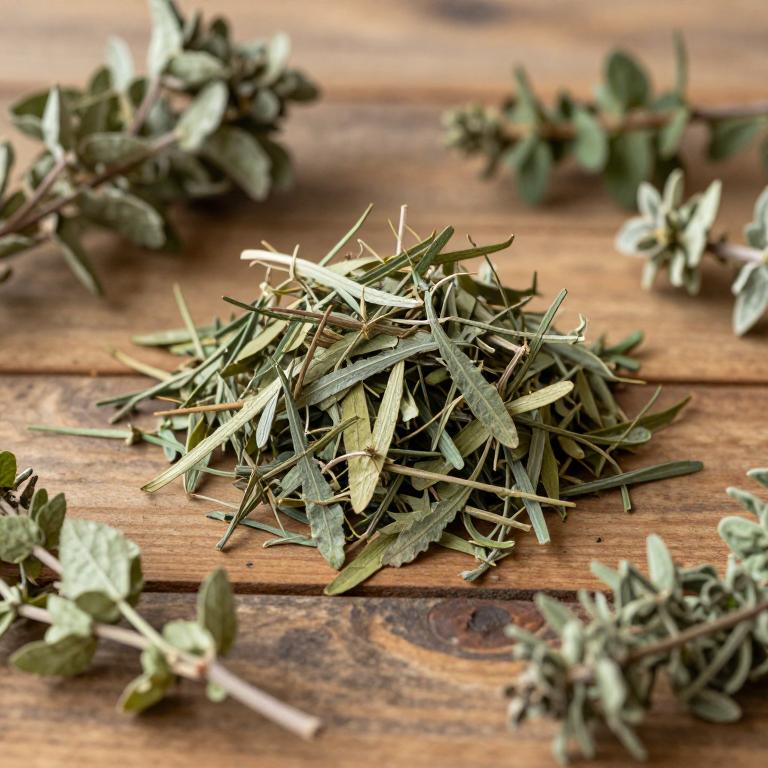
Hog Meat, scientifically known as Boerhavia coccinea, is a versatile medicinal herb renowned in traditional Ayurvedic practices. Often referred to as Punarnava, this plant is celebrated for its remarkable rejuvenating properties, particularly its ability to support kidney function, reduce inflammation, and promote overall detoxification within the human body.
Names and Synonyms
Common Names
- Hog Meat
- Hog Meat Bush
- Potta Potta
- hogweed
- red spiderling
- Boerhavia bracteata
Scientific Names
Accepted name
Boerhavia coccineaSynonyms
- Boerhavia diffusa var. undulata
- Boerhavia coccinea var. paniculata
- Boerhavia coccinea var. pubescens
- Boerhavia diffusa var. paniculata
- Boerhavia adscendens var. pubescens
- Boerhavia polymorpha
- Boerhavia ramulosa
- Boerhavia viscosa
- Boerhavia viscosa subsp. apiculata
- Boerhavia viscosa f. oligadena
- Boerhavia diffusa var. xerophila
- Boerhavia glandulosa
- Boerhavia ixodes
- Boerhavia marlothii
- Boerhavia obtusifolia
- Boerhavia diffusa var. obtusifolia
- Boerhavia diffusa var. hirsuta
- Boerhavia diffusa var. viscosa
- Boerhavia coccinea f. parcehirsuta
- Boerhavia coccinea var. viscosa
- Boerhavia bracteata
- Boerhavia caribaea
- Boerhavia diffusa f. crassifolia
- Boerhavia agglutinans
- Boerhavia patula
- Boerhavia nantocana
- Boerhavia repens var. undulata
- Boerhavia repens subsp. viscosa
- Boerhavia reboudiana
- Boerhavia sonorae
- Boerhavia squamata
Regional and Traditional Names
Spanish:
- hierba de la hormiga
- hierba del cancer
- mata pavo
- tostón
- yerba de puerco
- Abrojo rojo
- hierba del arlomo
Sources: Wikidata, Catalogue of Life
Taxonomical Classification
This plant belongs to the kingdom Plantae and is classified under the phylum Streptophyta within the class Equisetopsida. Following the subclass Magnoliidae, it is placed in the order Caryophyllales and the family Nyctaginaceae. Finally, it is identified under the genus Boerhavia.
| Rank | Classification |
|---|---|
| Kingdom | Plantae |
| Phylum | Streptophyta |
| Class | Equisetopsida |
| Subclass | Magnoliidae |
| Order | Caryophyllales |
| Family | Nyctaginaceae |
| Genus | Boerhavia |
Sources: The World Checklist of Vascular Plants (WCVP)
Distribution
This plant exhibits a broad geographical distribution across several key regions in the Mediterranean and surrounding areas. In Southeastern Europe, its presence can be specifically noted in Sicilia. The species is also well-established across various parts of Northern Africa. Within this region, it is found in Algeria, Egypt, and Libya. Additionally, its range extends further west to include Morocco.
| Region | Area |
|---|---|
| Southeastern Europe | Sicilia |
| Northern Africa | Algeria |
| Northern Africa | Egypt |
| Northern Africa | Libya |
| Northern Africa | Morocco |
| Macaronesia | Cape Verde |
| West Tropical Africa | Burkina |
| West Tropical Africa | Gambia |
| West Tropical Africa | Ghana |
| West Tropical Africa | Guinea-Bissau |
Sources: The World Checklist of Vascular Plants (WCVP)
Botanical Identification
Ecology
The ecology of Boerhavia coccineae is characterized by its broad adaptability to varying altitudes and its tendency to colonize disturbed landscapes. This species exhibits a significant elevational range, occupying environments from sea level up to a maximum altitude of 2000 m AMSL. Regarding its preferred environment, the plant is frequently found in "Área Antrópica" (anthropic areas), indicating a high tolerance for habitats modified by human activity, such as roadsides, agricultural edges, or urbanized zones.
- Elevational range max:
- 2000 m AMSL
- Elevational range min:
- 0 m AMSL
- Habitat :
- Área Antrópica
Genetics
The genetics of Boerhavia coccineae are characterized by a complex chromosomal configuration that suggests a history of polyploidy or genomic variation within the species. Cytogenetic analyses of the plant reveal distinct chromosome numbers, specifically documented at 24 and 54. These varying counts indicate a diverse karyotype that may influence the plant's evolutionary adaptation, phenotypic plasticity, and its ability to thrive in diverse ecological niches. The presence of these multiple chromosomal states highlights a significant level of genetic complexity, which is a critical factor in understanding the species' reproductive biology and its potential for genetic divergence.
- Chromosome number :
- 24, 54
Life history
The life history of Boerhavia coccineae is characterized by a perennial lifecycle, allowing the plant to persist through multiple growing seasons. In terms of its biological structure and survival strategy, it is classified as a therophyte, meaning it completes its life cycle through seeds that remain dormant during unfavorable conditions, ensuring the species can re-emerge when environmental circumstances are optimal. This specific life form is consistent across its developmental stages, identifying it as a therophyte in both its fundamental growth habit and its ecological classification.
- Life form :
- therophyte
- Lifecycle :
- perennial
Morphology
The morphology of Boerhavia coccineae is characterized by its growth form as a non-woody herb and forb, which functions as a self-supporting plant rather than an obligatory or facultative climber. As a terrestrial species, it does not exhibit epiphytic behavior, functioning instead as an independent organism without parasitic tendencies. The plant's physical structure is relatively low-profile, with a plant height ranging from 0 to a maximum of 2 meters. Its habit is strictly terrestrial, spanning across various environments without being aquatic or semiaquatic.
- Aquatic :
- terrestrial
- Climber :
- self-supporting
- Epiphyte :
- terrestrial
- Growth form :
- herb
- Growth form :
- forb
- Parasite :
- independent
- Plant height max:
- 2 m
- Plant height min:
- 0 m
- Woodiness :
- non-woody
Physiology
The physiology of Boerhavia coccineum is characterized by a specialized metabolic efficiency, utilizing a C4 photosynthetic pathway to optimize carbon fixation and enhance water-use efficiency under varying environmental conditions. The structural morphology of its foliage supports this metabolic activity, with leaves reaching a maximum length of 5 cm and a maximum width of 3.5 cm. These dimensions, combined with its specific photosynthetic adaptations, allow the plant to maintain robust physiological functions and energy production.
- Leaf length max:
- 5 cm
- Leaf width max:
- 3.5 cm
- Photosynthetic pathway :
- C4
Reproduction
The reproduction of Boerhavia coccineas involves the production of small, dry fruits that typically measure between 0.3 cm and 0.4 cm in length. Within these fruits, the seeds are characterized by a consistent volume of approximately 2 mm³, with no recorded variation between the minimum and maximum seed volume values. The mass of these seeds exhibits significant variability, ranging from a minimum of 0.00008 g to a maximum of 0.004022 g, with an average seed mass of 0.002118 g. Regarding its dispersal strategy, the plant utilizes a zoochorous syndrome, though its reproductive success may also be influenced by anemochorous, autochorous, hydrochorous, or unspecialized dispersal mechanisms.
- Dispersal syndrome :
- zoochorous
- Fruit dryness :
- dry
- Fruit length max:
- 0.4 cm
- Fruit length min:
- 0.3 cm
- Seed mass max:
- 0.004022 g
- Seed mass mean:
- 0.002118 g
- Seed mass min:
- 8e-05 g
- Seed volume max:
- 2 mm³
Sources: Global Inventory of Floras and Traits (GIFT)
Plant Parts
Boerhavia coccinea has 2 reported plant parts identified across 4 scientific publications and several other databases that are studied for medicinal purposes. The most consistently reported plant part include leaf, root.
| Plant part | Supporting sources | Consensus |
|---|---|---|
| Leaf | 2 supporting sources | ★☆☆☆☆ |
| Root | 2 supporting sources | ★☆☆☆☆ |
Leaf
- Journal of traditional and complementary medicine
- Biomedicine & pharmacotherapy = Biomedecine & pharmacotherapie
Root
- Pakistan journal of biological sciences : PJBS
- Journal of environmental biology
Chemicals
Boerhavia coccinea has 29 reported phytochemicals identified across 4 scientific publications and several other databases. The most consistently reported chemicals include boeravinone B, Flavonoids, caffeic acid, quercetin, Betanin.
| Chemical | Supporting sources | Consensus |
|---|---|---|
| boeravinone B | 3 supporting sources | ★★☆☆☆ |
| Flavonoids | 2 supporting sources | ★☆☆☆☆ |
| caffeic acid | 2 supporting sources | ★☆☆☆☆ |
| quercetin | 2 supporting sources | ★☆☆☆☆ |
| Betanin | 1 supporting sources | ★☆☆☆☆ |
| Boeravinone G | 1 supporting sources | ★☆☆☆☆ |
| CHLOROFORM | 1 supporting sources | ★☆☆☆☆ |
| ETHYL ACETATE | 1 supporting sources | ★☆☆☆☆ |
| Eupalitin | 1 supporting sources | ★☆☆☆☆ |
| Glycosides | 1 supporting sources | ★☆☆☆☆ |
boeravinone B
- BMB reports
- Biomedicine & pharmacotherapy = Biomedecine & pharmacotherapie
- Journal of biomolecular structure & dynamics
Flavonoids
- Chemistry & biodiversity
- Fitoterapia
caffeic acid
- Journal of ethnopharmacology
- Biomedicine & pharmacotherapy = Biomedecine & pharmacotherapie
quercetin
- Journal of ethnopharmacology
- Biomedicine & pharmacotherapy = Biomedecine & pharmacotherapie
Betanin
- Journal of ethnopharmacology
Boeravinone G
- Journal of biomolecular structure & dynamics
CHLOROFORM
- Journal of environmental biology
ETHYL ACETATE
- Journal of environmental biology
Eupalitin
- Journal of ethnopharmacology
Glycosides
- Fitoterapia
Activities
Boerhavia coccinea has 11 reported activities identified across 4 scientific publications and several other databases. The most consistently reported activities include Antibacterial, Anticancer, Antioxidant, Antidiabetic, Antifungal.
| Activity | Supporting sources | Consensus |
|---|---|---|
| Antibacterial | 3 supporting sources | ★★☆☆☆ |
| Anticancer | 3 supporting sources | ★★☆☆☆ |
| Antioxidant | 3 supporting sources | ★★☆☆☆ |
| Antidiabetic | 2 supporting sources | ★☆☆☆☆ |
| Antifungal | 2 supporting sources | ★☆☆☆☆ |
| Antimicrobial | 2 supporting sources | ★☆☆☆☆ |
| Hepatoprotective | 2 supporting sources | ★☆☆☆☆ |
| Antiaging | 1 supporting sources | ★☆☆☆☆ |
| Antifertility | 1 supporting sources | ★☆☆☆☆ |
| Cardioprotective | 1 supporting sources | ★☆☆☆☆ |
Antibacterial
- Fitoterapia
- Frontiers in chemistry
- Discover nano
Anticancer
- Fitoterapia
- Frontiers in chemistry
- Discover nano
Antioxidant
- Chemistry & biodiversity
- Frontiers in chemistry
- Discover nano
Antidiabetic
- Fitoterapia
- Frontiers in chemistry
Antifungal
- Frontiers in chemistry
- Discover nano
Antimicrobial
- Chemistry & biodiversity
- Frontiers in chemistry
Hepatoprotective
- Fitoterapia
- Frontiers in chemistry
Antiaging
- Frontiers in chemistry
Antifertility
- Frontiers in chemistry
Cardioprotective
- Frontiers in chemistry
Preparations
Boerhavia coccinea has 22 reported preparations identified across 4 scientific publications and several other databases. The most consistently reported preparations include extracts, Boerhavia diffusa extract, Extract, aqueous, aqueous plant extracts.
| Preparation | Supporting sources | Consensus |
|---|---|---|
| Extracts | 2 supporting sources | ★☆☆☆☆ |
| Boerhavia diffusa extract | 1 supporting sources | ★☆☆☆☆ |
| Extract | 1 supporting sources | ★☆☆☆☆ |
| Aqueous | 1 supporting sources | ★☆☆☆☆ |
| Aqueous plant extracts | 1 supporting sources | ★☆☆☆☆ |
| Boeravinone b | 1 supporting sources | ★☆☆☆☆ |
| Chloroform | 1 supporting sources | ★☆☆☆☆ |
| Chloroform extracts of the root | 1 supporting sources | ★☆☆☆☆ |
| Crude extract preparations | 1 supporting sources | ★☆☆☆☆ |
| Crude extracts | 1 supporting sources | ★☆☆☆☆ |
Extracts
- Journal of ethnopharmacology
- Toxicology reports
Boerhavia diffusa extract
- Molecules (Basel, Switzerland)
Extract
- Current hypertension reviews
Aqueous
- Journal of environmental biology
Aqueous plant extracts
- Pharmaceutical biology
Boeravinone b
- BMB reports
Chloroform
- Journal of environmental biology
Chloroform extracts of the root
- Journal of environmental biology
Crude extract preparations
- Journal of ethnopharmacology
Crude extracts
- Journal of ethnopharmacology