Boehmeria sieboldiana
Boehmeria sieboldiana · Accepted scientific name
Scientific literature: Very Sparse (4 studies) · ★☆☆☆☆
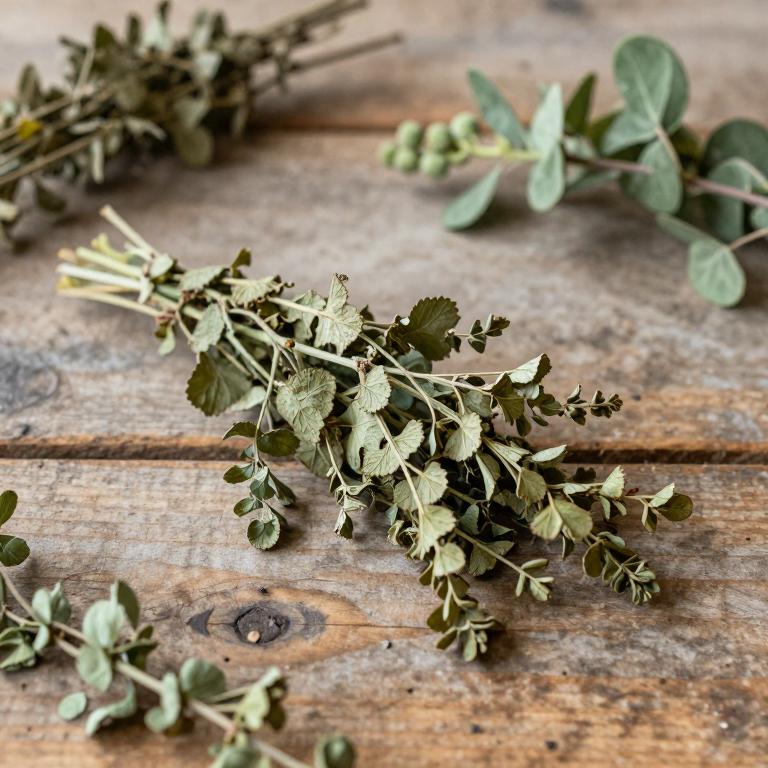
, scientifically known as Boehmeria sieboldiana, is a versatile medicinal herb native to East Asia. Traditionally used in folk medicine, this plant is valued for its anti-inflammatory and diuretic properties. Often utilized to treat skin conditions and respiratory ailments, it remains a subject of interest in modern pharmacological research.
- Family
- Urticaceae
- Native range
- Asia-Temperate
- Parts used
- Leaf
- Common names
- Not available
- Scientific synonyms
- Duretia Sieboldiana · Boehmeria Platyphylla Var. Sieboldiana
Names and Synonyms
Scientific Names
Accepted name
Boehmeria sieboldianaSynonyms
- Duretia sieboldiana
- Boehmeria platyphylla var. sieboldiana
Sources: Wikidata, Catalogue of Life
Taxonomical Classification
This plant belongs to the kingdom Plantae and is classified under the phylum Streptophyta and the class Equisetopsida. Within the subclass Magnoliidae, it falls under the order Rosales and the family Urticaceae. It is specifically identified by the genus Boehmeria, which includes the species Boehmeria sieboldiana.
| Rank | Classification |
|---|---|
| Kingdom | Plantae |
| Phylum | Streptophyta |
| Class | Equisetopsida |
| Subclass | Magnoliidae |
| Order | Rosales |
| Family | Urticaceae |
| Genus | Boehmeria |
Sources: The World Checklist of Vascular Plants (WCVP)
Distribution
This plant exhibits a diverse geographical range across several regions of Eastern Asia. Within China, its presence is noted in the South-Central, Southeast, and Hainan areas. The species is also widely distributed throughout the island nation of Japan. Additionally, it can be found growing across the Korean Peninsula. Together, these locations highlight the plant's significant footprint in East Asian ecosystems.
| Region | Area |
|---|---|
| China | China South-Central |
| China | Hainan |
| China | China Southeast |
| Eastern Asia | Japan |
| Eastern Asia | Korea |
| Eastern Asia | Nansei-shoto |
| Eastern Asia | Taiwan |
Sources: The World Checklist of Vascular Plants (WCVP)
Botanical Identification
Ecology
The ecology of Boehmeria sieboldiana is fundamentally defined by its specific altitudinal distribution within its native montane habitats. This species thrives within a distinct vertical niche, typically found inhabiting elevations that center around a mean altitude of 900 m AMSL. Its ecological presence is constrained by specific topographic limits, ranging from a minimum elevation of 1400 m AMSL to a maximum elevation of 400 m AMSL, indicating a preference for specific thermal and moisture gradients found within these mountain ranges.
- Elevational range max:
- 400 m AMSL
- Elevational range mean:
- 900 m AMSL
- Elevational range min:
- 1400 m AMSL
Life history
The life history of Boehmeria sieboldiana is characterized by its classification as a perennial plant, meaning it persists through multiple growing seasons rather than completing its life cycle in a single year. Throughout its existence, the plant undergoes a continuous cycle of vegetative growth and reproductive phases, often relying on robust root systems or rhizomes to survive periods of dormancy. As a perennial, it demonstrates a long-term developmental strategy that allows it to establish itself within its ecological niche, repeatedly producing foliage and flowering structures over several years. This perennial nature enables the species to recover from seasonal environmental fluctuations, ensuring a stable presence in its habitat through sustained growth cycles.
- Lifecycle :
- perennial
Morphology
The morphology of Boehmeria sieboldiana is characterized by its growth form as a herb, exhibiting a non-woody structure throughout its development. The plant reaches various heights depending on environmental conditions, with a minimum height of 0.8 m and a maximum height of up to 1.5 m. On average, the plant maintains a height of approximately 1.15 m.
- Growth form :
- herb
- Plant height max:
- 1.5 m
- Plant height mean:
- 1.15 m
- Plant height min:
- 0.8 m
- Woodiness :
- non-woody
Physiology
The physiology of Boehmeria sieboldiana is closely characterized by its vegetative development, particularly the morphometric variations observed in its foliage. The leaf structure exhibits significant dimensional diversity, with leaf lengths ranging from a minimum of 8 cm to a maximum of 15 cm, maintaining a mean length of approximately 11.5 cm. Complementing this longitudinal variation, the leaf width fluctuates between a minimum of 2.5 cm and a maximum of 6.5 cm. These morphological parameters indicate a dynamic growth pattern where the surface area of the leaves is optimized through these specific length and width dimensions to facilitate efficient photosynthetic activity and gas exchange.
- Leaf length max:
- 15 cm
- Leaf length mean:
- 11.5 cm
- Leaf length min:
- 8 cm
- Leaf width max:
- 6.5 cm
- Leaf width min:
- 2.5 cm
Reproduction
The reproduction of Boehmeria sieboldiana is characterized by its specific inflorescence and fruiting structures. The plant produces inflorescences that vary in length, typically ranging from a minimum of 0.035 m to a maximum of 0.09 m. Following pollination, the development of the fruit occurs, which is remarkably uniform in size; the fruit width maintains a consistent measurement of 0.1 cm, with both the minimum and maximum recorded widths, as well as the mean width, staying at this exact value.
- Fruit width max:
- 0.1 cm
- Inflorescence length max:
- 0.09 m
- Inflorescence length min:
- 0.035 m
Sources: Global Inventory of Floras and Traits (GIFT)
Plant Parts
Boehmeria sieboldiana has 1 reported plant parts identified across 1 scientific publications and several other databases that are studied for medicinal purposes. The most consistently reported plant part include leaf.
| Plant part | Supporting sources | Consensus |
|---|---|---|
| Leaf | 1 supporting sources | ★☆☆☆☆ |
Leaf
- Journal of natural medicines
Chemicals
Boehmeria sieboldiana has 3 reported phytochemicals identified across 1 scientific publications and several other databases. The most consistently reported chemicals include seco-Dehydroantofine A, seco-Dehydroantofine B, septicine.
| Chemical | Supporting sources | Consensus |
|---|---|---|
| seco-Dehydroantofine A | 1 supporting sources | ★☆☆☆☆ |
| seco-Dehydroantofine B | 1 supporting sources | ★☆☆☆☆ |
| septicine | 1 supporting sources | ★☆☆☆☆ |
seco-Dehydroantofine A
- Journal of natural medicines
seco-Dehydroantofine B
- Journal of natural medicines
septicine
- Journal of natural medicines