Hammock Fern
Blechnum occidentale · Accepted scientific name
Scientific literature: Very Sparse (6 studies) · ★☆☆☆☆
Hammock Fern, scientifically known as Blechnum occidentale, is a resilient tropical plant native to the Caribbean and Florida. Often found in moist, shaded environments, this fern is valued for its lush, arching fronds. It serves as an ornamental highlight in landscapes and holds traditional significance in various regional herbal practices.
- Family
- Aspleniaceae
- Native range
- Africa
- Parts used
- Not available
- Common names
- Hammock Fern · New World Midsorus Fern
- Scientific synonyms
- Blechnum Occidentale Var. Majus · Blechnum Occidentale Var. Pallidum · 30 more
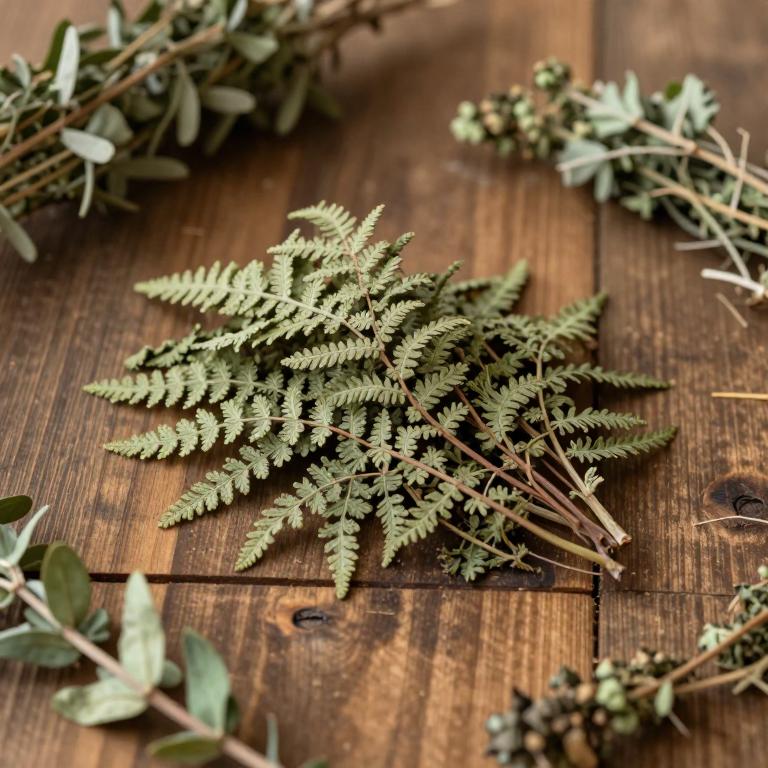
Names and Synonyms
Common Names
- Hammock Fern
- New World midsorus fern
Scientific Names
Accepted name
Blechnum occidentaleSynonyms
- Blechnum occidentale var. majus
- Blechnum occidentale var. pallidum
- Blechnum suburbicum
- Lomaria campylotis
- Mesothema campylotis
- Struthiopteris appendiculata
- Struthiopteris caudata
- Blechnum occidentale var. pectinatum
- Blechnum occidentale var. campylote
- Blechnum extensum
- Blechnum rugosum
- Blechnum occidentale f. bifidum
- Blechnum occidentale var. solutum
- Blechnum sodiroi
- Blechnum acuminatum
- Blechnum campylotis
- Blechnum cognatum
- Blechnum cunninghamii
- Blechnum drepanophyllum
- Blechnum falcatum
- Blechnum falciculatum
- Blechnum galeottii
- Blechnum haenkeanum
- Blechnum lomariaceum
- Blechnum mucronatum
- Blechnum occidentale var. cunninghamii
- Blechnum occidentale var. lacerata
- Blechnum occidentale var. lomariaceum
- Spicanta occidentalis
- Blechnum helveolum
- Blechnum triangulatum
- Blechnum scaberulum
Regional and Traditional Names
Spanish:
- Helecho pluma rosa
German:
- östlicher Rippenfarn
Sources: Wikidata, Catalogue of Life
Taxonomical Classification
This plant belongs to the kingdom Plantae and is classified under the phylum Streptophyta within the class Equisetopsida. It is further categorized under the subclass Polypodiinae and the order Polypodiales. Finally, it is a member of the family Aspleniaceae and falls under the genus Blechnum.
| Rank | Classification |
|---|---|
| Kingdom | Plantae |
| Phylum | Streptophyta |
| Class | Equisetopsida |
| Subclass | Polypodiinae |
| Order | Polypodiales |
| Family | Aspleniaceae |
| Genus | Blechnum |
Sources: The World Checklist of Vascular Plants (WCVP)
Distribution
This plant exhibits a diverse geographical distribution spanning several distinct regions across the globe. In the Atlantic, it can be found within the Macaronesian archipelago, specifically in the Azores. Its presence extends to the Indian Subcontinent, where it inhabits both India and Sri Lanka. Moving towards the Pacific, the species is located in the North-Central region, particularly in Hawaii. Finally, its range reaches the Southern Hemisphere, specifically documented in Queensland, Australia.
| Region | Area |
|---|---|
| Macaronesia | Azores |
| Indian Subcontinent | India |
| Indian Subcontinent | Sri Lanka |
| Australia | Queensland |
| North-Central Pacific | Hawaii |
| Mexico | Mexico Central |
| Mexico | Mexico Northeast |
| Mexico | Mexico Gulf |
| Mexico | Mexico Southwest |
| Mexico | Mexico Southeast |
Sources: The World Checklist of Vascular Plants (WCVP)
Botanical Identification
Ecology
The ecology of Blechnum occidentale is characterized by a broad adaptability to diverse environmental conditions and significant altitudinal variation. This species inhabits a wide range of ecosystems, ranging from anthropogenic areas (Área Antrópica) and the Cerrado (latu sensu) to more specialized forest types, including Coastal Forests (Floresta Ciliar ou Galeria), Semi-deciduous Seasonal Forests (Floresta Estacional Semidecidual), Ombrophilous Forests (Floresta Ombrófila/Pluvial), and Mixed Ombrophilous Forests (Floresta Ombrófila Mista). Its vertical distribution is extensive, occurring at elevations starting from sea level (0 m AMSL) up to a maximum altitude of 2850 m AMSL, allowing it to occupy various ecological niches across different climatic gradients.
- Elevational range max:
- 2850 m AMSL
- Elevational range min:
- 0 m AMSL
- Habitat :
- Área Antrópica, Cerrado (lato sensu), Floresta Ciliar ou Galeria, Floresta Estacional Semidecidual, Floresta Ombrófila (= Floresta Pluvial), Floresta Ombrófila Mista
Life history
The life history of Blechnum occidentale is characterized by a perennial lifecycle, meaning it persists through multiple growing seasons rather than completing its development in a single year. As a long-lived fern, it maintains a continuous presence in its natural habitat, often establishing stable populations through the slow expansion of its rhizomatous systems. This perennial nature allows the plant to invest energy into robust structural development, facilitating survival through varying environmental conditions and enabling it to reproduce via spores over many years.
- Lifecycle :
- perennial
Morphology
The morphology of Blechnum occidentale is characterized by its growth form as a non-woody herb and forb, functioning as a self-supporting plant rather than a climber or liana. It is an independent organism that does not exhibit parasitic behavior, maintaining an independent nutritional status. In terms of its ecological positioning and habitat, the species is terrestrial rather than aquatic or semiaquatic, and it does not function as an epiphyte, remaining firmly rooted in the ground. Its structure is defined by its non-woody composition, lacking the lignified tissues found in shrubs or trees.
- Aquatic :
- terrestrial
- Climber :
- self-supporting
- Epiphyte :
- terrestrial
- Growth form :
- herb
- Growth form :
- forb
- Parasite :
- independent
- Woodiness :
- non-woody
Sources: Global Inventory of Floras and Traits (GIFT)
Activities
Blechnum occidentale has 2 reported activities identified across 0 scientific publications and several other databases. The most consistently reported activities include Antiinflammatory, Antinociceptive.
| Activity | Supporting sources | Consensus |
|---|---|---|
| Antiinflammatory | 1 supporting sources | ★☆☆☆☆ |
| Antinociceptive | 1 supporting sources | ★☆☆☆☆ |
Antiinflammatory
- Journal of ethnopharmacology
Antinociceptive
- Journal of ethnopharmacology
Conditions
Blechnum occidentale has 4 reported investigations on conditions identified across 0 scientific publications and several other databases. The most consistently reported conditions include inflammation, liver diseases, pain, pulmonary diseases.
| Condition | Supporting sources | Consensus |
|---|---|---|
| Inflammation | 1 supporting sources | ★☆☆☆☆ |
| Liver diseases | 1 supporting sources | ★☆☆☆☆ |
| Pain | 1 supporting sources | ★☆☆☆☆ |
| Pulmonary diseases | 1 supporting sources | ★☆☆☆☆ |
Inflammation
- Journal of ethnopharmacology
Liver diseases
- Journal of ethnopharmacology
Pain
- Journal of ethnopharmacology
Pulmonary diseases
- Journal of ethnopharmacology