Blechnum maximum
Blechnum maximum · Accepted scientific name
Scientific literature: Very Sparse (1 studies) · ★☆☆☆☆
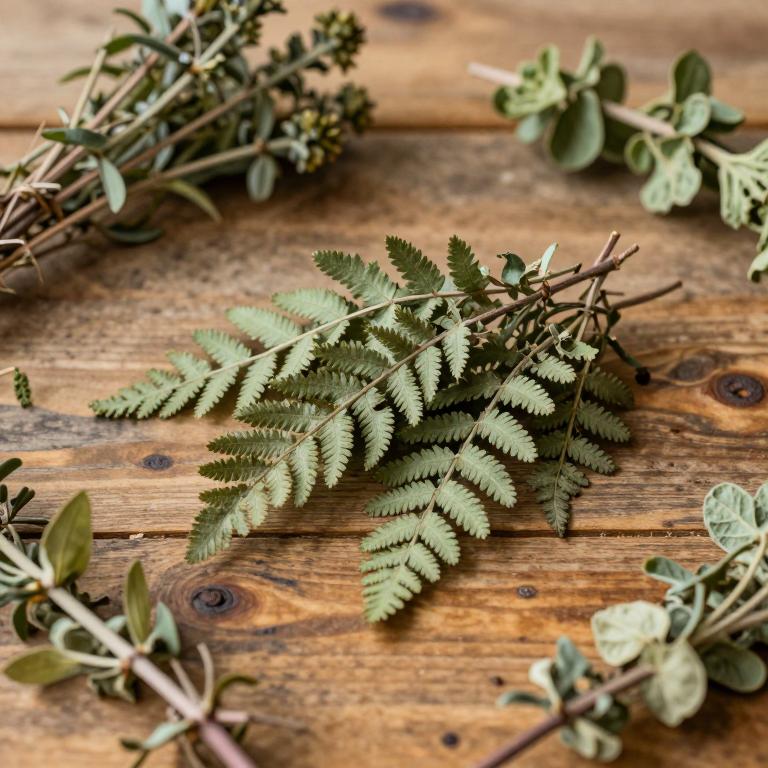
Blechnum maximum, scientifically known as Blechnum maximum, is a resilient fern species native to various tropical and subtropical regions. Renowned for its lush, verdant foliage, this plant holds significant ethnobotanical value. It is frequently utilized in traditional medicine to treat various ailments, showcasing its importance in natural healing practices.
- Family
- Aspleniaceae
- Native range
- Australasia
- Parts used
- Not available
- Common names
- Not available
- Scientific synonyms
- Doodia Aspera Var. Blechnoides · Woodwardia Blechnoides · 3 more
Names and Synonyms
Scientific Names
Accepted name
Blechnum maximumSynonyms
- Doodia aspera var. blechnoides
- Woodwardia blechnoides
- Woodwardia desvauxii
- Doodia blechnoides
- Doodia maxima
Sources: Wikidata
Taxonomical Classification
This plant belongs to the kingdom Plantae and is classified under the phylum Streptophyta within the class Equisetopsida. It is further organized into the subclass Polypodiinae and the order Polypodiales, falling under the family Aspleniaceae. Finally, its taxonomic identity is defined by the genus Blechnum.
| Rank | Classification |
|---|---|
| Kingdom | Plantae |
| Phylum | Streptophyta |
| Class | Equisetopsida |
| Subclass | Polypodiinae |
| Order | Polypodiales |
| Family | Aspleniaceae |
| Genus | Blechnum |
Sources: The World Checklist of Vascular Plants (WCVP)
Distribution
This plant is primarily found within the specific regions of Australia. Its geographical range includes the coastal and inland areas of New South Wales. Additionally, the species can be located throughout parts of Queensland. These two states represent the core locations where the plant naturally occurs. Consequently, its distribution is concentrated within these eastern Australian territories.
| Region | Area |
|---|---|
| Australia | New South Wales |
| Australia | Queensland |
Sources: The World Checklist of Vascular Plants (WCVP)
Botanical Identification
Morphology
The morphology of Blechnum maximum is characterized by its growth habit as a self-supporting, non-woody plant that functions independently within its ecosystem. Rather than being an obligate climber or an epiphyte, it maintains a terrestrial existence, though its ecological niche can span across aquatic, semiaquatic, and terrestrial habitats depending on environmental moisture levels. As an independent organism, it does not exhibit parasitic behavior, relying instead on its own structural development to occupy various soil and substrate conditions.
- Aquatic :
- terrestrial
- Climber :
- self-supporting
- Epiphyte :
- terrestrial
- Parasite :
- independent
- Woodiness :
- non-woody
Physiology
The physiology of Blechnum maximum is characterized by its specialized vegetative structures designed to optimize light interception and nutrient cycling within its native habitat. A primary physiological component of its morphology is the development of its fronds, which serve as the main photosynthetic organs. The dimensions of these leaves vary significantly based on environmental factors and the developmental stage of the plant, with leaf length typically ranging from a minimum of 30 cm to a maximum of 70 cm. This variation in leaf length reflects the plant's adaptive capacity to manage light absorption efficiency and transpiration rates. Through these expansive surfaces, the plant facilitates gas exchange and carbon fixation, sustaining its metabolic processes through complex photosynthetic pathways regulated by its structural dimensions.
- Leaf length max:
- 70 cm
- Leaf length min:
- 30 cm
Sources: Global Inventory of Floras and Traits (GIFT)
Chemicals
Blechnum maximum has 1 reported phytochemicals identified across 0 scientific publications and several other databases. The most consistently reported chemicals include rosmarinic acid.
| Chemical | Supporting sources | Consensus |
|---|---|---|
| rosmarinic acid | 1 supporting sources | ★☆☆☆☆ |
rosmarinic acid
- Plant biology (Stuttgart, Germany)