Blanchetia heterotricha
Blanchetia heterotricha · Accepted scientific name
Scientific literature: Very Sparse (4 studies) · ★☆☆☆☆
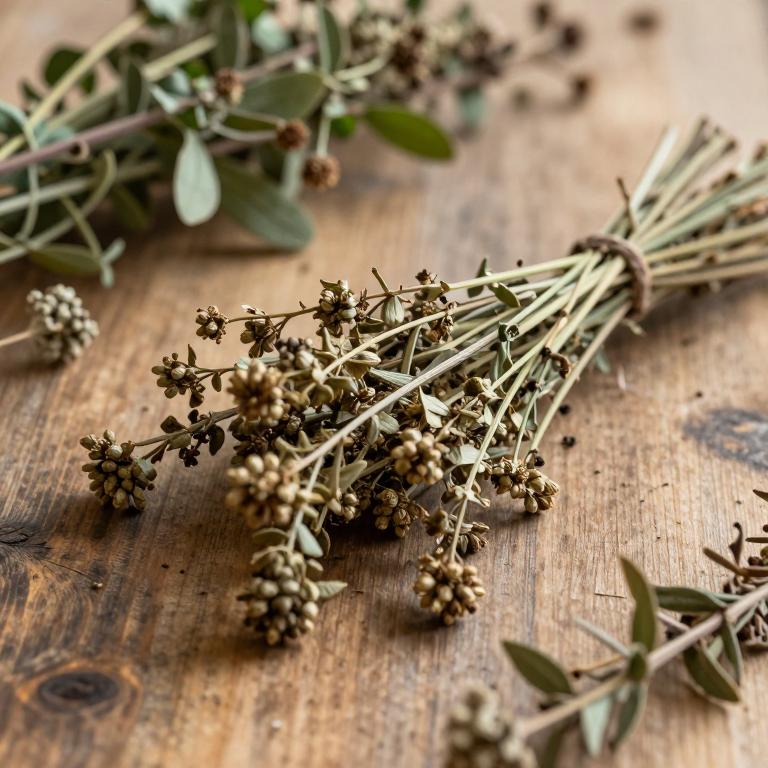
, scientifically known as Blanchetia heterotricha, is a distinctive medicinal plant belonging to the Asteraceae family. Native to specific tropical regions, it is highly valued in traditional ethnobotany for its unique pharmacological properties. Researchers continue to explore its bioactive compounds, aiming to uncover new therapeutic potential for modern medicine.
- Family
- Asteraceae
- Native range
- Southern America
- Parts used
- Root · Seed
- Common names
- Not available
- Scientific synonyms
- Not available
Names and Synonyms
Scientific Names
Accepted name
Blanchetia heterotrichaSources: Wikidata
Taxonomical Classification
This plant belongs to the kingdom Plantae within the phylum Streptophyta and the class Equisetopsida. Classified under the subclass Magnoliidae and the order Asterales, it is a member of the family Asteraceae. Its specific taxonomic placement is within the genus Blanchetia, identifying it as Blanchetia heterotricha.
| Rank | Classification |
|---|---|
| Kingdom | Plantae |
| Phylum | Streptophyta |
| Class | Equisetopsida |
| Subclass | Magnoliidae |
| Order | Asterales |
| Family | Asteraceae |
| Genus | Blanchetia |
Sources: The World Checklist of Vascular Plants (WCVP)
Distribution
This plant is found within a very specific and limited geographic range. Its presence is exclusively documented within the country of Brazil. More specifically, it is located in the Northeast region of the nation. This concentrated distribution suggests that the species may be adapted to the unique environmental conditions of that area. Consequently, its natural habitat is restricted to these particular Brazilian territories.
| Region | Area |
|---|---|
| Brazil | Brazil Northeast |
Sources: The World Checklist of Vascular Plants (WCVP)
Botanical Identification
Ecology
The ecology of Blanchetia heterotricha is characterized by its adaptability to diverse and varied environmental landscapes, spanning from natural ecosystems to human-modified environments. It is frequently found inhabiting Campo Rupestre, where it thrives in rocky, nutrient-poor soils under high solar exposure, as well as within the humid and shaded conditions of Floresta Ciliar or Floresta de Galeria, where proximity to water sources dictates the local microclimate. Furthermore, the species occupies Floresta Estacional Semidecidual, adapting to seasonal fluctuations in moisture and leaf shedding. Notably, its presence in Área Antrópica indicates a resilient ecological capacity to persist in landscapes altered by human activity, allowing it to integrate into fragmented or disturbed habitats alongside its more stable natural occurrences.
- Habitat :
- Área Antrópica, Campo Rupestre, Floresta Ciliar ou Galeria, Floresta Estacional Semidecidual
Morphology
The morphology of Blanchetia hetero-tricha is characterized by a woody structure, manifesting as a growth form that transitions between a shrub and a subshrub. It functions as a self-supporting plant rather than a climber and is biologically independent, lacking any parasitic tendencies. In terms of its habitat and ecological positioning, it is a terrestrial species, specifically not classified as an aquatic, semiaquatic, or epiphytic organism.
- Aquatic :
- terrestrial
- Climber :
- self-supporting
- Epiphyte :
- terrestrial
- Growth form :
- shrub
- Growth form :
- subshrub
- Parasite :
- independent
- Woodiness :
- woody
Sources: Global Inventory of Floras and Traits (GIFT)
Plant Parts
Blanchetia heterotricha has 2 reported plant parts identified across 2 scientific publications and several other databases that are studied for medicinal purposes. The most consistently reported plant part include root, seed.
| Plant part | Supporting sources | Consensus |
|---|---|---|
| Root | 1 supporting sources | ★☆☆☆☆ |
| Seed | 1 supporting sources | ★☆☆☆☆ |
Root
- Chemistry & biodiversity
Seed
- Chemistry & biodiversity
Activities
Blanchetia heterotricha has 2 reported activities identified across 2 scientific publications and several other databases. The most consistently reported activities include Antimicrobial, Antioxidant.
| Activity | Supporting sources | Consensus |
|---|---|---|
| Antimicrobial | 1 supporting sources | ★☆☆☆☆ |
| Antioxidant | 1 supporting sources | ★☆☆☆☆ |
Antimicrobial
- Chemistry & biodiversity
Antioxidant
- Chemistry & biodiversity
Preparations
Blanchetia heterotricha has 2 reported preparations identified across 2 scientific publications and several other databases. The most consistently reported preparations include essential oil, fixed extracts.
| Preparation | Supporting sources | Consensus |
|---|---|---|
| Essential oil | 1 supporting sources | ★☆☆☆☆ |
| Fixed extracts | 1 supporting sources | ★☆☆☆☆ |
Essential oil
- Chemistry & biodiversity
Fixed extracts
- Chemistry & biodiversity