Pitch Trefoil
Bituminaria bituminosa · Accepted scientific name
Scientific literature: Very Sparse (33 studies) · ★☆☆☆☆
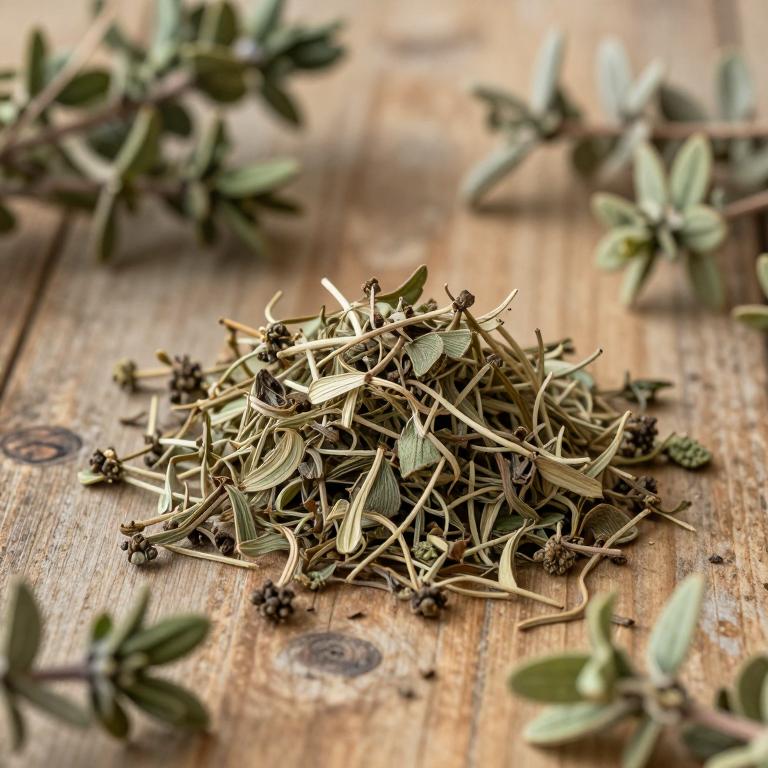
Pitch Trefoil, scientifically known as Bituminaria bituminosa, is a perennial herb belonging to the Fabaceae family. Renowned for its distinct, tar-like aromatic scent, this plant is widely utilized in traditional medicine. It possesses significant bioactive properties, including antioxidant and anti-inflammatory effects, making it valuable for various therapeutic applications.
- Family
- Fabaceae
- Native range
- Europe
- Parts used
- Leaf
- Common names
- Pitch Trefoil · Arabian Pea
- Scientific synonyms
- Aspalthium Bituminosum · Lotodes Bituminosum · 3 more
Names and Synonyms
Common Names
- Pitch Trefoil
- arabian pea
Scientific Names
Accepted name
Bituminaria bituminosaSynonyms
- Aspalthium bituminosum
- Lotodes bituminosum
- Rhynchodium bituminosum
- Psoralea bituminosa
- Bipontinia bituminosa
Regional and Traditional Names
Spanish:
- trébol hediondo
German:
- Asphaltklee
- Gewöhnlicher Asphaltklee
- Harzklee
- Pechklee
French:
- Trèfle bitumineux
- Psoralée bitumineuse
- Psoralea bituminosa
- Psoralée bitumineuse
- Psoralée à odeur de bitume
Sources: Wikidata, Catalogue of Life
Taxonomical Classification
This plant belongs to the kingdom Plantae and the phylum Streptophyta, situated within the class Equisetopsida and subclass Magnoliidae. It is categorized under the order Fabales and is a member of the Fabaceae family. Specifically, its taxonomic identity is defined by the genus Bituminaaria.
| Rank | Classification |
|---|---|
| Kingdom | Plantae |
| Phylum | Streptophyta |
| Class | Equisetopsida |
| Subclass | Magnoliidae |
| Order | Fabales |
| Family | Fabaceae |
| Genus | Bituminaria |
Sources: The World Checklist of Vascular Plants (WCVP)
Distribution
This plant exhibits a diverse geographical distribution across several distinct regions of Europe. In Northern Europe, its presence can be specifically noted within Great Britain. Moving into Middle Europe, the species is found inhabiting parts of Germany. The distribution extends further into Southwestern Europe, where it grows in the Baleares and Corsica. Additionally, the plant is commonly documented throughout France.
| Region | Area |
|---|---|
| Northern Europe | Great Britain |
| Middle Europe | Germany |
| Southwestern Europe | Baleares |
| Southwestern Europe | Corse |
| Southwestern Europe | France |
| Southwestern Europe | Portugal |
| Southwestern Europe | Sardegna |
| Southwestern Europe | Spain |
| Southeastern Europe | Albania |
| Southeastern Europe | Bulgaria |
Sources: The World Checklist of Vascular Plants (WCVP)
Botanical Identification
Ecology
The ecology of Bituminaria bituminosa is characterized by its adaptation to diverse topographical landscapes, primarily thriving within hills and mountain regions. This species exhibits a broad altitudinal distribution, occupying a wide vertical range that begins at sea level (0 m AMSL) and extends up to a maximum elevation of 1250 m AMSL. This wide elevational range allows the plant to inhabit various microclimates found across sloping terrains and montane environments.
- Elevational range max:
- 1250 m AMSL
- Elevational range min:
- 0 m AMSL
- Habitat :
- hills, mountains
Life history
The life history of Bituminaria bituminosa is characterized by its status as a perennial plant, ensuring its presence in the ecosystem across multiple growing seasons. In terms of its structural growth habit and survival strategy, it is classified as a hemicryptophyte, meaning that its perennial buds are located at the soil surface or just below it, protected by leaf litter or the substrate during unfavorable conditions. This life form, consistent across both its biological classifications as a hemicryptophyte and its specific growth strategy, allows the species to persist through seasonal changes and regenerate effectively from its protected base.
- Life form :
- hemicryptophyte
- Lifecycle :
- perennial
Morphology
The morphology of Bituminaria bituminosa is characterized by its growth form as a non-woody herb and specifically a forb. This plant is a self-supporting species, functioning as an independent organism rather than a parasite or an epiphyte, maintaining a terrestrial lifestyle across its habitats. It does not exhibit climbing habits, such as lianas or vines, and instead grows upright with a stature that typically ranges from a minimum height of 0.2 m to a maximum height of 1 m.
- Aquatic :
- terrestrial
- Climber :
- self-supporting
- Epiphyte :
- terrestrial
- Growth form :
- herb
- Growth form :
- forb
- Parasite :
- independent
- Plant height max:
- 1 m
- Plant height min:
- 0.2 m
- Woodiness :
- non-woody
Physiology
The physiology of Bituminaria bituminosa is characterized by a C3 photosynthetic pathway, which facilitates carbon fixation through the standard Calvin cycle typical of many temperate medicinal species. Its vegetative morphology is defined by distinct leaf characteristics, where the leaf form is predominantly elliptic. The dimensions of these leaves exhibit significant variability, with a minimum leaf length of 1.2 cm and a maximum length reaching up to 9 cm. In terms of lateral expansion, the leaf width ranges from a narrow minimum of 0.3 cm to a maximum width of 3 cm, contributing to the overall surface area available for light interception and gas exchange.
- Leaf form :
- elliptic
- Leaf length max:
- 9 cm
- Leaf length min:
- 1.2 cm
- Leaf width max:
- 3 cm
- Leaf width min:
- 0.3 cm
- Photosynthetic pathway :
- C3
Reproduction
The reproduction of Bituminaria bituminosa is characterized by a flowering period that typically commences in April and extends through July, though the timing can be variable. During this reproductive phase, the plant produces distinct violet-colored flowers. Following pollination, the development of the fruit results in a dry, dehiscence-type pod. These fruits exhibit specific dimensions, with lengths ranging from a minimum of 1.3 cm to a maximum of 1.9 cm. Within these fruits, the seeds are produced with a mean mass of approximately 0.0281 g, though individual seed weights can vary from a minimum of 0.00951 g to a maximum of 0.0482 g. Once mature, the plant utilizes an anemochorous dispersal syndrome, relying on wind to facilitate the spread of its seeds.
- Dehiscence :
- dehiscent
- Dispersal syndrome :
- anemochorous
- Flower colour :
- violet
- Flowering time :
- Apr
- Flowering time :
- Jul
- Fruit dryness :
- dry
- Fruit length max:
- 1.9 cm
- Fruit length min:
- 1.3 cm
- Fruit type :
- pod
- Seed mass max:
- 0.0482 g
- Seed mass mean:
- 0.0281416668333333 g
- Seed mass min:
- 0.00951 g
Sources: Global Inventory of Floras and Traits (GIFT)
Plant Parts
Bituminaria bituminosa has 1 reported plant parts identified across 1 scientific publications and several other databases that are studied for medicinal purposes. The most consistently reported plant part include leaf.
| Plant part | Supporting sources | Consensus |
|---|---|---|
| Leaf | 1 supporting sources | ★☆☆☆☆ |
Leaf
- Journal of complementary & integrative medicine
Chemicals
Bituminaria bituminosa has 18 reported phytochemicals identified across 1 scientific publications and several other databases. The most consistently reported chemicals include Flavonoids, Furanocoumarins, Isoflavones, Angelicin, Bitucarpin A.
| Chemical | Supporting sources | Consensus |
|---|---|---|
| Flavonoids | 4 supporting sources | ★★☆☆☆ |
| Furanocoumarins | 2 supporting sources | ★☆☆☆☆ |
| Isoflavones | 2 supporting sources | ★☆☆☆☆ |
| Angelicin | 1 supporting sources | ★☆☆☆☆ |
| Bitucarpin A | 1 supporting sources | ★☆☆☆☆ |
| Carotenoids | 1 supporting sources | ★☆☆☆☆ |
| Chlorophylls | 1 supporting sources | ★☆☆☆☆ |
| Erybraedin C | 1 supporting sources | ★☆☆☆☆ |
| Plicatin B | 1 supporting sources | ★☆☆☆☆ |
| Psoralene | 1 supporting sources | ★☆☆☆☆ |
Flavonoids
- Scientific reports
- Journal of infection in developing countries
- Frontiers in plant science
- Plant biology (Stuttgart, Germany)
Furanocoumarins
- Frontiers in plant science
- Plant biology (Stuttgart, Germany)
Isoflavones
- Scientific reports
- Plant biology (Stuttgart, Germany)
Angelicin
- Plant biology (Stuttgart, Germany)
Bitucarpin A
- Plant biology (Stuttgart, Germany)
Carotenoids
- Plant biology (Stuttgart, Germany)
Chlorophylls
- Plant biology (Stuttgart, Germany)
Erybraedin C
- Plant biology (Stuttgart, Germany)
Plicatin B
- Plant biology (Stuttgart, Germany)
Psoralene
- Plant biology (Stuttgart, Germany)
Activities
Bituminaria bituminosa has 7 reported activities identified across 1 scientific publications and several other databases. The most consistently reported activities include Anticancer, Antihyperglycemic, Antimicrobial, Antioxidant, Diuretic.
| Activity | Supporting sources | Consensus |
|---|---|---|
| Anticancer | 1 supporting sources | ★☆☆☆☆ |
| Antihyperglycemic | 1 supporting sources | ★☆☆☆☆ |
| Antimicrobial | 1 supporting sources | ★☆☆☆☆ |
| Antioxidant | 1 supporting sources | ★☆☆☆☆ |
| Diuretic | 1 supporting sources | ★☆☆☆☆ |
| Hepatoprotective | 1 supporting sources | ★☆☆☆☆ |
| Vulnerary | 1 supporting sources | ★☆☆☆☆ |
Anticancer
- Scientific reports
Antihyperglycemic
- Scientific reports
Antimicrobial
- Scientific reports
Antioxidant
- Scientific reports
Diuretic
- Journal of ethnopharmacology
Hepatoprotective
- Journal of ethnopharmacology
Vulnerary
- Plant biology (Stuttgart, Germany)
Conditions
Bituminaria bituminosa has 1 reported investigations on conditions identified across 1 scientific publications and several other databases. The most consistently reported conditions include disinfectant.
| Condition | Supporting sources | Consensus |
|---|---|---|
| Disinfectant | 1 supporting sources | ★☆☆☆☆ |
Disinfectant
- Plant biology (Stuttgart, Germany)
Preparations
Bituminaria bituminosa has 5 reported preparations identified across 1 scientific publications and several other databases. The most consistently reported preparations include ethyl acetate extract, lipophilic fractions, methanol extract, plant extract, water extract.
| Preparation | Supporting sources | Consensus |
|---|---|---|
| Ethyl acetate extract | 1 supporting sources | ★☆☆☆☆ |
| Lipophilic fractions | 1 supporting sources | ★☆☆☆☆ |
| Methanol extract | 1 supporting sources | ★☆☆☆☆ |
| Plant extract | 1 supporting sources | ★☆☆☆☆ |
| Water extract | 1 supporting sources | ★☆☆☆☆ |
Ethyl acetate extract
- Food science and biotechnology
Lipophilic fractions
- Journal of complementary & integrative medicine
Methanol extract
- Food science and biotechnology
Plant extract
- Frontiers in plant science
Water extract
- Food science and biotechnology