Bistorta officinalis
Bistorta officinalis · Accepted scientific name
Scientific literature: Very Sparse (29 studies) · ★☆☆☆☆
Commonly called Bistort, scientifically known as Bistorta officinalis, is a perennial herb cherished in traditional herbalism. Renowned for its potent astringent properties, it is frequently utilized to support digestive health and manage skin inflammations. This hardy plant offers a rich array of tannins, making it a versatile botanical remedy.
- Family
- Polygonaceae
- Native range
- Europe
- Parts used
- Root
- Common names
- Not available
- Scientific synonyms
- Persicaria Bistorta · Polygonum Bistorta
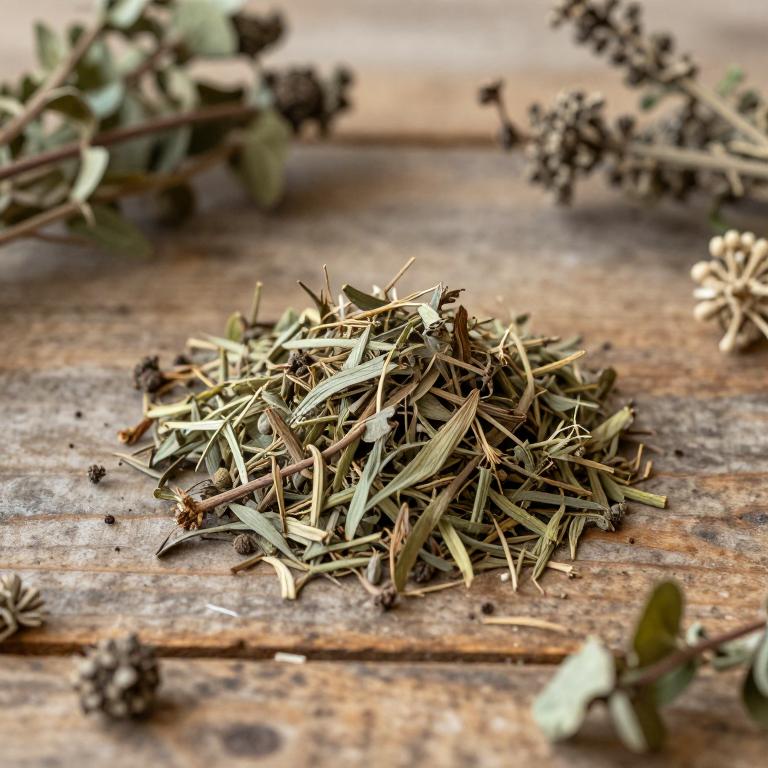
Names and Synonyms
Scientific Names
Accepted name
Bistorta officinalisSynonyms
- Persicaria bistorta
- Polygonum bistorta
Regional and Traditional Names
Spanish:
- Polygonum bistorta
- bistorta hembra
- bistorta macho
- bistorta menor
- romaza retorcida
- sierpe tendida
- suelda Colorada
German:
- Schlangen-Knöterich
- Persicaria bistorta
- Polygonum bistorta
- Schlangenwurz
- Lauchelchen
- Wiesen-Knöterich
- Zahnbürste
- Schlangen-Wiesenknöterich
French:
- Renouée bistorte
- renouée bistorte
Sources: Wikidata
Taxonomical Classification
This plant belongs to the kingdom Plantae and the phylum Streptophyta, falling under the class Equisetopsida and subclass Magnoliidae. Within the order Caryophyllales, it is classified under the family Polygonaceae. It is specifically identified by the genus Bistorta.
| Rank | Classification |
|---|---|
| Kingdom | Plantae |
| Phylum | Streptophyta |
| Class | Equisetopsida |
| Subclass | Magnoliidae |
| Order | Caryophyllales |
| Family | Polygonaceae |
| Genus | Bistorta |
Sources: The World Checklist of Vascular Plants (WCVP)
Distribution
This plant exhibits a specific distribution pattern concentrated primarily throughout Northern Europe. Within this region, its presence is documented in the coastal and inland landscapes of Denmark. It can also be found growing across the diverse terrains of Finland. The species extends its range to the northern reaches of Iceland as well. Finally, its geographical footprint includes the islands of Great Britain and Ireland.
| Region | Area |
|---|---|
| Northern Europe | Denmark |
| Northern Europe | Finland |
| Northern Europe | Great Britain |
| Northern Europe | Iceland |
| Northern Europe | Ireland |
| Northern Europe | Norway |
| Northern Europe | Sweden |
| Middle Europe | Austria |
| Middle Europe | Belgium |
| Middle Europe | Czechia-Slovakia |
Sources: The World Checklist of Vascular Plants (WCVP)
Botanical Identification
Ecology
The ecology of Bistorta officinalis is characterized by its adaptability to diverse montane and subalpine environments, where it primarily inhabits forest ecosystems, forest edges, and open meadows. This species exhibits a broad altitudinal distribution, thriving across a significant vertical gradient that begins at elevations as low as 300 m AMSL and extends to a maximum of 4120 m AMSL. While it can be found in varied landscapes, its typical ecological niche is centered around a mean elevation of approximately 2150 m AMSL, where the moisture levels and soil conditions of woodland fringes and grassy clearings provide optimal conditions for its growth and development.
- Elevational range max:
- 4120 m AMSL
- Elevational range mean:
- 2150 m AMSL
- Elevational range min:
- 300 m AMSL
- Habitat :
- forest, forest edges, meadows
Life history
The life history of Bistorta officinalis is characterized by its status as a perennial plant, allowing it to persist in its environment through multiple growing seasons. Structurally, it functions as a hemicryptophyte, a life form where the perennating buds are located at the soil surface, protected by leaf litter or other organic debris during unfavorable periods. This classification as a hemicryptophyte ensures its survival across seasonal cycles, facilitating its long-term presence in its natural habitat.
- Life form :
- hemicryptophyte
- Lifecycle :
- perennial
Morphology
The morphology of Bistorta officinalis is characterized by its growth form as a non-woody herb, specifically categorized as a forb. As a self-supporting plant, it does not function as a climber or a liana, nor does it exhibit parasitic or epiphytic tendencies, maintaining an independent terrestrial lifestyle. The plant's stature varies significantly depending on environmental conditions, with a height ranging from a minimum of 0.05 m to a maximum of 1 m, maintaining an average plant height of approximately 0.3415 m.
- Aquatic :
- terrestrial
- Climber :
- self-supporting
- Epiphyte :
- terrestrial
- Growth form :
- herb
- Growth form :
- forb
- Parasite :
- independent
- Plant height max:
- 1 m
- Plant height mean:
- 0.3415 m
- Plant height min:
- 0.05 m
- Woodiness :
- non-woody
Physiology
The physiology of Bistorta officinalis is characterized by a C3 photosynthetic pathway, utilizing the standard Calvin cycle for carbon fixation. The plant exhibits a non-carnivorous nutritional strategy, relying on soil nutrients rather than the capture of prey. Morphologically, the leaves possess a mean size of 180.21 cm², and the plant maintains a mean Specific Leaf Area (SLA) of 246.48 cm²/g, reflecting its leaf density and resource allocation strategies.
- Carnivory :
- non-carnivorous
- Leaf size mean:
- 180.21 cm²
- Photosynthetic pathway :
- C3
- Specific Leaf Area (SLA) mean:
- 246.48 cm²/g
Reproduction
The reproduction of Bistorta officinalis is characterized by a sexual cycle, as asexual reproduction is absent in this species. The flowering period typically begins in June and concludes in August, featuring inflorescences that range in length from a minimum of 0.03 m to a maximum of 0.09 m. The pollination process is primarily driven by an insect pollination syndrome. Once fertilized, the plant produces fruits classified as achenes, which are indehiscent in nature. These fruits are relatively small, with a mean length of 0.3 cm, ranging from a minimum of 0.25 cm to a maximum of 0.35 cm. Self-fertilization is present within the species, contributing to its reproductive success. The resulting seeds are lightweight, with a mean mass of approximately 0.0050395 g, falling within a specific range between 0.00481 g and 0.00624 g. For the spread of the next generation, the plant utilizes an anemochorous dispersal syndrome, relying on the wind to transport its seeds.
- Dehiscence :
- indehiscent
- Dispersal syndrome :
- anemochorous
- Flowering time :
- Jun
- Flowering time :
- Aug
- Fruit length max:
- 0.35 cm
- Fruit length mean:
- 0.3 cm
- Fruit length min:
- 0.25 cm
- Fruit type :
- achene
- Inflorescence length max:
- 0.09 m
- Inflorescence length min:
- 0.03 m
- Pollination syndrome :
- insect
- Reproduction asexual :
- absent
- Seed mass max:
- 0.00624 g
- Seed mass mean:
- 0.0050395 g
- Seed mass min:
- 0.00481 g
- Self fertilization :
- present
Sources: Global Inventory of Floras and Traits (GIFT)
Plant Parts
Bistorta officinalis has 1 reported plant parts identified across 1 scientific publications and several other databases that are studied for medicinal purposes. The most consistently reported plant part include root.
| Plant part | Supporting sources | Consensus |
|---|---|---|
| Root | 1 supporting sources | ★☆☆☆☆ |
Root
- Evidence-based complementary and alternative medicine : eCAM
Chemicals
Bistorta officinalis has 17 reported phytochemicals identified across 1 scientific publications and several other databases. The most consistently reported chemicals include CHLOROGENIC ACID, Tannins, Bis(2-ethylhexyl) phthalate, Cyclotetradecane, DODECANOIC ACID.
| Chemical | Supporting sources | Consensus |
|---|---|---|
| CHLOROGENIC ACID | 2 supporting sources | ★☆☆☆☆ |
| Tannins | 2 supporting sources | ★☆☆☆☆ |
| Bis(2-ethylhexyl) phthalate | 1 supporting sources | ★☆☆☆☆ |
| Cyclotetradecane | 1 supporting sources | ★☆☆☆☆ |
| DODECANOIC ACID | 1 supporting sources | ★☆☆☆☆ |
| Ethyl oleate | 1 supporting sources | ★☆☆☆☆ |
| Flavonoids | 1 supporting sources | ★☆☆☆☆ |
| Gallic acid | 1 supporting sources | ★☆☆☆☆ |
| Hexadecanoic acid | 1 supporting sources | ★☆☆☆☆ |
| Hexadecanoic acid methyl ester | 1 supporting sources | ★☆☆☆☆ |
CHLOROGENIC ACID
- Journal of ethnopharmacology
- Evidence-based complementary and alternative medicine : eCAM
Tannins
- Applied biochemistry and biotechnology
- Journal of ethnopharmacology
Bis(2-ethylhexyl) phthalate
- Applied biochemistry and biotechnology
Cyclotetradecane
- Applied biochemistry and biotechnology
DODECANOIC ACID
- Applied biochemistry and biotechnology
Ethyl oleate
- Applied biochemistry and biotechnology
Flavonoids
- Applied biochemistry and biotechnology
Gallic acid
- Evidence-based complementary and alternative medicine : eCAM
Hexadecanoic acid
- Applied biochemistry and biotechnology
Hexadecanoic acid methyl ester
- Applied biochemistry and biotechnology
Activities
Bistorta officinalis has 2 reported activities identified across 1 scientific publications and several other databases. The most consistently reported activities include Antibacterial, Antimicrobial.
| Activity | Supporting sources | Consensus |
|---|---|---|
| Antibacterial | 2 supporting sources | ★☆☆☆☆ |
| Antimicrobial | 1 supporting sources | ★☆☆☆☆ |
Antibacterial
- Journal of ethnopharmacology
- Journal of biological engineering
Antimicrobial
- Journal of ethnopharmacology
Conditions
Bistorta officinalis has 3 reported investigations on conditions identified across 1 scientific publications and several other databases. The most consistently reported conditions include Bleeding, Pseudomonas infections, diarrhea.
| Condition | Supporting sources | Consensus |
|---|---|---|
| Bleeding | 1 supporting sources | ★☆☆☆☆ |
| Pseudomonas infections | 1 supporting sources | ★☆☆☆☆ |
| Diarrhea | 1 supporting sources | ★☆☆☆☆ |
Bleeding
- Journal of biological engineering
Pseudomonas infections
- Molecules (Basel, Switzerland)
Diarrhea
- Journal of ethnopharmacology
Preparations
Bistorta officinalis has 8 reported preparations identified across 1 scientific publications and several other databases. The most consistently reported preparations include Aqueous ethanol extracts, ethanol extracts, ethanolic extract, ethanolic fraction of Persicaria bistorta, ethyl acetate fraction.
| Preparation | Supporting sources | Consensus |
|---|---|---|
| Aqueous ethanol extracts | 1 supporting sources | ★☆☆☆☆ |
| Ethanol extracts | 1 supporting sources | ★☆☆☆☆ |
| Ethanolic extract | 1 supporting sources | ★☆☆☆☆ |
| Ethanolic fraction of persicaria bistorta | 1 supporting sources | ★☆☆☆☆ |
| Ethyl acetate fraction | 1 supporting sources | ★☆☆☆☆ |
| Extract of the medicinal plant bistorta officinalis (bex) | 1 supporting sources | ★☆☆☆☆ |
| Extracts | 1 supporting sources | ★☆☆☆☆ |
| Water and ethanol extracts | 1 supporting sources | ★☆☆☆☆ |
Aqueous ethanol extracts
- Pakistan journal of pharmaceutical sciences
Ethanol extracts
- Molecules (Basel, Switzerland)
Ethanolic extract
- Applied biochemistry and biotechnology
Ethanolic fraction of persicaria bistorta
- Applied biochemistry and biotechnology
Ethyl acetate fraction
- Applied biochemistry and biotechnology
Extract of the medicinal plant bistorta officinalis (bex)
- Journal of biological engineering
Extracts
- Journal of ethnopharmacology
Water and ethanol extracts
- Journal of ethnopharmacology