Polygonum macrophyllum
Bistorta macrophylla · Accepted scientific name
Scientific literature: Very Sparse (5 studies) · ★☆☆☆☆
Polygonum macrophyllum, scientifically known as Bistorta macrophylla, is a perennial herb native to East Asian montane regions. Renowned for its large, lanceolate leaves and vibrant pink flower spikes, it holds significant value in traditional medicine. Its rhizomes are frequently utilized for their diverse therapeutic properties and healing potential.
- Family
- Polygonaceae
- Native range
- Asia-Temperate
- Parts used
- Not available
- Common names
- Not available
- Scientific synonyms
- Persicaria Macrophylla · Polygonum Macrophyllum
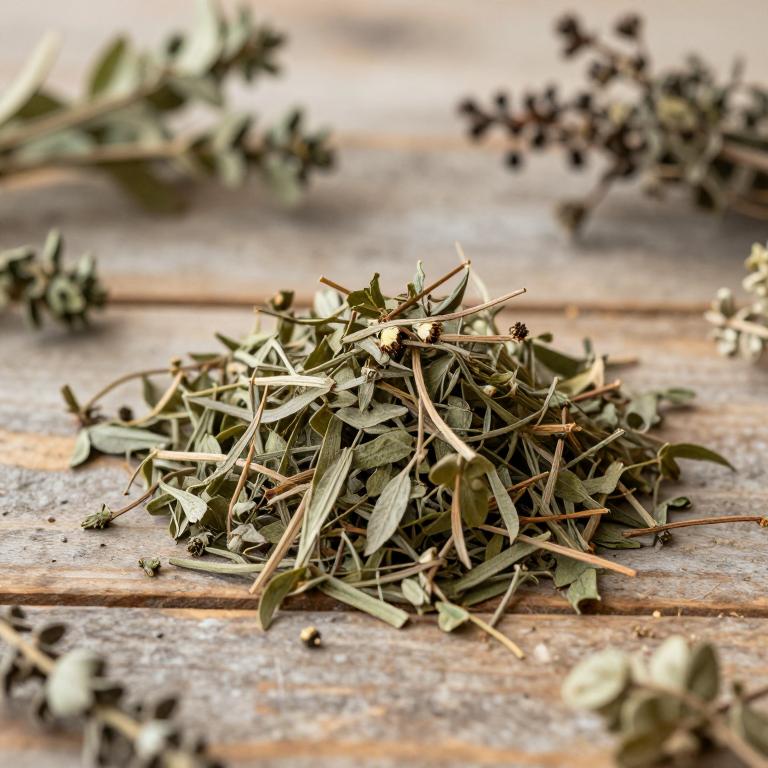
Names and Synonyms
Scientific Names
Accepted name
Bistorta macrophyllaSynonyms
- Persicaria macrophylla
- Polygonum macrophyllum
Regional and Traditional Names
Spanish:
- Polygonum macrophyllum
German:
- Polygonum macrophyllum
French:
- Polygonum macrophyllum
Sources: Wikidata, Catalogue of Life
Taxonomical Classification
This plant belongs to the kingdom Plantae and is classified under the phylum Streptophyta and class Equisetopsida. Within the subclass Magnoliidae, it is organized under the order Caryophyllales and the family Polygonaceae. Finally, it is placed in the genus Bistorta, where it is specifically known as Bistorta macrophyllia.
| Rank | Classification |
|---|---|
| Kingdom | Plantae |
| Phylum | Streptophyta |
| Class | Equisetopsida |
| Subclass | Magnoliidae |
| Order | Caryophyllales |
| Family | Polygonaceae |
| Genus | Bistorta |
Sources: The World Checklist of Vascular Plants (WCVP)
Distribution
This plant exhibits a broad geographical range across several distinct regions in Asia. Within China, it is widely distributed throughout the South-Central, North-Central, and Inner Mongolia areas. Its presence is also noted in the high-altitude regions of Tibet. Furthermore, the species extends beyond mainland China into the Indian Subcontinent. Specifically, it can be found growing in the Assam region.
| Region | Area |
|---|---|
| China | China South-Central |
| China | Inner Mongolia |
| China | China North-Central |
| China | Tibet |
| Indian Subcontinent | Assam |
| Indian Subcontinent | East Himalaya |
| Indian Subcontinent | Nepal |
| Indian Subcontinent | West Himalaya |
| Indo-China | Myanmar |
Sources: The World Checklist of Vascular Plants (WCVP)
Botanical Identification
Ecology
The ecology of Bistorta macrophylla is defined by its specialized adaptation to high-altitude montane and alpine environments, where it occupies a specific niche within mountainous landscapes. This species thrives across a broad altitudinal gradient, demonstrating significant resilience to the varying climatic conditions found at different heights. Its distribution begins at a minimum elevation of 2,000 m AMSL, ascending through diverse topographical zones to reach a maximum elevation of 5,000 m AMSL. On average, the plant is most commonly situated at a mean elevation of 3,525 m AMSL, a range that typically corresponds to subalpine meadows, rocky slopes, or damp alpine habitats characterized by cooler temperatures and high UV exposure.
- Elevational range max:
- 5000 m AMSL
- Elevational range mean:
- 3525 m AMSL
- Elevational range min:
- 2000 m AMSL
Life history
The life history of Bistorta macrophylla is characterized by its status as a perennial plant, meaning it lives for more than two years and undergoes repeated cycles of growth and dormancy. As a perennial species, it establishes a robust root system, often involving rhizomes, which allows the plant to store nutrients and survive through unfavorable seasons to emerge again in subsequent years. Its developmental cycle involves seasonal growth patterns where it emerges from its underground structures to produce large, characteristic leaves and eventually erect inflorescences. This perennial nature enables the plant to occupy stable niches within its habitat, as it does not need to complete its entire reproductive cycle within a single growing season, but instead can invest energy into long-term survival and multiple reproductive events over its lifespan.
- Lifecycle :
- perennial
Morphology
The morphology of Bistorta macrophyllia is characterized by its classification as a non-woody herb and a forb, exhibiting a growth form that is strictly self-supporting rather than acting as a liana, vine, or climber. As a terrestrial plant, it does not function as an aquatic, semiaquatic, or epiphytic species, maintaining its life cycle within soil-based environments. Furthermore, the plant is an independent organism, showing no parasitic tendencies, and lacks any woody structural development.
- Aquatic :
- terrestrial
- Climber :
- self-supporting
- Epiphyte :
- terrestrial
- Growth form :
- herb
- Growth form :
- forb
- Parasite :
- independent
- Woodiness :
- non-woody
Physiology
The physiology of Bistorta macrophyllia is characterized by a C3 photosynthetic pathway, which dictates its carbon fixation processes and metabolic efficiency in its native environment. Morphological physiological traits related to its foliage include specific leaf width dimensions that reflect its structural adaptations; the leaf width typically ranges from a minimum of 0.2 cm to a maximum of 0.5 cm, maintaining a mean leaf width of approximately 0.35 cm.
- Leaf width max:
- 0.5 cm
- Leaf width mean:
- 0.35 cm
- Leaf width min:
- 0.2 cm
- Photosynthetic pathway :
- C3
Reproduction
The reproduction of Bistorta macrophylla is characterized by its specific inflorescence and fruiting structures. The plant produces inflorescences that typically range in length from a minimum of 0.015 m to a maximum of 0.025 m. Following pollination, the development of the fruit occurs, with fruit lengths generally measuring between 0.25 cm and 0.3 cm, maintaining a mean fruit length of 0.275 cm. The resulting seeds are relatively fine, possessing a mean seed mass of 0.1075 g, which facilitates the plant's reproductive cycle and subsequent dispersal.
- Fruit length max:
- 0.3 cm
- Fruit length mean:
- 0.275 cm
- Fruit length min:
- 0.25 cm
- Inflorescence length max:
- 0.025 m
- Inflorescence length min:
- 0.015 m
- Seed mass mean:
- 0.1075 g
Sources: Global Inventory of Floras and Traits (GIFT)
Chemicals
Bistorta macrophylla has 5 reported phytochemicals identified across 0 scientific publications and several other databases. The most consistently reported chemicals include (+)-Catechin 7-O-beta-D-glucopyranoside, (-)-Epicatechin, (-)-Epicatechin-5-O-beta-D-glucopyranoside, CHLOROGENIC ACID, Gallic acid.
| Chemical | Supporting sources | Consensus |
|---|---|---|
| (+)-Catechin 7-O-beta-D-glucopyranoside | 1 supporting sources | ★☆☆☆☆ |
| (-)-Epicatechin | 1 supporting sources | ★☆☆☆☆ |
| (-)-Epicatechin-5-O-beta-D-glucopyranoside | 1 supporting sources | ★☆☆☆☆ |
| CHLOROGENIC ACID | 1 supporting sources | ★☆☆☆☆ |
| Gallic acid | 1 supporting sources | ★☆☆☆☆ |
(+)-Catechin 7-O-beta-D-glucopyranoside
- Zhong yao cai = Zhongyaocai = Journal of Chinese medicinal materials
(-)-Epicatechin
- Zhong yao cai = Zhongyaocai = Journal of Chinese medicinal materials
(-)-Epicatechin-5-O-beta-D-glucopyranoside
- Zhong yao cai = Zhongyaocai = Journal of Chinese medicinal materials
CHLOROGENIC ACID
- Zhong yao cai = Zhongyaocai = Journal of Chinese medicinal materials
Gallic acid
- Zhong yao cai = Zhongyaocai = Journal of Chinese medicinal materials