Cydista potosina
Bignonia potosina · Accepted scientific name
Scientific literature: Very Sparse (8 studies) · ★☆☆☆☆
Bignonia potosina, scientifically known as Bignonia potosina, is a medicinal plant native to specific tropical regions. Valued in traditional healing practices, it is often utilized for its unique bioactive compounds. This species offers significant ethnobotanical interest, particularly for its potential therapeutic applications in treating various ailments through natural extracts.
- Family
- Bignoniaceae
- Native range
- Northern America
- Parts used
- Flower
- Common names
- Not available
- Scientific synonyms
- Clytostoma Mayanum · Cydista Potosina · 1 more
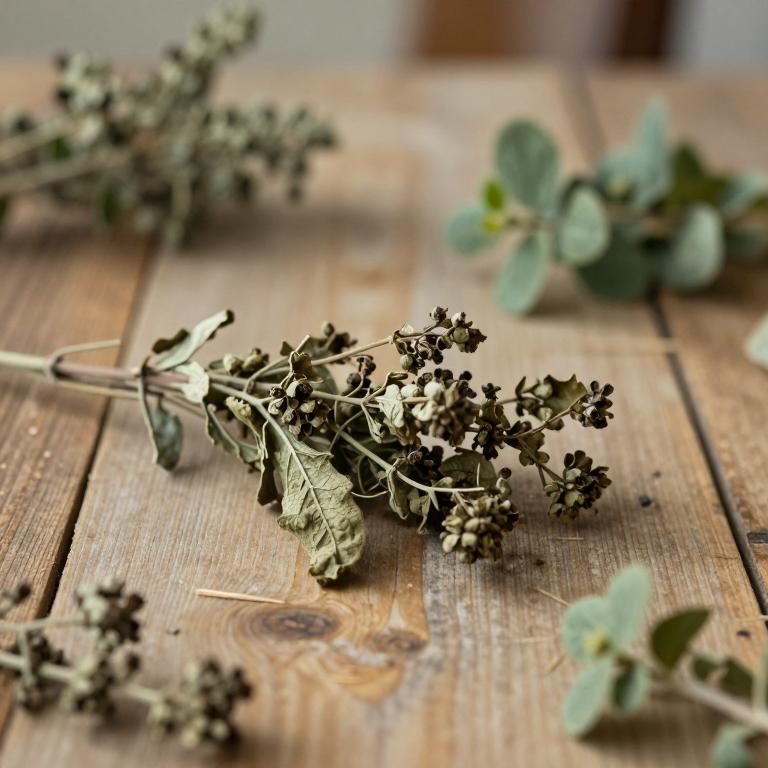
Names and Synonyms
Scientific Names
Accepted name
Bignonia potosinaSynonyms
- Clytostoma mayanum
- Cydista potosina
- Arrabidaea potosina
Regional and Traditional Names
Spanish:
- Cydista potosina
- bejuco tres lomo
Sources: Wikidata, Catalogue of Life
Taxonomical Classification
This plant belongs to the kingdom Plantae and is classified under the phylum Streptophyta and the class Equisetopsida. Within the subclass Magnoliidae, it is categorized under the order Lamiales and the family Bignoniaceae. Finally, its specific taxonomic placement is within the genus Bignonia.
| Rank | Classification |
|---|---|
| Kingdom | Plantae |
| Phylum | Streptophyta |
| Class | Equisetopsida |
| Subclass | Magnoliidae |
| Order | Lamiales |
| Family | Bignoniaceae |
| Genus | Bignonia |
Sources: The World Checklist of Vascular Plants (WCVP)
Distribution
This plant is native to various regions across the country of Mexico. Its presence is widely documented throughout the central part of the nation. Additionally, it can be found growing in the northeastern territories of Mexico. The species also extends its range into the Gulf and southwest regions of the country. Finally, its geographical distribution includes the southeastern parts of Mexico.
| Region | Area |
|---|---|
| Mexico | Mexico Central |
| Mexico | Mexico Northeast |
| Mexico | Mexico Gulf |
| Mexico | Mexico Southwest |
| Mexico | Mexico Southeast |
| Central America | Belize |
| Central America | Costa Rica |
| Central America | El Salvador |
| Central America | Guatemala |
| Central America | Honduras |
Sources: The World Checklist of Vascular Plants (WCVP)
Botanical Identification
Morphology
The morphology of Bignonia potosina is characterized by a growth habit that is primarily terrestrial, though it exhibits specialized adaptations for climbing within its environment. It functions as a liana, utilizing a climbing mechanism that is categorized as obligatory to navigate its habitat. As an independent organism, it does not exhibit parasitic behavior, nor does it function as an epiphyte, maintaining a terrestrial existence rather than growing upon other plants for support. Structurally, the plant is distinguished by its non-woody composition, which defines its flexible and climbing physical form.
- Aquatic :
- terrestrial
- Climber :
- liana
- Climber :
- obligatory
- Epiphyte :
- terrestrial
- Parasite :
- independent
- Woodiness :
- non-woody
Physiology
The physiology of Bignonia potosina is characterized by highly consistent structural and compositional metrics across its vegetative tissues. The stem specific density (SSD) exhibits no variance, maintaining a steady mean, minimum, and maximum value of 510 mg/cm³, suggesting a highly uniform wood density that contributes to its structural integrity. Similarly, the leaf dry matter content (LDMC) is uniform throughout the specimen, with a recorded mean, minimum, and maximum of 394 mg/g, indicating a stabilized ratio of organic matter to water within the leaf tissue. This leaf stability is further reflected in the specific leaf area (SLA), which also shows no fluctuation, maintaining a constant mean, minimum, and maximum of 134.72 cm²/g. These synchronized physiological values point to a specialized resource allocation strategy where the plant maintains strict control over its biomass density and leaf morphology.
- Leaf dry matter content (LDMC) mean:
- 394 mg/g
- Specific Leaf Area (SLA) min:
- 134.72 cm²/g
- Stem specific density (SSD) min:
- 510 mg/cm³
Reproduction
The reproduction of Bignonia potosina is characterized by specific morphological and ecological mechanisms centered on its seed production and distribution strategies. The species produces seeds with a highly uniform measurement, exhibiting a consistent seed length of 16.653 mm, with no variation observed between the minimum and maximum recorded values. Regarding the movement of its progeny, the plant utilizes multiple dispersal syndromes to ensure colonization of new habitats; specifically, it demonstrates a reproductive strategy that encompasses anemochorous (wind dispersal), zoochorous (animal dispersal), autochorous (self-dispersal), hydrochorous (water dispersal), and unspecialized methods. This diverse array of dispersal syndromes suggests a robust evolutionary adaptation, allowing the plant to leverage various environmental vectors to spread its seeds effectively.
- Dispersal syndrome :
- anemochorous
- Seed length mean:
- 16.653 mm
Sources: Global Inventory of Floras and Traits (GIFT)
Plant Parts
Bignonia potosina has 1 reported plant parts identified across 1 scientific publications and several other databases that are studied for medicinal purposes. The most consistently reported plant part include flower.
| Plant part | Supporting sources | Consensus |
|---|---|---|
| Flower | 1 supporting sources | ★☆☆☆☆ |
Flower
- Plants (Basel, Switzerland)
Chemicals
Bignonia potosina has 2 reported phytochemicals identified across 1 scientific publications and several other databases. The most consistently reported chemicals include Fatty acids, Terpenes.
| Chemical | Supporting sources | Consensus |
|---|---|---|
| Fatty acids | 1 supporting sources | ★☆☆☆☆ |
| Terpenes | 1 supporting sources | ★☆☆☆☆ |
Fatty acids
- Plants (Basel, Switzerland)
Terpenes
- Plants (Basel, Switzerland)
Conditions
Bignonia potosina has 2 reported investigations on conditions identified across 1 scientific publications and several other databases. The most consistently reported conditions include Acinetobacter baumannii, Pseudomonas aeruginosa.
| Condition | Supporting sources | Consensus |
|---|---|---|
| Acinetobacter baumannii | 1 supporting sources | ★☆☆☆☆ |
| Pseudomonas aeruginosa | 1 supporting sources | ★☆☆☆☆ |
Acinetobacter baumannii
- Plants (Basel, Switzerland)
Pseudomonas aeruginosa
- Plants (Basel, Switzerland)
Preparations
Bignonia potosina has 1 reported preparations identified across 1 scientific publications and several other databases. The most consistently reported preparations include liana and flower extracts.
| Preparation | Supporting sources | Consensus |
|---|---|---|
| Liana and flower extracts | 1 supporting sources | ★☆☆☆☆ |
Liana and flower extracts
- Plants (Basel, Switzerland)