Bidens
Bidens · Accepted scientific name
Scientific literature: Very Sparse (1 studies) · ★☆☆☆☆
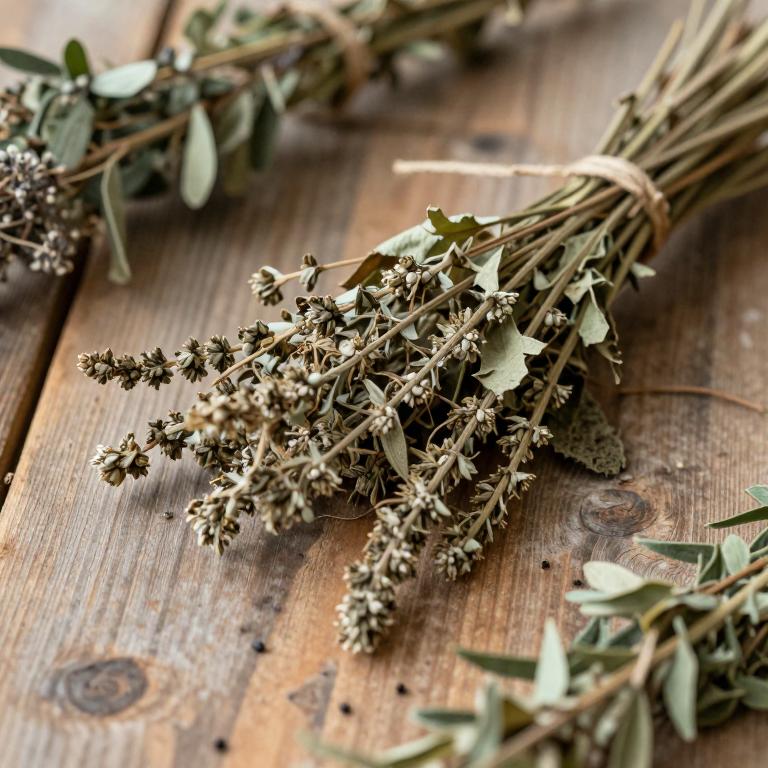
Bidens represents a diverse genus of plants that has gained significant attention in pharmacological research due to its diverse biological activities. Recent studies have focused on its potent antimalarial properties, offering potential new avenues for combating parasitic infections. The therapeutic efficacy of this plant is largely attributed to its rich concentration of bioactive chemicals, particularly flavonoids. Researchers are increasingly utilizing advanced methods such as microwave-assisted extraction to optimize the yield of these beneficial compounds. By refining the production of various plant extracts, scientists aim to harness the full medicinal potential of Bidens for future healthcare applications.
- Synonyms
- Adenolepis · Gemella · 8 more
- Common names
- Not available
- Family
- Asteraceae
- Distribution
- Not available
- Plant Parts
- Not available
Classification
Common Names
Bidens is a versatile plant recognized by a wide array of regional and descriptive names. In certain areas, it is affectionately referred to as aceitillas or mozotes, while others call it amores secos y mirasoles. English speakers often identify the species as beggarticks or bur-marigolds due to its unique seed structure. It is also frequently documented under the variations of bident and bidents. This diversity in nomenclature highlights the plant's widespread presence across different cultures and landscapes.
Sources: Catalogue of Life (COL)
Synonyms
Bidens is a diverse genus that has undergone significant taxonomic revisions over the years. Due to these shifting classifications, several other names are recognized as synonyms within the group. For instance, the names Adenolepis and Campylotheca are often used to describe species now housed under this umbrella. Similarly, the genus has absorbed various botanical identities such as Delucia and Diodonta. These relationships are further complicated by the inclusion of Dolichotheca, reflecting the complex history of plant nomenclature.
Sources: The World Checklist of Vascular Plants (WCVP)
Taxonomy
Bidens belongs to the expansive kingdom Plantae, representing a diverse group of multicellular organisms. Within this vast realm, it is classified under the class Equisetopsida, distinguishing its evolutionary lineage. The plant further resides in the order Asterales, which connects it to a wide array of flowering species. As a member of the Asteraceae family, it shares characteristic traits with many well-known composite flowers. Ultimately, its specific identity is defined by its placement within the genus Bidens.
| Rank | Classification |
|---|---|
| Kingdom | Plantae |
| Phylum | Streptophyta |
| Class | Equisetopsida |
| Subclass | Magnoliidae |
| Order | Asterales |
| Family | Asteraceae |
| Genus | Bidens |
Sources: The World Checklist of Vascular Plants (WCVP)
Distribution
Geographic Regions
Bidens exhibits a diverse geographical distribution across several key regions of the African continent. Within East Tropical Africa, the plant is commonly found throughout Kenya, Tanzania, and Uganda. Its reach extends beyond the mainland to the Atlantic islands of Macaronesia. Specifically, populations can be identified within the Azores and throughout the Canary Islands. This widespread presence highlights the plant's ability to thrive in varied island and continental environments.
Sources: The World Checklist of Vascular Plants (WCVP)
Identification
Biological Activities
Bidens species, particularly Bidens pilosa, have demonstrated significant antimalarial potential through various scientific studies. Research indicates that crude ethanol extracts from the leaves and roots can inhibit the growth of Plasmodium falciparum by up to 90% in vitro. This biological activity appears to be strongly linked to the presence of specific chemical compounds, such as flavonoids and aliphatic acetylenes. In addition to successful in vitro testing, certain fractions have also shown a partial reduction of parasitemia in mouse models. Because of these promising results, Bidens remains a primary subject of interest for developing new treatments against malaria.
Compounds
Bidens is a notable medicinal plant that contains valuable active ingredients such as flavonoids. Recent research has focused on utilizing microwave-assisted extraction technology to efficiently isolate these specific compounds. By applying a precise combination of microwave power and radiation time, scientists can optimize the recovery process. For instance, setting the microwave power to 850 W for a duration of 30 minutes has proven effective for this extraction. This optimized approach ensures that the beneficial flavonoids within the plant are obtained more reliably for medicinal use.
Conditions
Preparations
Bidens is prepared as extracts that have demonstrated the ability to modulate immune cells through the presence of phenolic compounds and flavonoids. These extracts are utilized for their potential immunomodulatory, anti-inflammatory, and antioxidant properties in various medicinal applications. Furthermore, Bidens is prepared as microwave-assisted extraction to efficiently recover its active ingredients. Specifically, the optimization of this microwave-assisted process for flavonoids in Bidens involves utilizing a power of 850 W and a radiation time of 30 minutes. This specialized extraction technology serves as a reasonable method for obtaining the plant's valuable chemical components.