Arizona beggar-ticks
Bidens aurea · Accepted scientific name
Scientific literature: Very Sparse (2 studies) · ★☆☆☆☆
Arizona beggar-ticks, scientifically known as Bidens aurea, is a resilient perennial herb native to the arid landscapes of the American Southwest. Characterized by its vibrant yellow, daisy-like blooms, this plant plays a vital role in supporting local pollinators and serves as an important subject in ethnobotanical studies.
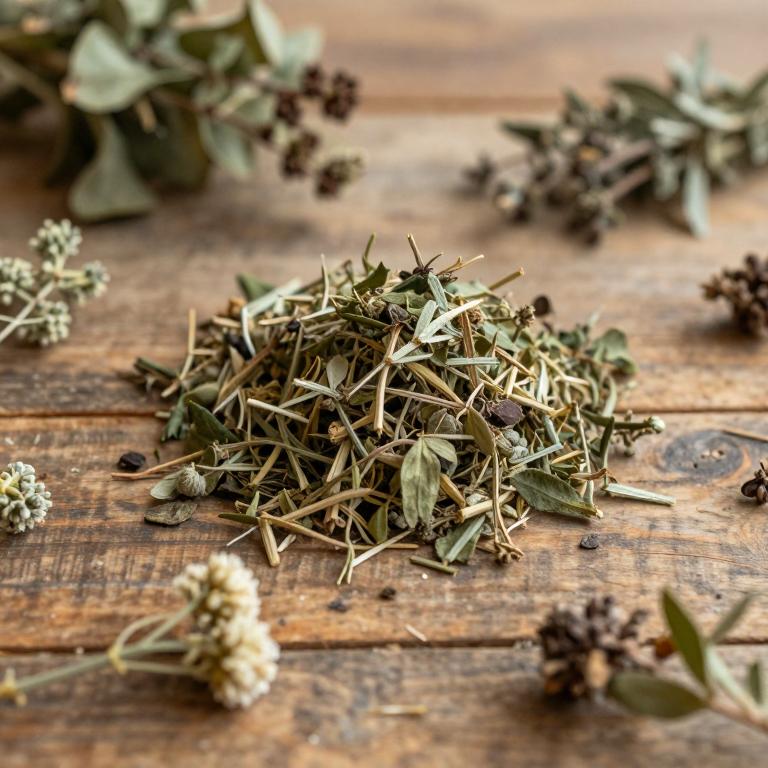
Names and Synonyms
Common Names
- Arizona beggar-ticks
- Apache Beggarticks
- Arizona beggarticks
- Fern-leaved Beggarticks
Scientific Names
Accepted name
Bidens aureaSynonyms
- Coreopsis tetragona
- Bidens arguta
- Bidens decolorata
- Bidens heterophylla
- Bidens longifolia
- Bidens warszewicziana var. simplicifolia
- Bidens luxurians
- Bidens warszewicziana
- Coreopsis ambigua
- Bidens ferulifolia var. ludens
- Coreopsis arguta
- Coreopsis aurea
- Bidens ludens
- Coreopsis incurva
- Bidens heterophylla var. wrightii
- Bidens schaffneri var. wrightii
- Kerneria ferulifolia
- Bidens aurea var. wrightii
- Bidens ferulifolia
- Bidens tetragona
- Coreopsis aurea var. leptophylla
- Bidens ferulifolia var. foeniculifolia
- Bidens arguta var. luxurians
- Coreopsis trichosperma var. aurea
- Diodonta aurea
- Bidens foeniculifolia
- Bidens procera
- Coreopsis aurea var. incisa
- Coreopsis aurea var. subintegra
- Bidens warszewicziana var. bipinnata
- Bidens warszewicziana var. pinnata
- Coreopsis nitida
- Diodonta leptophylla
- Coreopsis lucida
- Coreopsis ferulifolia
- Diodonta mitis
- Coreopsis foeniculacea
Regional and Traditional Names
Spanish:
- Aceitillo
- Capitaneja
- Falso Té
- Té de milpa
- Amor seco dorado
German:
- goldener Zweizahn
- Gold-Zweizahn
French:
- bident doré
Sources: Wikidata, Catalogue of Life
Taxonomical Classification
This plant belongs to the kingdom Plantae and the phylum Streptophyta, falling under the class Equisetopsida and subclass Magnoliidae. Within the order Asterales, it is classified under the family Asteraceae. Specifically, its taxonomic identity is defined by the genus Bidens, with the species name aurea.
| Rank | Classification |
|---|---|
| Kingdom | Plantae |
| Phylum | Streptophyta |
| Class | Equisetopsida |
| Subclass | Magnoliidae |
| Order | Asterales |
| Family | Asteraceae |
| Genus | Bidens |
Sources: The World Checklist of Vascular Plants (WCVP)
Distribution
This plant exhibits a specific distribution across several regions in the European continent. In Northern Europe, its presence is recorded in Great Britain, Ireland, and Norway. Moving toward the central part of the continent, the species can also be found in Middle Europe. Specifically, it inhabits the territories of both Austria and Germany. These locations represent the documented geographical range for Bidens aurea.
| Region | Area |
|---|---|
| Northern Europe | Great Britain |
| Northern Europe | Ireland |
| Northern Europe | Norway |
| Middle Europe | Austria |
| Middle Europe | Germany |
| Middle Europe | Poland |
| Southwestern Europe | Baleares |
| Southwestern Europe | France |
| Southwestern Europe | Portugal |
| Southwestern Europe | Spain |
Sources: The World Checklist of Vascular Plants (WCVP)
Botanical Identification
Ecology
The ecology of Bidens aurea is characterized by its adaptation to low-to-mid altitude environments, thriving within a specific elevational range that begins at 0 m AMSL and extends to a maximum of 500 m AMSL. This species typically colonizes open habitats such as roadsides, field margins, and disturbed lands where sunlight availability is high. It functions effectively in various soil types, often showing resilience in disturbed ecosystems where competition from dense forest canopies is minimal. By occupying these lower altitudinal zones, the plant plays a role in local biodiversity, providing nectar sources for various pollinators within its specific topographical niche.
- Elevational range max:
- 500 m AMSL
- Elevational range min:
- 0 m AMSL
Life history
The life history of Bidens aurea is characterized by its status as a perennial plant, though its growth patterns can be categorized as variable depending on environmental conditions and resource availability. Throughout its life cycle, the plant undergoes distinct stages of development, beginning with seed germination that leads to the establishment of a robust root system capable of supporting its long-term survival. As a perennial, it possesses the ability to persist through multiple growing seasons, often regenerating from its rootstock or through the dispersal of its seeds. The plant's longevity allows it to establish a stable presence in its habitat, transitioning from vegetative growth to reproductive maturity where it produces characteristic inflorescences to ensure the continuation of its lineage.
- Lifecycle :
- perennial
Morphology
The morphology of Bidens aurea is characterized by a growth form classified as a non-woody herb and specifically a forb. This plant is terrestrial in its habitat, functioning as an independent organism rather than a parasite or epiphyte. It exhibits a self-supporting growth habit, meaning it does not function as a climber, liana, or vine. The plant displays an erect shoot orientation, with a stature that typically ranges from a minimum height of 0.2 m to a maximum height of 2 m.
- Aquatic :
- terrestrial
- Climber :
- self-supporting
- Epiphyte :
- terrestrial
- Growth form :
- herb
- Growth form :
- forb
- Parasite :
- independent
- Plant height max:
- 2 m
- Plant height min:
- 0.2 m
- Shoot orientation :
- erect
- Woodiness :
- non-woody
Physiology
The physiological development of Bidens aurea is characterized by a distinct structural organization of its vegetative organs, which facilitates efficient light interception and nutrient distribution. The plant exhibits a systematic leaf arrangement that follows an alternate pattern along the stem, ensuring that each leaf is positioned to minimize shading of the lower foliage and maximize photosynthetic surface area. The individual leaves are characterized by an elliptic leaf form, a shape that optimizes the surface-to-volume ratio for gas exchange and transpiration processes. This morphological configuration, combined with the strategic alternate placement, supports the metabolic requirements necessary for the plant's growth and resource acquisition within its ecological niche.
- Leaf arrangement :
- alternate
- Leaf form :
- elliptic
Reproduction
The reproduction of Bidens aurea is characterized by a versatile flowering period that can span nearly the entire year, starting as early as January and extending through December, though the specific timing remains variable. The plant produces flowers that range in length from 1.3 cm to 2.5 cm, with a width varying between 3 cm and 5 cm, and they are typically white in color. Following pollination, the plant develops fruit in the form of an achene, which is an indehiscent type of fruit. These fruits are relatively small, measuring between a minimum of 0.3 cm and a maximum of 0.5 cm in length. The seeds produced are exceptionally light, with a consistent mean, minimum, and maximum mass of 0.00118 g, facilitating their dispersal.
- Dehiscence :
- indehiscent
- Flower colour :
- white
- Flower length max:
- 2.5 cm
- Flower length min:
- 1.3 cm
- Flower width max:
- 5 cm
- Flower width min:
- 3 cm
- Flowering time :
- Jan
- Flowering time :
- Dec
- Fruit length max:
- 0.5 cm
- Fruit length min:
- 0.3 cm
- Fruit type :
- achene
- Seed mass mean:
- 0.00118 g
Sources: Global Inventory of Floras and Traits (GIFT)
Activities
Bidens aurea has 2 reported activities identified across 0 scientific publications and several other databases. The most consistently reported activities include Antimicrobial, Antioxidant.
| Activity | Supporting sources | Consensus |
|---|---|---|
| Antimicrobial | 1 supporting sources | ★☆☆☆☆ |
| Antioxidant | 1 supporting sources | ★☆☆☆☆ |
Antimicrobial
- BMC complementary medicine and therapies
Antioxidant
- BMC complementary medicine and therapies
Preparations
Bidens aurea has 16 reported preparations identified across 0 scientific publications and several other databases. The most consistently reported preparations include flavonoid fraction, 6 isolated fractions of ethanolic extract, Ethyl acetate: ethanol (20:80) fraction, Ethyl acetate: ethanol (60:40) fraction, cold water.
| Preparation | Supporting sources | Consensus |
|---|---|---|
| Flavonoid fraction | 2 supporting sources | ★☆☆☆☆ |
| 6 isolated fractions of ethanolic extract | 1 supporting sources | ★☆☆☆☆ |
| Ethyl acetate: ethanol (20:80) fraction | 1 supporting sources | ★☆☆☆☆ |
| Ethyl acetate: ethanol (60:40) fraction | 1 supporting sources | ★☆☆☆☆ |
| Cold water | 1 supporting sources | ★☆☆☆☆ |
| Crude ethanolic extract | 1 supporting sources | ★☆☆☆☆ |
| Diethyal ether extract | 1 supporting sources | ★☆☆☆☆ |
| Ethanol | 1 supporting sources | ★☆☆☆☆ |
| Ethanolic extract | 1 supporting sources | ★☆☆☆☆ |
| Ether fraction of the flavonoid extract | 1 supporting sources | ★☆☆☆☆ |
Flavonoid fraction
- Journal of ethnopharmacology
- Zeitschrift fur Naturforschung. C, Journal of biosciences
6 isolated fractions of ethanolic extract
- BMC complementary medicine and therapies
Ethyl acetate: ethanol (20:80) fraction
- BMC complementary medicine and therapies
Ethyl acetate: ethanol (60:40) fraction
- BMC complementary medicine and therapies
Cold water
- BMC complementary medicine and therapies
Crude ethanolic extract
- BMC complementary medicine and therapies
Diethyal ether extract
- Zeitschrift fur Naturforschung. C, Journal of biosciences
Ethanol
- BMC complementary medicine and therapies
Ethanolic extract
- BMC complementary medicine and therapies
Ether fraction of the flavonoid extract
- Journal of ethnopharmacology