Beggar's Lice
Bidens alba · Accepted scientific name
Scientific literature: Very Sparse (40 studies) · ★☆☆☆☆
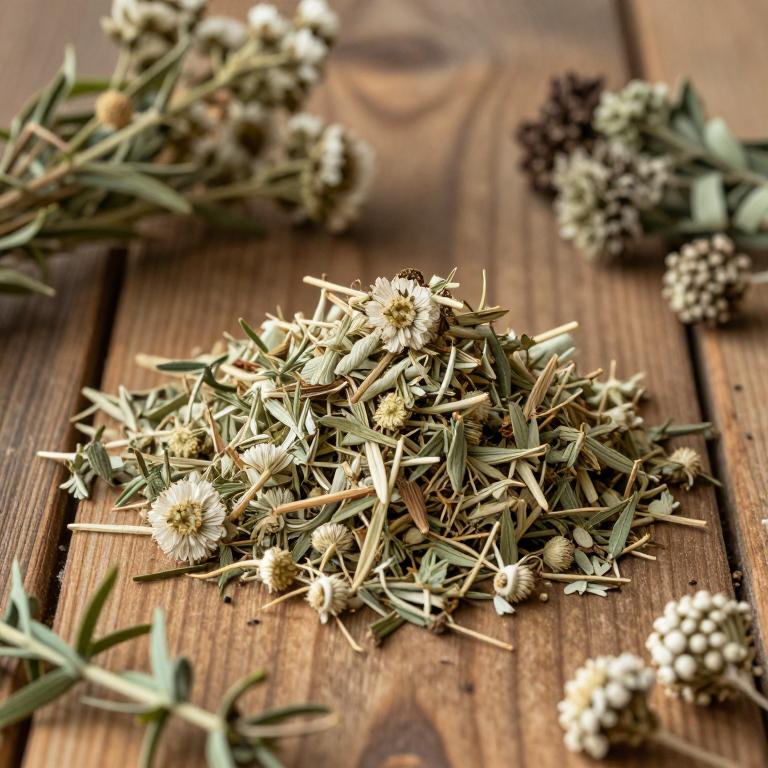
Beggar's Lice, scientifically known as Bidens alba, is a versatile medicinal herb widely used in traditional medicine. Renowned for its potent anti-inflammatory, antibacterial, and antioxidant properties, this plant serves as a natural remedy for skin ailments, wound healing, and various infections, offering significant therapeutic potential in holistic healthcare practices.
Names and Synonyms
Common Names
- Beggar's Lice
- Monkey's Lice
- Romerillo
- Shepherd's Needles
- Shepherds Needles
- Spanish needles
- White beggarticks
Scientific Names
Accepted name
Bidens albaSynonyms
- Bidens leucanthema
- Kerneria pilosa var. radiata
- Kerneria leucanthema
- Bidens pilosa f. radiata
- Bidens odorata var. rosea
- Bidens alba var. radiata
- Bidens caucalidea
- Bidens pilosa var. radiata
- Bidens daucifolia
- Bidens pilosa subvar. radiata
- Coreopsis alba
- Bidens odorata var. oaxacensis
- Bidens ramosissima
- Coreopsis leucanthema
- Bidens oxyodonta
- Bidens exaristata
- Coreopsis odoratissima
- Bidens bonplandii
- Bidens brachycarpa
- Bidens abortiva
- Cosmos tenellus
- Cosmos pilosus
- Bidens decumbens
- Bidens pilosa f. decumbens
- Bidens odorata var. chilpancingensis
- Bidens pilosa var. leucanthema
- Bidens pilosa var. brachycarpa
- Bidens pilosa var. albus
- Bidens leucanthema var. humilis
- Bidens deamii
- Bidens inermis
- Bidens rosea
Regional and Traditional Names
Spanish:
- Bidens pilosa var. radiata
- Coreopsis alba
- Bidens pilosa var radiata
- aceitilla blanca
German:
- Weißer Zweizahn
Sources: Wikidata, Catalogue of Life
Taxonomical Classification
This plant belongs to the kingdom Plantae and is classified under the phylum Streptophyta and class Equisetopsida. Within the subclass Magnoliidae and order Asterales, it is further categorized into the family Asteraceae. Finally, it is identified under the genus Bidens, specifically as the species Bidens alba.
| Rank | Classification |
|---|---|
| Kingdom | Plantae |
| Phylum | Streptophyta |
| Class | Equisetopsida |
| Subclass | Magnoliidae |
| Order | Asterales |
| Family | Asteraceae |
| Genus | Bidens |
Sources: The World Checklist of Vascular Plants (WCVP)
Distribution
This plant exhibits a diverse geographical distribution spanning across several distinct regions of the world. In the Macaronesia region, it can be found specifically on the island of Madeira. Moving to Western Asia, its presence is noted in the East Aegean Islands as well as throughout the Lebanon-Syria area. Its range also extends into Eastern Asia, where it is located in the Kazan-retto region. Finally, the distribution includes the remote Ogasawara-shoto islands within the same eastern territory.
| Region | Area |
|---|---|
| Macaronesia | Madeira |
| Western Asia | East Aegean Is. |
| Western Asia | Lebanon-Syria |
| Eastern Asia | Kazan-retto |
| Eastern Asia | Ogasawara-shoto |
| Malesia | Philippines |
| Australia | New South Wales |
| Australia | Northern Territory |
| Australia | Queensland |
| Australia | South Australia |
Sources: The World Checklist of Vascular Plants (WCVP)
Botanical Identification
Ecology
The ecology of Bidens alba is characterized by its remarkable adaptability to diverse environmental conditions, spanning a broad vertical gradient from sea level to high-altitude regions. It exhibits an expansive elevational range, thriving from 0 m AMSL up to a maximum of 3000 m AMSL. This species is frequently found in anthropogenic areas (Área Antrópica), demonstrating a high tolerance for human-disturbed landscapes, including roadsides, agricultural fields, and urban gardens. Its ability to colonize these disturbed habitats across such a wide altitudinal spectrum underscores its resilience and opportunistic growth patterns within various ecosystems.
- Elevational range max:
- 3000 m AMSL
- Elevational range min:
- 0 m AMSL
- Habitat :
- Área Antrópica
Genetics
The genetics of Bidens alba are characterized by specific chromosomal configurations that define its cytological profile. The plant exhibits a chromosome number of 20 or 40, reflecting a variation in its genomic structure. Furthermore, it typically functions at a ploidy level of 2, indicating a diploid state in its primary genetic expression.
- Chromosome number :
- 20,40
- Ploidy :
- 2
Life history
The life history of Bidens alba is characterized by its classification as an annual plant, meaning it completes its entire developmental cycle—from germination to seed production—within a single growing season. During this cycle, the plant rapidly establishes itself, focusing its energy on vegetative growth to develop a bushy structure before transitioning into a reproductive phase. As an annual, it relies heavily on the production of a large quantity of seeds to ensure the survival of the next generation, as the individual parent plant will not survive beyond its first year. This rapid turnover allows the species to colonize disturbed habitats and open areas effectively, utilizing seasonal rainfall and favorable temperatures to trigger germination and complete its lifecycle before environmental conditions shift.
- Lifecycle :
- annual
Morphology
The morphology of Bidens alba is characterized by its growth form as a non-woody herb and specifically a forb. This terrestrial plant, which is neither an epiphyte nor a parasite, grows as an independent organism. It exhibits a self-supporting structure, lacking any climbing or liana-like qualities, and maintains an erect shoot orientation. In terms of physical stature, the plant typically reaches a height ranging from a minimum of 0.3 m to a maximum of 1.5 m.
- Aquatic :
- terrestrial
- Climber :
- self-supporting
- Epiphyte :
- terrestrial
- Growth form :
- herb
- Growth form :
- forb
- Parasite :
- independent
- Plant height max:
- 1.5 m
- Plant height min:
- 0.3 m
- Shoot orientation :
- erect
- Woodiness :
- non-woody
Physiology
The physiological development of Bidens alba is characterized by significant morphological variability in its foliar structures, which play a critical role in its photosynthetic capacity and environmental adaptation. The leaves exhibit a wide range of dimensions, with a mean leaf length of 5.25 cm, though individual specimens can fluctuate significantly, ranging from a minimum length of 3.5 cm to a maximum length of 17 cm. This longitudinal variation is accompanied by specific width constraints, where the leaf width ranges from a minimum of 1.5 cm to a maximum of 2.5 cm. Such variations in leaf surface area and geometry suggest a dynamic physiological response to light interception and transpiration requirements, allowing the plant to optimize gas exchange and nutrient transport across its varying leaf sizes.
- Leaf length max:
- 17 cm
- Leaf length mean:
- 5.25 cm
- Leaf length min:
- 3.5 cm
- Leaf width max:
- 2.5 cm
- Leaf width min:
- 1.5 cm
Reproduction
The reproduction of Bidens alba is characterized by the production of white flowers that lead to the development of specialized fruit structures. The fruit is classified as an achene and is notably indehiscent, meaning it does not split open at maturity to release its contents. These achenes exhibit measurable variation in size, with a mean fruit length of 1 cm (ranging from a minimum of 0.4 cm to a maximum of 1.3 cm) and a consistent mean width of 0.1 cm, which remains constant across its minimum and maximum dimensions. The seeds produced within these fruits are extremely lightweight, maintaining a uniform mass of approximately 0.001 g, with the minimum, mean, and maximum seed mass all recorded at this value.
- Dehiscence :
- indehiscent
- Flower colour :
- white
- Fruit length max:
- 1.3 cm
- Fruit length mean:
- 1 cm
- Fruit length min:
- 0.4 cm
- Fruit type :
- achene
- Fruit width max:
- 0.1 cm
- Seed mass mean:
- 0.001 g
Sources: Global Inventory of Floras and Traits (GIFT)
Plant Parts
Bidens alba has 4 reported plant parts identified across 5 scientific publications and several other databases that are studied for medicinal purposes. The most consistently reported plant part include leaf, flower, root, stem.
| Plant part | Supporting sources | Consensus |
|---|---|---|
| Leaf | 2 supporting sources | ★☆☆☆☆ |
| Flower | 1 supporting sources | ★☆☆☆☆ |
| Root | 1 supporting sources | ★☆☆☆☆ |
| Stem | 1 supporting sources | ★☆☆☆☆ |
Leaf
- Journal of natural products
- Frontiers in plant science
Flower
- Frontiers in plant science
Root
- Frontiers in plant science
Stem
- Frontiers in plant science
Chemicals
Bidens alba has 22 reported phytochemicals identified across 5 scientific publications and several other databases. The most consistently reported chemicals include BETA-SITOSTEROL, CHLOROGENIC ACID, Cytopiloyne, Ethyl caffeate, Flavonoid.
| Chemical | Supporting sources | Consensus |
|---|---|---|
| BETA-SITOSTEROL | 1 supporting sources | ★☆☆☆☆ |
| CHLOROGENIC ACID | 1 supporting sources | ★☆☆☆☆ |
| Cytopiloyne | 1 supporting sources | ★☆☆☆☆ |
| Ethyl caffeate | 1 supporting sources | ★☆☆☆☆ |
| Flavonoid | 1 supporting sources | ★☆☆☆☆ |
| Flavonoids | 1 supporting sources | ★☆☆☆☆ |
| Friedelin | 1 supporting sources | ★☆☆☆☆ |
| Friedelinol | 1 supporting sources | ★☆☆☆☆ |
| Lupeol | 1 supporting sources | ★☆☆☆☆ |
| N-TRIDECANE | 1 supporting sources | ★☆☆☆☆ |
BETA-SITOSTEROL
- Zhong yao cai = Zhongyaocai = Journal of Chinese medicinal materials
CHLOROGENIC ACID
- Animals : an open access journal from MDPI
Cytopiloyne
- Animals : an open access journal from MDPI
Ethyl caffeate
- Animals : an open access journal from MDPI
Flavonoid
- Animals : an open access journal from MDPI
Flavonoids
- Frontiers in plant science
Friedelin
- Zhong yao cai = Zhongyaocai = Journal of Chinese medicinal materials
Friedelinol
- Zhong yao cai = Zhongyaocai = Journal of Chinese medicinal materials
Lupeol
- Zhong yao cai = Zhongyaocai = Journal of Chinese medicinal materials
N-TRIDECANE
- Zhong yao cai = Zhongyaocai = Journal of Chinese medicinal materials
Activities
Bidens alba has 2 reported activities identified across 5 scientific publications and several other databases. The most consistently reported activities include Antioxidant, Antimicrobial.
| Activity | Supporting sources | Consensus |
|---|---|---|
| Antioxidant | 2 supporting sources | ★☆☆☆☆ |
| Antimicrobial | 1 supporting sources | ★☆☆☆☆ |
Antioxidant
- BMC research notes
- Frontiers in plant science
Antimicrobial
- Frontiers in plant science
Conditions
Bidens alba has 3 reported investigations on conditions identified across 5 scientific publications and several other databases. The most consistently reported conditions include antioxidant, hypertension, pain.
| Condition | Supporting sources | Consensus |
|---|---|---|
| Antioxidant | 1 supporting sources | ★☆☆☆☆ |
| Hypertension | 1 supporting sources | ★☆☆☆☆ |
| Pain | 1 supporting sources | ★☆☆☆☆ |
Antioxidant
- Frontiers in plant science
Hypertension
- Journal of ethnobiology and ethnomedicine
Pain
- Journal of ethnobiology and ethnomedicine
Preparations
Bidens alba has 1 reported preparations identified across 5 scientific publications and several other databases. The most consistently reported preparations include leaves.
| Preparation | Supporting sources | Consensus |
|---|---|---|
| Leaves | 1 supporting sources | ★☆☆☆☆ |
Leaves
- Journal of natural products