Bicuiba oleifera
Bicuiba oleifera · Accepted scientific name
Scientific literature: Very Sparse (7 studies) · ★☆☆☆☆
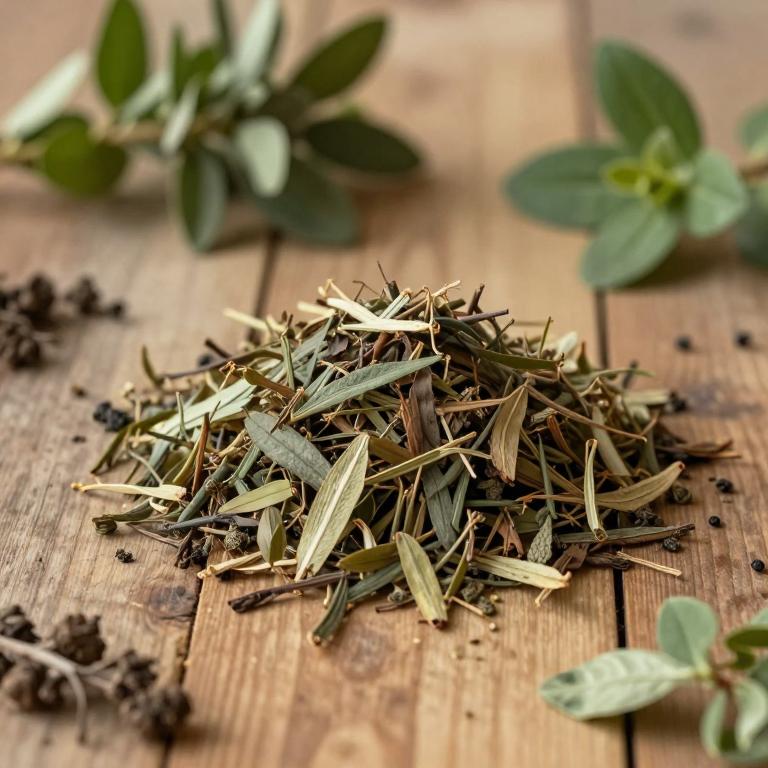
scientifically known as Bicuiba oleifera, is a remarkable medicinal plant valued for its diverse therapeutic properties. Indigenous to specific tropical regions, this botanical treasure is traditionally utilized to treat various ailments. Research continues to explore its bioactive compounds, highlighting its significant potential in modern pharmacology and natural wellness.
- Family
- Myristicaceae
- Native range
- Southern America
- Parts used
- Not available
- Common names
- Not available
- Scientific synonyms
- Virola Oleifera · Myristica Oleifera
Names and Synonyms
Scientific Names
Accepted name
Bicuiba oleiferaSynonyms
- Virola oleifera
- Myristica oleifera
Regional and Traditional Names
Spanish:
- Myristica oleifera
Sources: Wikidata, Catalogue of Life
Taxonomical Classification
This plant, Bicuiba oleifera, belongs to the kingdom Plantae and the phylum Streptophyta. It is classified within the class Equisetopsida and the subclass Magnoliidae, falling under the order Magnoliales. Finally, it is a member of the family Myristicaceae within the genus Bicuiba.
| Rank | Classification |
|---|---|
| Kingdom | Plantae |
| Phylum | Streptophyta |
| Class | Equisetopsida |
| Subclass | Magnoliidae |
| Order | Magnoliales |
| Family | Myristicaceae |
| Genus | Bicuiba |
Sources: The World Checklist of Vascular Plants (WCVP)
Distribution
This plant is primarily found within the specific territory of Brazil. Its presence is most notably documented throughout the Southeast region of the country. This concentrated distribution suggests that the local climate and soil conditions in these areas are ideal for its growth. Consequently, researchers focusing on this species often direct their field studies toward these Brazilian states. Understanding this localized range is essential for the conservation and sustainable harvesting of the species.
| Region | Area |
|---|---|
| Brazil | Brazil Southeast |
Sources: The World Checklist of Vascular Plants (WCVP)
Botanical Identification
Life history
The life history of Bicuiba oleifera is characterized by its status as a perennial organism, allowing it to persist in its environment across multiple growing seasons rather than completing its cycle within a single year. As a perennial, the plant undergoes continuous developmental stages that involve establishing a robust structural foundation, which supports its long-term survival and ability to reproduce repeatedly over time. This extended lifecycle enables the species to adapt to seasonal variations and accumulate resources, ensuring a sustained presence within its ecological niche through successive years of growth and maturation.
- Lifecycle :
- perennial
Morphology
The morphology of Bicuiba oleifera is characterized by its robust growth form as a woody tree, reaching an average plant height of approximately 25 m. This species is strictly terrestrial in its habitat, functioning as an independent organism rather than as a parasite or an epiphyte. Furthermore, the plant exhibits a self-supporting structural habit, meaning it does not function as a liana or a climbing vine, but maintains its own vertical stature through its woody architecture.
- Aquatic :
- terrestrial
- Climber :
- self-supporting
- Epiphyte :
- terrestrial
- Growth form :
- tree
- Parasite :
- independent
- Plant height mean:
- 25 m
- Woodiness :
- woody
Physiology
The physiology of Bicuiba oleifera is characterized by a C3 photosynthetic pathway, a metabolic process where carbon fixation occurs primarily through the Calvin cycle using the enzyme RuBisCO to incorporate atmospheric CO2 into three-carbon organic compounds. This pathway dictates the plant's water-use efficiency and adaptation to its specific environmental light and temperature regimes. Furthermore, regarding its nutrient acquisition strategies, the plant is not a nitrogen fixer, meaning it lacks the symbiotic relationship with diazotrophic bacteria required to convert atmospheric nitrogen into usable forms and must instead rely on the uptake of nitrates or ammonium from the soil medium to support its protein synthesis and metabolic functions.
- Nitrogen fixer :
- no
- Photosynthetic pathway :
- C3
Sources: Global Inventory of Floras and Traits (GIFT)
Chemicals
Bicuiba oleifera has 5 reported phytochemicals identified across 0 scientific publications and several other databases. The most consistently reported chemicals include ERIODICTYOL, Epicatechin, Flavonoids, Tannins, polyphenols.
| Chemical | Supporting sources | Consensus |
|---|---|---|
| ERIODICTYOL | 1 supporting sources | ★☆☆☆☆ |
| Epicatechin | 1 supporting sources | ★☆☆☆☆ |
| Flavonoids | 1 supporting sources | ★☆☆☆☆ |
| Tannins | 1 supporting sources | ★☆☆☆☆ |
| polyphenols | 1 supporting sources | ★☆☆☆☆ |
ERIODICTYOL
- Pharmaceutical biology
Epicatechin
- Pharmaceutical biology
Flavonoids
- Pharmaceutical biology
Tannins
- Pharmaceutical biology
polyphenols
- Pharmaceutical biology