medicinal plant
Biancaea decapetala · Accepted scientific name
Scientific literature: Very Sparse (36 studies) · ★☆☆☆☆
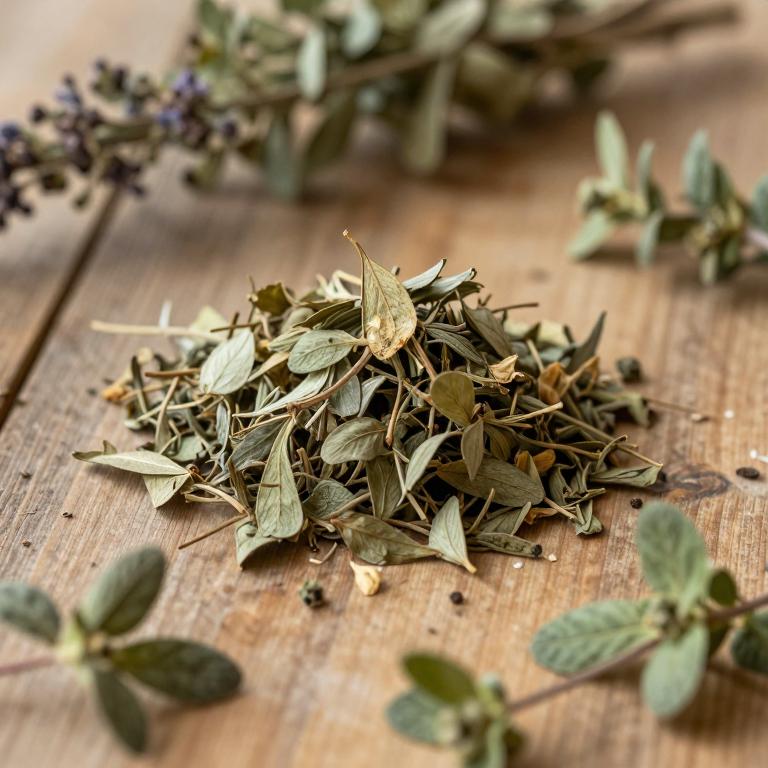
Medicinal plant, scientifically known as Biancaea decapetalas, is a versatile species valued in traditional medicine for its diverse therapeutic properties. Often utilized to treat inflammatory conditions and various ailments, this plant holds significant ethnobotanical importance. Ongoing research continues to explore its bioactive compounds for potential modern pharmacological applications.
Names and Synonyms
Common Names
- Mauritius-thorn
- Mysorethorn
- thorny poinciana
- wait-a-while
- woody wait-a-while
- Cat's claw
- Mauritius thorn
- shoofly
Scientific Names
Accepted name
Biancaea decapetalaSynonyms
- Mezoneuron benguetense
- Caesalpinia decapetala var. pubescens
- Caesalpinia decapetala
- Biancaea ferox
- Biancaea sepiaria
- Caesalpinia ferox
- Caesalpinia japonica
- Caesalpinia benguetensis
- Biancaea scandens
- Caesalpinia decapetala var. japonica
- Caesalpinia sepiaria
- Caesalpinia sepiaria var. pubescens
- Caesalpinia sepiaria var. japonica
Regional and Traditional Names
Spanish:
- zarza de cercas
German:
- Mauritius-dorn
- Mauritiusdorn
French:
- canicroc
Sources: Wikidata, Catalogue of Life
Taxonomical Classification
This plant belongs to the kingdom Plantae and is classified within the phylum Streptophyta and the class Equisetopsida. Under the subclass Magnoliidae, it falls into the order Fabales and the family Fabaceae. Finally, it is categorized under the genus Biancaea.
| Rank | Classification |
|---|---|
| Kingdom | Plantae |
| Phylum | Streptophyta |
| Class | Equisetopsida |
| Subclass | Magnoliidae |
| Order | Fabales |
| Family | Fabaceae |
| Genus | Biancaea |
Sources: The World Checklist of Vascular Plants (WCVP)
Distribution
This plant exhibits a diverse geographical range spanning both the Macaronesian islands and parts of West Tropical Africa. Within the Macaronesian region, its distribution includes the Canary Islands and Madeira. Moving toward the African continent, it can be found across several West Tropical African nations. Specifically, it is documented to grow in Liberia and Sierra Leone. Furthermore, its presence extends eastward to include Nigeria within its natural habitat.
| Region | Area |
|---|---|
| Macaronesia | Canary Is. |
| Macaronesia | Madeira |
| West Tropical Africa | Liberia |
| West Tropical Africa | Nigeria |
| West Tropical Africa | Sierra Leone |
| West-Central Tropical Africa | Burundi |
| West-Central Tropical Africa | Cameroon |
| West-Central Tropical Africa | Gabon |
| West-Central Tropical Africa | Rwanda |
| West-Central Tropical Africa | DR Congo |
Sources: The World Checklist of Vascular Plants (WCVP)
Botanical Identification
Ecology
The ecology of Biancaea decapetala is characterized by its presence within Savanna habitats, where it adapts to a broad range of environmental conditions. This species exhibits a significant altitudinal plasticity, occupying a vast vertical gradient that begins at sea level, with a minimum elevation of 9 m AMSL, and extends up to a maximum of 2000 m AMSL. Across its distribution, the plant maintains a mean elevation of approximately 1580 m AMSL, reflecting its ability to thrive in diverse topographical settings within the savanna ecosystem.
- Elevational range max:
- 2000 m AMSL
- Elevational range mean:
- 1580 m AMSL
- Elevational range min:
- 9 m AMSL
- Habitat :
- Savanna
Genetics
The genetics of Biancaea decapetala are characterized by a notable degree of karyotypic variation, specifically regarding its chromosomal composition. Scientific analysis of the species has revealed a fluctuating chromosome number, with documented values of 22 and 24. This variation in the diploid number suggests a complex cytogenetic profile that may be influenced by evolutionary processes such as chromosomal rearrangements, polyploidization events, or aneuploidy within different populations. Such genomic plasticity is a key factor in understanding the reproductive biology and evolutionary lineage of the species.
- Chromosome number :
- 22, 24
Life history
The life history of Biancaea decapetala is characterized by a perennial lifecycle, allowing the plant to persist across multiple growing seasons. As a phanerophyte, it maintains its photosynthetic organs on elevated stems above the soil surface, a growth form that can be further classified under the phanerophyte category. The species exhibits a deciduous nature, shedding its foliage periodically as part of its seasonal biological rhythm.
- Deciduousness :
- deciduous
- Life form :
- phanerophyte
- Lifecycle :
- perennial
Morphology
The morphology of Biancaea decapetala is characterized by a woody growth form that typically presents as a shrub. This plant is primarily terrestrial in its habitat, functioning as an independent organism rather than a parasite or an epiphyte. In terms of its physical stature, it exhibits significant variation in height, with measurements ranging from a minimum of 1.2 m to a maximum of 15 m, resulting in a mean plant height of approximately 10 m. Although it possesses a shrub-like growth habit, it is also characterized as a self-supporting climber, capable of maintaining its structure without the need for obligatory climbing mechanisms.
- Aquatic :
- terrestrial
- Climber :
- self-supporting
- Epiphyte :
- terrestrial
- Growth form :
- shrub
- Parasite :
- independent
- Plant height max:
- 15 m
- Plant height mean:
- 10 m
- Plant height min:
- 1.2 m
- Woodiness :
- woody
Physiology
The physiology of Biancaea decapetala is characterized by a C3 photosynthetic pathway, which dictates its metabolic processes and carbon fixation strategies. The plant exhibits significant morphological variation in its foliage, with leaf lengths ranging from a minimum of 1 cm to a maximum of 40 cm. Correspondingly, the leaf width is relatively narrow, spanning from a minimum of 0.2 cm to a maximum of 1.1 cm. Additionally, the species possesses the physiological capability of nitrogen fixation, allowing it to enhance nutrient availability within its environment.
- Leaf length max:
- 40 cm
- Leaf length min:
- 1 cm
- Leaf width max:
- 1.1 cm
- Leaf width min:
- 0.2 cm
- Nitrogen fixer :
- yes
- Photosynthetic pathway :
- C3
Reproduction
The reproduction of Biancaea decapetala is driven by a biotic pollination syndrome, specifically relying on insects to facilitate fertilization. Following successful pollination, the plant develops fruit in the form of a pod. These pods exhibit significant morphological variation, with lengths ranging from a minimum of 6.5 cm to a maximum of 11 cm, and widths ranging between 2 cm and 3 cm. The fruit is characterized as being dehiscent, meaning it opens at maturity to release its contents. The dispersal syndrome is classified as autochorous, indicating that the plant utilizes self-dispersal mechanisms to spread its offspring. The seeds produced are relatively robust, with a minimum seed length of 8 mm and a maximum of 12 mm, and a minimum seed width of 6 mm reaching a maximum of 8 mm. In terms of mass, the seeds show considerable diversity, with a mean mass of approximately 0.463265 g, while individual seed weights range from a minimum of 0.23781 g to a maximum of 2.252 g.
- Dehiscence :
- dehiscent
- Dispersal syndrome :
- autochorous
- Fruit length max:
- 11 cm
- Fruit length min:
- 6.5 cm
- Fruit type :
- pod
- Fruit width max:
- 3 cm
- Fruit width min:
- 2 cm
- Pollination syndrome :
- insect
- Pollination syndrome :
- biotic
- Seed length max:
- 12 mm
- Seed length min:
- 8 mm
- Seed mass max:
- 2.252 g
- Seed mass mean:
- 0.463265 g
- Seed mass min:
- 0.23781 g
- Seed width max:
- 8 mm
- Seed width min:
- 6 mm
Sources: Global Inventory of Floras and Traits (GIFT)
Plant Parts
Biancaea decapetala has 1 reported plant parts identified across 2 scientific publications and several other databases that are studied for medicinal purposes. The most consistently reported plant part include root.
| Plant part | Supporting sources | Consensus |
|---|---|---|
| Root | 2 supporting sources | ★☆☆☆☆ |
Root
- Zhongguo Zhong yao za zhi = Zhongguo zhongyao zazhi = China journal of Chinese materia medica
- Journal of natural products
Chemicals
Biancaea decapetala has 12 reported phytochemicals identified across 2 scientific publications and several other databases. The most consistently reported chemicals include 3-Deoxysappanchalcone, Protosappanin B, 1-(26-hydroxyhexacosanoyl)-glycerol, 20-Acetoxytaepeenin D, BETA-SITOSTEROL.
| Chemical | Supporting sources | Consensus |
|---|---|---|
| 3-Deoxysappanchalcone | 2 supporting sources | ★☆☆☆☆ |
| Protosappanin B | 2 supporting sources | ★☆☆☆☆ |
| 1-(26-hydroxyhexacosanoyl)-glycerol | 1 supporting sources | ★☆☆☆☆ |
| 20-Acetoxytaepeenin D | 1 supporting sources | ★☆☆☆☆ |
| BETA-SITOSTEROL | 1 supporting sources | ★☆☆☆☆ |
| Lupeol | 1 supporting sources | ★☆☆☆☆ |
| Lupeol acetate | 1 supporting sources | ★☆☆☆☆ |
| STIGMASTEROL | 1 supporting sources | ★☆☆☆☆ |
| Tomocin E | 1 supporting sources | ★☆☆☆☆ |
| betulinic acid | 1 supporting sources | ★☆☆☆☆ |
3-Deoxysappanchalcone
- Zhongguo Zhong yao za zhi = Zhongguo zhongyao zazhi = China journal of Chinese materia medica
- Journal of chromatography. B, Analytical technologies in the biomedical and life sciences
Protosappanin B
- Zhongguo Zhong yao za zhi = Zhongguo zhongyao zazhi = China journal of Chinese materia medica
- Journal of chromatography. B, Analytical technologies in the biomedical and life sciences
1-(26-hydroxyhexacosanoyl)-glycerol
- Zhong yao cai = Zhongyaocai = Journal of Chinese medicinal materials
20-Acetoxytaepeenin D
- Journal of natural products
BETA-SITOSTEROL
- Zhong yao cai = Zhongyaocai = Journal of Chinese medicinal materials
Lupeol
- Zhong yao cai = Zhongyaocai = Journal of Chinese medicinal materials
Lupeol acetate
- Zhong yao cai = Zhongyaocai = Journal of Chinese medicinal materials
STIGMASTEROL
- Zhong yao cai = Zhongyaocai = Journal of Chinese medicinal materials
Tomocin E
- Journal of natural products
betulinic acid
- Dr. Duke
Activities
Biancaea decapetala has 18 reported activities identified across 2 scientific publications and several other databases. The most consistently reported activities include Anthelmintic, AntiHIV, Antibacterial, Anticancer, Anticarcinomic.
| Activity | Supporting sources | Consensus |
|---|---|---|
| Anthelmintic | 1 supporting sources | ★☆☆☆☆ |
| AntiHIV | 1 supporting sources | ★☆☆☆☆ |
| Antibacterial | 1 supporting sources | ★☆☆☆☆ |
| Anticancer | 1 supporting sources | ★☆☆☆☆ |
| Anticarcinomic | 1 supporting sources | ★☆☆☆☆ |
| Antiedemic | 1 supporting sources | ★☆☆☆☆ |
| Antiinflammatory | 1 supporting sources | ★☆☆☆☆ |
| Antileukemic | 1 supporting sources | ★☆☆☆☆ |
| Antimalarial | 1 supporting sources | ★☆☆☆☆ |
| Antimelanomic | 1 supporting sources | ★☆☆☆☆ |
Anthelmintic
- Dr. Duke
AntiHIV
- Dr. Duke
Antibacterial
- Dr. Duke
Anticancer
- Dr. Duke
Anticarcinomic
- Dr. Duke
Antiedemic
- Dr. Duke
Antiinflammatory
- Dr. Duke
Antileukemic
- Dr. Duke
Antimalarial
- Dr. Duke
Antimelanomic
- Dr. Duke
Conditions
Biancaea decapetala has 2 reported investigations on conditions identified across 2 scientific publications and several other databases. The most consistently reported conditions include fever, rheumatoid arthritis.
| Condition | Supporting sources | Consensus |
|---|---|---|
| Fever | 1 supporting sources | ★☆☆☆☆ |
| Rheumatoid arthritis | 1 supporting sources | ★☆☆☆☆ |
Fever
- Phytomedicine : international journal of phytotherapy and phytopharmacology
Rheumatoid arthritis
- Journal of chromatography. B, Analytical technologies in the biomedical and life sciences
Preparations
Biancaea decapetala has 5 reported preparations identified across 2 scientific publications and several other databases. The most consistently reported preparations include 70% ethanol extract, Biancaea decapetala extracts, extract, root bark of Caesalpinia decapetala extract, roots.
| Preparation | Supporting sources | Consensus |
|---|---|---|
| 70% ethanol extract | 1 supporting sources | ★☆☆☆☆ |
| Biancaea decapetala extracts | 1 supporting sources | ★☆☆☆☆ |
| Extract | 1 supporting sources | ★☆☆☆☆ |
| Root bark of caesalpinia decapetala extract | 1 supporting sources | ★☆☆☆☆ |
| Roots | 1 supporting sources | ★☆☆☆☆ |
70% ethanol extract
- Zhongguo Zhong yao za zhi = Zhongguo zhongyao zazhi = China journal of Chinese materia medica
Biancaea decapetala extracts
- Journal of chromatography. B, Analytical technologies in the biomedical and life sciences
Extract
- Phytomedicine : international journal of phytotherapy and phytopharmacology
Root bark of caesalpinia decapetala extract
- Zhongguo Zhong yao za zhi = Zhongguo zhongyao zazhi = China journal of Chinese materia medica
Roots
- Journal of natural products