Bethencourtia palmensis
Bethencourtia palmensis · Accepted scientific name
Scientific literature: Very Sparse (2 studies) · ★☆☆☆☆
, scientifically known as Bethencourtia palmensis, is a distinctive medicinal shrub native to the arid landscapes of Baja California. Renowned for its resilience, this plant offers unique therapeutic properties. Local traditional practices often utilize its components, making it a subject of growing interest for botanical research and natural healing.
- Family
- Asteraceae
- Native range
- Africa
- Parts used
- Not available
- Common names
- Not available
- Scientific synonyms
- Senecio Palmensis · Cineraria Palmensis
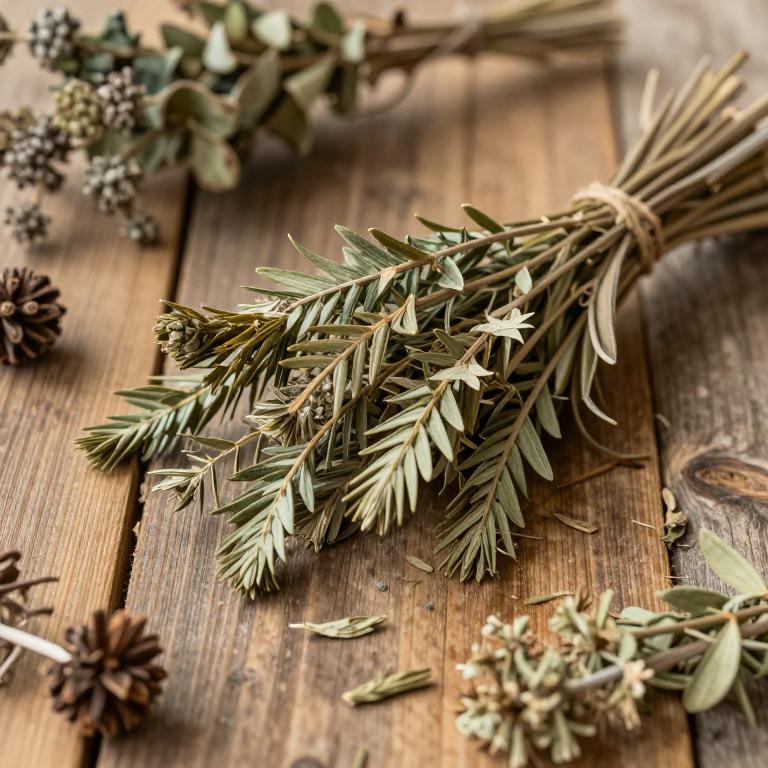
Names and Synonyms
Scientific Names
Accepted name
Bethencourtia palmensisSynonyms
- Senecio palmensis
- Cineraria palmensis
Regional and Traditional Names
Spanish:
- turgayte
- Turgaite
German:
- La-Palma-Greiskraut
Sources: Wikidata, Catalogue of Life
Taxonomical Classification
This plant, Bethencourtia palmensis, belongs to the kingdom Plantae and the phylum Streptophyta. It is classified within the class Equisetopsida and the subclass Magnoliidae, falling under the order Asterales. Finally, it is a member of the family Asteraceae and is specifically categorized under the genus Bethencourtia.
| Rank | Classification |
|---|---|
| Kingdom | Plantae |
| Phylum | Streptophyta |
| Class | Equisetopsida |
| Subclass | Magnoliidae |
| Order | Asterales |
| Family | Asteraceae |
| Genus | Bethencourtia |
Sources: The World Checklist of Vascular Plants (WCVP)
Distribution
This plant is a specialized species found exclusively within the Macaronesian region. Its natural range is strictly limited to the Canary Islands, where it has evolved in isolation. Within this archipelago, it occupies specific ecological niches that support its unique growth requirements. The distribution pattern highlights the high level of endemism characteristic of these Atlantic islands. Consequently, protecting its specific habitats is essential for the survival of this localized flora.
| Region | Area |
|---|---|
| Macaronesia | Canary Is. |
Sources: The World Checklist of Vascular Plants (WCVP)
Botanical Identification
Ecology
The ecology of Bethencourtia palmensis is fundamentally defined by its specialized habitat requirements within high-altitude montane ecosystems. This species thrives within a specific vertical distribution, occupying a distinct ecological niche that spans an elevational range from 1500 m AMSL to a maximum of 2400 m AMSL. By inhabiting these mid-to-high elevation zones, the plant is adapted to the unique environmental stressors characteristic of such altitudes, including fluctuating temperature gradients, increased ultraviolet radiation exposure, and specific moisture regimes typical of these montane belts. Its presence within this narrow altitudinal band suggests a high degree of specialization to the soil compositions and microclimatic conditions found exclusively between these elevations.
- Elevational range max:
- 2400 m AMSL
- Elevational range min:
- 1500 m AMSL
Life history
The life history of Bethencourtia palmensis is characterized by its status as a perennial species, allowing it to persist in its environment over many successive growing seasons. As a long-lived plant, it avoids the rapid completion of a single reproductive cycle seen in annuals, instead focusing on sustained vegetative growth and episodic reproductive efforts. This perennial nature enables the plant to establish a robust presence within its specific ecological niche, navigating seasonal variations and contributing to the long-term stability of its habitat through continuous biological presence.
- Lifecycle :
- perennial
Morphology
The morphology of Beentourcourtia palmensis is characterized by a compact growth habit, primarily presenting as a shrub or subshrub. This plant exhibits a woody structure, indicating a perennial life cycle with developed lignified tissues. In terms of stature, it is a relatively low-growing species, with a plant height ranging from a minimum of 0.2 m to a maximum of 0.4 m.
- Growth form :
- shrub
- Plant height max:
- 0.4 m
- Plant height min:
- 0.2 m
- Woodiness :
- woody
Physiology
The physiology of Beaucarnea palmensis is characterized by distinct morphological adaptations designed for efficient resource management and moisture retention. The plant exhibits a succulent nature, utilizing specialized tissues to store water, which allows it to maintain metabolic functions during periods of environmental stress or drought. Its foliage is defined by an oblong leaf form, a structural adaptation that optimizes surface area for photosynthesis while minimizing excessive transpiration. These leaves are relatively narrow, reaching a maximum width of only 2 cm, a trait that further aids in reducing water loss through the stomata and assists in regulating the plant's internal thermal equilibrium.
- Leaf form :
- oblong
- Leaf width max:
- 2 cm
- Succulence :
- yes
Reproduction
The reproduction of Bethencourtia palmensis is characterized by its distinctive flowering pattern and fruit morphology. The plant produces flowers that are yellow in color, with a maximum width of 1 cm, arranged in a raceme inflorescence. The flowering season typically begins in June and continues through to October, though the timing can be variable. Following pollination, the plant develops an achene as its fruit type. This fruit is indehiscent, meaning it does not spontaneously split open at maturity to release its seeds.
- Dehiscence :
- indehiscent
- Flower colour :
- yellow
- Flower width max:
- 1 cm
- Flowering time :
- Jun
- Flowering time :
- Oct
- Fruit type :
- achene
- Inflorescence :
- raceme
Sources: Global Inventory of Floras and Traits (GIFT)
Chemicals
Bethencourtia palmensis has 1 reported phytochemicals identified across 0 scientific publications and several other databases. The most consistently reported chemicals include 6,7-Epoxy-2,9-humuladiene.
| Chemical | Supporting sources | Consensus |
|---|---|---|
| 6,7-Epoxy-2,9-humuladiene | 1 supporting sources | ★☆☆☆☆ |
6,7-Epoxy-2,9-humuladiene
- Journal of natural products
Activities
Bethencourtia palmensis has 1 reported activities identified across 0 scientific publications and several other databases. The most consistently reported activities include Antifeedant.
| Activity | Supporting sources | Consensus |
|---|---|---|
| Antifeedant | 1 supporting sources | ★☆☆☆☆ |
Antifeedant
- Journal of natural products