hoary alyssum
Berteroa incana · Accepted scientific name
Scientific literature: Very Sparse (10 studies) · ★☆☆☆☆
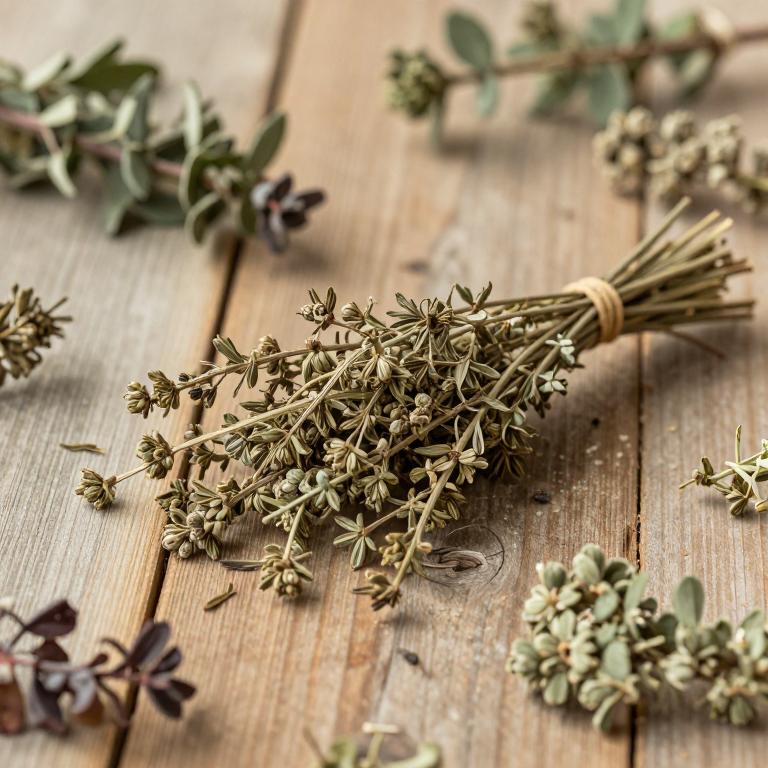
Hoary alyssum, scientifically known as Berteroa incana, is a resilient perennial herb native to the arid regions of the southwestern United States. Characterized by its silvery, felt-like foliage and delicate white blossoms, this plant is valued in traditional herbalism for its unique medicinal properties and ability to thrive in rocky soils.
Names and Synonyms
Common Names
- hoary alyssum
- hoary false madwort
- hoary false-alyssum
- Hoary Alison
- hoary false alyssum
- hoary-alyssum
Scientific Names
Accepted name
Berteroa incanaSynonyms
- Moenchia incana
- Vesicaria incana
- Berteroa incana subsp. stricta
- Berteroa orbiculata var. stricta
- Berteroa incana f. trichocarpa
- Berteroa incana var. bulgarica
- Berteroa incana var. prolifera
- Berteroa incana var. trichocarpa
- Draba chaeirifolia
- Draba cheirifolia
- Alyssum incanum
- Berteroa stricta
- Crucifera berteroa
- Draba cheiranthifolia
- Alyssum incanum var. trichocarpum
- Draba cheiriformis
- Draba dasycarpa
- Berteroa ascendens var. microcarpa
Regional and Traditional Names
German:
- Graukresse
- gewöhnliche Graukresse
- Sand-Graukresse
- Graukresse
French:
- alysson blanc
- alysson blanc
- berteroa blanc
- berteroa blanche
- bertéroa blanc
- Berteroa blanchatre
Sources: Wikidata, Catalogue of Life
Taxonomical Classification
This plant belongs to the kingdom Plantae and is classified under the phylum Streptophyta and class Equisetopsida. Within the subclass Magnoliidae, it is positioned in the order Brassicales and the family Brassicaceae. Finally, it is identified by the genus Berteroa.
| Rank | Classification |
|---|---|
| Kingdom | Plantae |
| Phylum | Streptophyta |
| Class | Equisetopsida |
| Subclass | Magnoliidae |
| Order | Brassicales |
| Family | Brassicaceae |
| Genus | Berteroa |
Sources: The World Checklist of Vascular Plants (WCVP)
Distribution
This plant exhibits a specific distribution across several territories within Northern Europe. It can be found growing in the coastal and inland regions of Denmark. Furthermore, its presence is documented throughout the landscapes of Finland. The species also inhabits various environments across Great Britain and Ireland. Finally, its range extends further north into the rugged terrain of Norway.
| Region | Area |
|---|---|
| Northern Europe | Denmark |
| Northern Europe | Finland |
| Northern Europe | Great Britain |
| Northern Europe | Ireland |
| Northern Europe | Norway |
| Northern Europe | Sweden |
| Middle Europe | Austria |
| Middle Europe | Belgium |
| Middle Europe | Czechia-Slovakia |
| Middle Europe | Germany |
Sources: The World Checklist of Vascular Plants (WCVP)
Botanical Identification
Ecology
The ecology of Berteroa incana is characterized by its ability to thrive in diverse and often disturbed landscapes, ranging from fertile crop fields and old fields to the more rugged terrain of hills, mountains, and steppes, as well as along roadsides. This species is specifically adapted to an elevational range that centers at 1200 m AMSL, maintaining its presence within this specific altitudinal bracket. Its presence in both agricultural environments and natural steppe habitats suggests a high degree of ecological plasticity, allowing it to colonize various soil types and open environments where sunlight is abundant.
- Elevational range max:
- 1200 m AMSL
- Habitat :
- crop fields, hills, mountains, old fields, roadsides, steppe
Life history
The life history of Berteroa incana is characterized by a biennial lifecycle, meaning it typically completes its biological processes over a period of two years, transitioning from vegetative growth to reproductive maturity. As a therophyte, the plant survives the unfavorable seasons through the production of seeds, which remain dormant until conditions are suitable for germination. This species maintains an evergreen status, retaining its foliage throughout much of its development. Its classification as a therophyte is further emphasized by its growth strategy, which focuses on rapid development and seed dispersal to ensure survival in its ecological niche.
- Deciduousness :
- evergreen
- Life form :
- therophyte
- Lifecycle :
- biennial
Morphology
The morphology of Berteroa incana is characterized by its growth form as a non-woody herb and forb. It functions as a self-supporting plant, requiring no external structures for climbing, and maintains an independent life cycle without parasitic behavior. As a terrestrial species, it does not exhibit aquatic or epiphytic tendencies. In terms of stature, the plant is relatively small, with a minimum height of 0.2 m, a maximum height of 0.65 m, and an average plant height of approximately 0.3625 m.
- Aquatic :
- terrestrial
- Climber :
- self-supporting
- Epiphyte :
- terrestrial
- Growth form :
- herb
- Growth form :
- forb
- Parasite :
- independent
- Plant height max:
- 0.65 m
- Plant height mean:
- 0.3625 m
- Plant height min:
- 0.2 m
- Woodiness :
- non-woody
Physiology
The physiology of Berteroa incana is characterized by a C3 photosynthetic pathway and a non-carnivorous nutritional strategy. The plant's foliar morphology exhibits significant variation, with leaf lengths ranging from a minimum of 4 cm to a maximum of 6 cm, maintaining a mean leaf length of 5 cm. The leaf width fluctuates between a minimum of 0.8 cm and a maximum of 1.5 cm, contributing to a mean leaf size of 1.4125 cm². Furthermore, the plant displays a mean Specific Leaf Area (SLA) of 177.43 cm²/g, reflecting its leaf mass per area and its resource allocation strategies regarding light interception and metabolic efficiency.
- Carnivory :
- non-carnivorous
- Leaf length max:
- 6 cm
- Leaf length mean:
- 5 cm
- Leaf length min:
- 4 cm
- Leaf size mean:
- 1.4125 cm²
- Leaf width max:
- 1.5 cm
- Leaf width min:
- 0.8 cm
- Photosynthetic pathway :
- C3
- Specific Leaf Area (SLA) mean:
- 177.43 cm²/g
Reproduction
The reproductive cycle of Berteroa incana is characterized by a specialized flowering period that begins and concludes in June. The plant relies on biotic pollination, specifically utilizing an insect pollination syndrome to facilitate fertilization; notably, self-fertilization is absent, indicating a dependency on external biological agents. Following successful pollination, the plant develops a capsule-type fruit that is classified as dehiscent. These fruits are relatively small, with a mean length of 0.6 cm (ranging from a minimum to a maximum of 0.6 cm) and a mean width of 0.4 cm (ranging from 0.3 cm to 0.5 cm). The resulting seeds are minute, possessing a mean mass of 0.00051425 g, with individual seed weights ranging from a minimum of 0.000319 g to a maximum of 0.00045 g. For the propagation of the species, Berteroa incana employs an anemochorous dispersal syndrome, meaning the seeds are dispersed by wind. Furthermore, the plant does not engage in asexual reproduction, relying entirely on these sexual processes for its life cycle.
- Dehiscence :
- dehiscent
- Dispersal syndrome :
- anemochorous
- Flowering time :
- Jun
- Fruit length max:
- 0.6 cm
- Fruit type :
- capsule
- Fruit width max:
- 0.5 cm
- Fruit width mean:
- 0.4 cm
- Fruit width min:
- 0.3 cm
- Pollination syndrome :
- insect
- Pollination syndrome :
- biotic
- Reproduction asexual :
- absent
- Seed mass max:
- 0.00045 g
- Seed mass mean:
- 0.00051425 g
- Seed mass min:
- 0.000319 g
- Self fertilization :
- absent
Sources: Global Inventory of Floras and Traits (GIFT)
Chemicals
Berteroa incana has 7 reported phytochemicals identified across 0 scientific publications and several other databases. The most consistently reported chemicals include Isoquercitrin, SINAPIC ACID, arabinose, ferulic acid, glucose.
| Chemical | Supporting sources | Consensus |
|---|---|---|
| Isoquercitrin | 1 supporting sources | ★☆☆☆☆ |
| SINAPIC ACID | 1 supporting sources | ★☆☆☆☆ |
| arabinose | 1 supporting sources | ★☆☆☆☆ |
| ferulic acid | 1 supporting sources | ★☆☆☆☆ |
| glucose | 1 supporting sources | ★☆☆☆☆ |
| polyphenols | 1 supporting sources | ★☆☆☆☆ |
| quercetin | 1 supporting sources | ★☆☆☆☆ |
Isoquercitrin
- Natural product research
SINAPIC ACID
- Natural product research
arabinose
- Natural product research
ferulic acid
- Natural product research
glucose
- Natural product research
polyphenols
- Natural product research
quercetin
- Natural product research
Activities
Berteroa incana has 3 reported activities identified across 0 scientific publications and several other databases. The most consistently reported activities include Antibacterial, Antimicrobial, Antioxidant.
| Activity | Supporting sources | Consensus |
|---|---|---|
| Antibacterial | 1 supporting sources | ★☆☆☆☆ |
| Antimicrobial | 1 supporting sources | ★☆☆☆☆ |
| Antioxidant | 1 supporting sources | ★☆☆☆☆ |
Antibacterial
- Natural product research
Antimicrobial
- Natural product research
Antioxidant
- Natural product research
Preparations
Berteroa incana has 1 reported preparations identified across 0 scientific publications and several other databases. The most consistently reported preparations include Methanolic and aqueous extracts.
| Preparation | Supporting sources | Consensus |
|---|---|---|
| Methanolic and aqueous extracts | 1 supporting sources | ★☆☆☆☆ |
Methanolic and aqueous extracts
- Natural product research