Hairy Bergenia
Bergenia ciliata · Accepted scientific name
Scientific literature: Moderate (127 studies) · ★★★☆☆
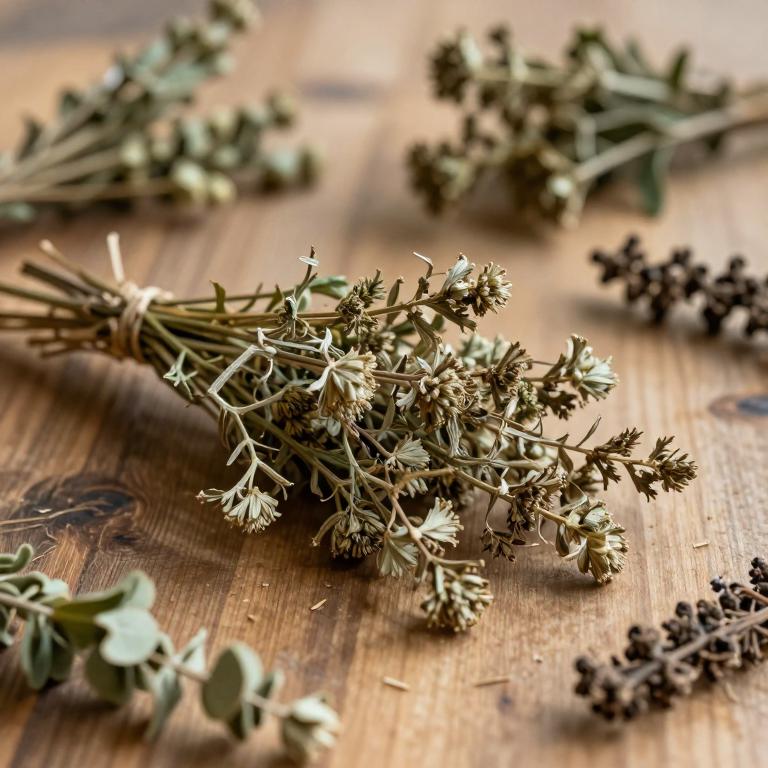
Hairy Bergenia, scientifically known as Bergenia ciliata, is a perennial herb native to the high-altitude Himalayan regions. Characterized by its distinctive hairy leaves and robust rhizomes, this medicinal plant is highly valued in traditional Ayurveda for its potent anti-inflammatory, antioxidant, and antimicrobial properties used to treat various ailments.
Names and Synonyms
Common Names
- Hairy Bergenia
- Fringed Bergenia
- Hairy Leaf Bergenia
- Rockfoil
- Winter Begonia
Scientific Names
Accepted name
Bergenia ciliataSynonyms
- Bergenia ligulata var. cliata
- Bergenia thysanodes
- Saxifraga ligulata var. ciliata
- Saxifraga ciliata
- Saxifraga thysanodes
- Megasea ciliata
Regional and Traditional Names
German:
- Kaschmir-Bergenie
Sources: Wikidata, Catalogue of Life
Taxonomical Classification
This plant belongs to the kingdom Plantae and is classified under the phylum Streptophyta and the class Equisetopsida. Within the subclass Magnoliidae, it is further organized under the order Saxifragales and the family Saxifragaceae. Finally, it is identified by the genus Bergenia, specifically as the species Bergenia ciliata.
| Rank | Classification |
|---|---|
| Kingdom | Plantae |
| Phylum | Streptophyta |
| Class | Equisetopsida |
| Subclass | Magnoliidae |
| Order | Saxifragales |
| Family | Saxifragaceae |
| Genus | Bergenia |
Sources: The World Checklist of Vascular Plants (WCVP)
Distribution
This plant is primarily found within the vast expanse of the Indian Subcontinent. Its specific natural range includes the rugged and mountainous terrain of Nepal. Additionally, the species is widely distributed throughout the West Himalaya region. These high-altitude habitats provide the ideal environmental conditions necessary for its survival. Consequently, its geographical presence is closely tied to these specific Himalayan ecosystems.
| Region | Area |
|---|---|
| Indian Subcontinent | Nepal |
| Indian Subcontinent | West Himalaya |
Sources: The World Checklist of Vascular Plants (WCVP)
Botanical Identification
Ecology
The ecology of Bergenia ciliata is characterized by its occurrence across a broad altitudinal gradient within montane ecosystems. This species is typically found inhabiting diverse mountainous terrains, spanning an elevational range that extends from a minimum of 900 m AMSL to a maximum of 3200 m AMSL. Within these varying altitudes, it thrives in specific microhabitats, often colonizing moist, shaded forest floors, rocky crevices, or the edges of alpine meadows where soil moisture is consistent. Its ability to persist across such a wide vertical distribution suggests a high degree of adaptability to fluctuating temperature regimes and varying levels of solar radiation characteristic of high-altitude environments.
- Elevational range max:
- 3200 m AMSL
- Elevational range min:
- 900 m AMSL
Life history
The life history of Bergenia ciliata is characterized by its status as a perennial plant, allowing it to persist in its environment through multiple growing seasons. As a perennial species, it undergoes continuous cycles of vegetative growth and seasonal changes, often developing robust rhizomatous structures that facilitate long-term survival and clonal spread. This lifecycle enables the plant to establish a stable presence in its natural habitat, where it can endure varying environmental conditions over many years. Throughout its life, the plant engages in periodic reproductive phases, transitioning from vegetative expansion to the production of flowers and seeds, thereby ensuring both individual longevity and the long-term maintenance of its population.
- Lifecycle :
- perennial
Morphology
The morphology of Bergenia ciliata is characterized by its distinct growth form as a non-woody herb. It functions as an independent organism, exhibiting no parasitic tendencies toward other plants, and maintains a terrestrial life habit rather than acting as an epiphyte. While some related climbing species may exhibit liana, vine, or self-supporting qualities, this plant is fundamentally characterized by its herbaceous structure, lacking any woody stems or climbing mechanisms.
- Climber :
- self-supporting
- Epiphyte :
- terrestrial
- Growth form :
- herb
- Parasite :
- independent
- Woodiness :
- non-woody
Reproduction
The reproduction of Bergenia ciliata is characterized by a distinct seasonal flowering period that facilitates its reproductive cycle. The flowering process typically commences in April and continues through the late spring and early summer months, reaching its conclusion in June. While the specific timing can be subject to environmental variations, the plant generally adheres to this window, ensuring that its floral displays are synchronized with favorable climatic conditions for pollination.
- Flowering time :
- Apr
- Flowering time :
- Jun
Sources: Global Inventory of Floras and Traits (GIFT)
Plant Parts
Bergenia ciliata has 4 reported plant parts identified across 10 scientific publications and several other databases that are studied for medicinal purposes. The most consistently reported plant part include leaf, rhizome, root, stem.
| Plant part | Supporting sources | Consensus |
|---|---|---|
| Leaf | 3 supporting sources | ★★☆☆☆ |
| Rhizome | 3 supporting sources | ★★☆☆☆ |
| Root | 3 supporting sources | ★★☆☆☆ |
| Stem | 1 supporting sources | ★☆☆☆☆ |
Leaf
- Functional & integrative genomics
- Parasitology research
- Pakistan journal of pharmaceutical sciences
Rhizome
- Fitoterapia
- Pakistan journal of pharmaceutical sciences
- Current pharmaceutical biotechnology
Root
- Colloids and surfaces. B, Biointerfaces
- Functional & integrative genomics
- Pakistan journal of pharmaceutical sciences
Stem
- Functional & integrative genomics
Chemicals
Bergenia ciliata has 24 reported phytochemicals identified across 10 scientific publications and several other databases. The most consistently reported chemicals include Flavonoids, Gallic acid, bergenin, Phenols, Terpenoids.
| Chemical | Supporting sources | Consensus |
|---|---|---|
| Flavonoids | 3 supporting sources | ★★☆☆☆ |
| Gallic acid | 3 supporting sources | ★★☆☆☆ |
| bergenin | 3 supporting sources | ★★☆☆☆ |
| Phenols | 2 supporting sources | ★☆☆☆☆ |
| Terpenoids | 2 supporting sources | ★☆☆☆☆ |
| 3-O-Galloylepicatechin | 1 supporting sources | ★☆☆☆☆ |
| Alcohols | 1 supporting sources | ★☆☆☆☆ |
| Cardiac glycoside | 1 supporting sources | ★☆☆☆☆ |
| Dimethylsulfoxonium formylmethylide | 1 supporting sources | ★☆☆☆☆ |
| Epicatechin | 1 supporting sources | ★☆☆☆☆ |
Flavonoids
- Parasitology research
- Journal of infection and public health
- Pakistan journal of pharmaceutical sciences
Gallic acid
- Phytomedicine : international journal of phytotherapy and phytopharmacology
- Functional & integrative genomics
- Journal of ethnopharmacology
bergenin
- Journal of integrative medicine
- Functional & integrative genomics
- Journal of ethnopharmacology
Phenols
- Parasitology research
- Biomedicine & pharmacotherapy = Biomedecine & pharmacotherapie
Terpenoids
- Biomedicine & pharmacotherapy = Biomedecine & pharmacotherapie
- Toxicology and industrial health
3-O-Galloylepicatechin
- Computational biology and chemistry
Alcohols
- Biomedicine & pharmacotherapy = Biomedecine & pharmacotherapie
Cardiac glycoside
- Toxicology and industrial health
Dimethylsulfoxonium formylmethylide
- Biology
Epicatechin
- Journal of ethnopharmacology
Activities
Bergenia ciliata has 11 reported activities identified across 10 scientific publications and several other databases. The most consistently reported activities include Antibacterial, Antioxidant, Anticancer, Antimalarial, Antiviral.
| Activity | Supporting sources | Consensus |
|---|---|---|
| Antibacterial | 5 supporting sources | ★★★☆☆ |
| Antioxidant | 5 supporting sources | ★★★☆☆ |
| Anticancer | 2 supporting sources | ★☆☆☆☆ |
| Antimalarial | 2 supporting sources | ★☆☆☆☆ |
| Antiviral | 2 supporting sources | ★☆☆☆☆ |
| Anticholinesterase | 1 supporting sources | ★☆☆☆☆ |
| Antifungal | 1 supporting sources | ★☆☆☆☆ |
| Antimicrobial | 1 supporting sources | ★☆☆☆☆ |
| Antipyretic | 1 supporting sources | ★☆☆☆☆ |
| Free-Radical Scavenging | 1 supporting sources | ★☆☆☆☆ |
Antibacterial
- Functional & integrative genomics
- Biomedicine & pharmacotherapy = Biomedecine & pharmacotherapie
- Biology
- Pakistan journal of pharmaceutical sciences
- Current pharmaceutical biotechnology
Antioxidant
- BMC complementary and alternative medicine
- BMC chemistry
- Pakistan journal of pharmaceutical sciences
- Biomedicine & pharmacotherapy = Biomedecine & pharmacotherapie
- Biology
Anticancer
- Functional & integrative genomics
- Biology
Antimalarial
- Journal of ethnopharmacology
- Parasitology research
Antiviral
- Functional & integrative genomics
- Biomedicine & pharmacotherapy = Biomedecine & pharmacotherapie
Anticholinesterase
- BMC complementary and alternative medicine
Antifungal
- Biomedicine & pharmacotherapy = Biomedecine & pharmacotherapie
Antimicrobial
- Pakistan journal of pharmaceutical sciences
Antipyretic
- Journal of ethnopharmacology
Free-Radical Scavenging
- BMC complementary and alternative medicine
Conditions
Bergenia ciliata has 35 reported investigations on conditions identified across 10 scientific publications and several other databases. The most consistently reported conditions include Escherichia coli, Staphylococcus aureus, cough, diarrhea, fever.
| Condition | Supporting sources | Consensus |
|---|---|---|
| Escherichia coli | 3 supporting sources | ★★☆☆☆ |
| Staphylococcus aureus | 3 supporting sources | ★★☆☆☆ |
| Cough | 3 supporting sources | ★★☆☆☆ |
| Diarrhea | 3 supporting sources | ★★☆☆☆ |
| Fever | 3 supporting sources | ★★☆☆☆ |
| Vomiting | 3 supporting sources | ★★☆☆☆ |
| Alzheimer's disease | 2 supporting sources | ★☆☆☆☆ |
| Pseudomonas aeruginosa | 2 supporting sources | ★☆☆☆☆ |
| Kidney stones | 2 supporting sources | ★☆☆☆☆ |
| Malaria | 2 supporting sources | ★☆☆☆☆ |
Escherichia coli
- Colloids and surfaces. B, Biointerfaces
- BMC chemistry
- European journal of microbiology & immunology
Staphylococcus aureus
- Colloids and surfaces. B, Biointerfaces
- BMC chemistry
- European journal of microbiology & immunology
Cough
- BMC complementary and alternative medicine
- Ceska a Slovenska farmacie : casopis Ceske farmaceuticke spolecnosti a Slovenske farmaceuticke spolecnosti
- Pakistan journal of pharmaceutical sciences
Diarrhea
- BMC complementary and alternative medicine
- Journal of separation science
- Pakistan journal of pharmaceutical sciences
Fever
- BMC complementary and alternative medicine
- Parasitology research
- Pakistan journal of pharmaceutical sciences
Vomiting
- BMC complementary and alternative medicine
- Journal of separation science
- Pakistan journal of pharmaceutical sciences
Alzheimer's disease
- Phytomedicine : international journal of phytotherapy and phytopharmacology
- Computational biology and chemistry
Pseudomonas aeruginosa
- Colloids and surfaces. B, Biointerfaces
- European journal of microbiology & immunology
Kidney stones
- Ancient science of life
- Biomedicine & pharmacotherapy = Biomedecine & pharmacotherapie
Malaria
- Journal of ethnopharmacology
- Parasitology research
Preparations
Bergenia ciliata has 21 reported preparations identified across 10 scientific publications and several other databases. The most consistently reported preparations include B. ciliata aqueous extract, Bergenia ciliata Rhizome Extract, Extract of Bergenia ciliata, Methanolic extracts, SBE-65.
| Preparation | Supporting sources | Consensus |
|---|---|---|
| B. ciliata aqueous extract | 1 supporting sources | ★☆☆☆☆ |
| Bergenia ciliata rhizome extract | 1 supporting sources | ★☆☆☆☆ |
| Extract of bergenia ciliata | 1 supporting sources | ★☆☆☆☆ |
| Methanolic extracts | 1 supporting sources | ★☆☆☆☆ |
| Sbe-65 | 1 supporting sources | ★☆☆☆☆ |
| Aqueous extract | 1 supporting sources | ★☆☆☆☆ |
| Aqueous root extracts | 1 supporting sources | ★☆☆☆☆ |
| Chloroform extract of root and leaves | 1 supporting sources | ★☆☆☆☆ |
| Crude extract | 1 supporting sources | ★☆☆☆☆ |
| Crude methanolic extracts | 1 supporting sources | ★☆☆☆☆ |
B. ciliata aqueous extract
- Current pharmaceutical biotechnology
Bergenia ciliata rhizome extract
- Current pharmaceutical biotechnology
Extract of bergenia ciliata
- Current pharmaceutical biotechnology
Methanolic extracts
- Evidence-based complementary and alternative medicine : eCAM
Sbe-65
- Phytomedicine : international journal of phytotherapy and phytopharmacology
Aqueous extract
- BMC complementary and alternative medicine
Aqueous root extracts
- Colloids and surfaces. B, Biointerfaces
Chloroform extract of root and leaves
- Pakistan journal of pharmaceutical sciences
Crude extract
- BMC complementary and alternative medicine
Crude methanolic extracts
- Toxicology and industrial health