Cretan Barberry
Berberis cretica · Accepted scientific name
Scientific literature: Very Sparse (7 studies) · ★☆☆☆☆
Cretan Barberry, scientifically known as Berberis cretica, is a resilient shrub native to the Mediterranean landscapes of Crete. Renowned for its vibrant yellow flowers and tart berries, this plant holds significant ethnobotanical value. It is traditionally utilized in folk medicine for its antioxidant properties and various therapeutic applications.
- Family
- Berberidaceae
- Native range
- Europe
- Parts used
- Root
- Common names
- Cretan Barberry
- Scientific synonyms
- Berberis Vulgaris Var. Cretica · Berberis Sinensis Var. Cretica · 1 more
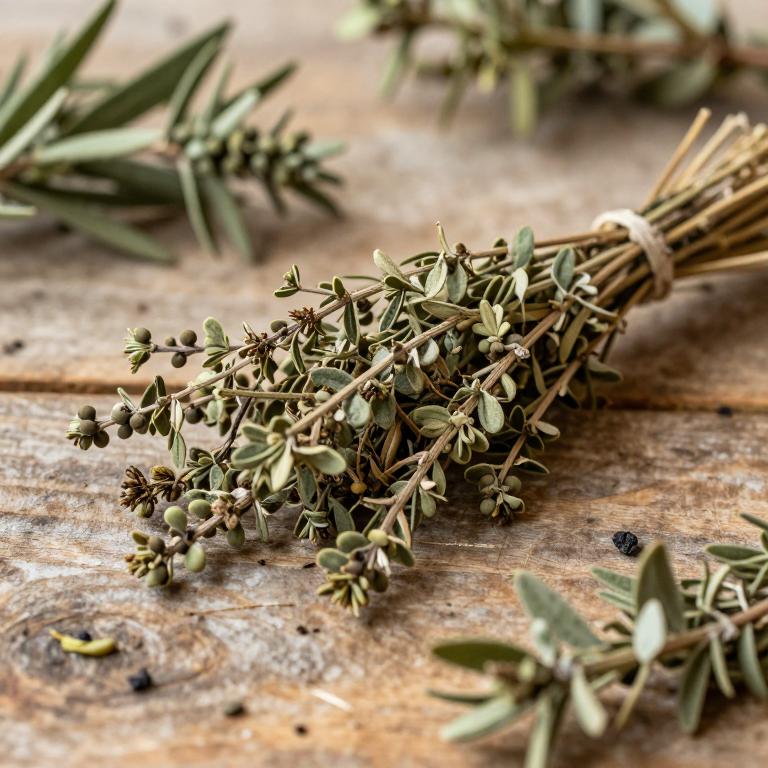
Names and Synonyms
Common Names
- Cretan Barberry
Scientific Names
Accepted name
Berberis creticaSynonyms
- Berberis vulgaris var. cretica
- Berberis sinensis var. cretica
- Berberis cretica var. serratifolia
Sources: Wikidata, Catalogue of Life
Taxonomical Classification
This plant belongs to the kingdom Plantae and is classified under the phylum Streptophyta within the class Equisetopsida. As a member of the subclass Magnoliidae and the order Ranunculales, it is specifically nested within the family Berberidaceae. Ultimately, it is identified by the genus Berberis, specifically as the species Berberis cretica.
| Rank | Classification |
|---|---|
| Kingdom | Plantae |
| Phylum | Streptophyta |
| Class | Equisetopsida |
| Subclass | Magnoliidae |
| Order | Ranunculales |
| Family | Berberidaceae |
| Genus | Berberis |
Sources: The World Checklist of Vascular Plants (WCVP)
Distribution
This plant is primarily found within the diverse landscapes of Southeastern Europe. In this region, its presence is notably recorded in Greece and specifically on the island of Kriti. The distribution extends into Western Asia, where it can be located on the island of Cyprus. It is also documented inhabiting the East Aegean Is. within the Western Asian territory. Finally, the geographical range reaches further into Western Asia, specifically covering the Lebanon-Syria area.
| Region | Area |
|---|---|
| Southeastern Europe | Greece |
| Southeastern Europe | Kriti |
| Western Asia | Cyprus |
| Western Asia | East Aegean Is. |
| Western Asia | Lebanon-Syria |
| Western Asia | Türkiye |
Sources: The World Checklist of Vascular Plants (WCVP)
Botanical Identification
Life history
The life history of Berberis cretica is characterized by its status as a phanerophyte, specifically manifesting as a nanophanerophyte or chamaephyte depending on the specific environmental stressors and growth stage. As a perennial woody species, it maintains its perennating buds well above the soil surface, allowing it to endure seasonal climatic shifts typical of its Mediterranean habitats. The plant's developmental cycle involves a robust vegetative phase where it establishes woody structures, followed by a reproductive period marked by the emergence of yellowish flowers that facilitate pollination. Following successful fertilization, it produces small, fleshy berries that serve as a vital dispersal mechanism via fauna. Its ability to persist through various life forms—transitioning between low-growing bushy forms and slightly taller woody structures—enables it to occupy rocky substrates and scrublands, where its life cycle is tightly synchronized with the availability of moisture and seasonal temperature fluctuations.
- Life form :
- phanerophyte
Morphology
The morphology of Berberis cretica is characterized by its growth form as a woody shrub, exhibiting a robust and perennial structure. This species is classified as a terrestrial plant, growing in soil-based environments rather than aquatic or semiaquatic habitats. As an independent organism, it does not function as a parasite, relying on its own physiological processes for nutrient acquisition. The plant's architecture is defined by its woody nature, providing the structural integrity necessary to support its shrubby habit.
- Aquatic :
- terrestrial
- Growth form :
- shrub
- Parasite :
- independent
- Woodiness :
- woody
Physiology
The physiology of Berberis cretica is characterized by a metabolic framework centered around the C3 photosynthetic pathway, a common trait among many woody Mediterranean shrubs that facilitates carbon fixation through the enzyme Rubisco. This C3 mechanism involves the direct fixation of atmospheric CO2 into three-carbon compounds within the mesophyll cells, a process that is highly efficient under the temperate to sub-humid conditions often found in its natural habitats. To support this carbon assimilation, the plant exhibits specialized physiological adaptations to manage transpiration and water use efficiency, which are critical for survival in its native Mediterranean ecosystems. The energy production required for these metabolic processes is driven by complex enzymatic activities, including the synthesis of isoquinoline alkaloids like berberine, which serve both defensive and physiological roles within the plant's internal systems.
- Photosynthetic pathway :
- C3
Sources: Global Inventory of Floras and Traits (GIFT)
Plant Parts
Berberis cretica has 1 reported plant parts identified across 1 scientific publications and several other databases that are studied for medicinal purposes. The most consistently reported plant part include root.
| Plant part | Supporting sources | Consensus |
|---|---|---|
| Root | 1 supporting sources | ★☆☆☆☆ |
Root
- Molecules (Basel, Switzerland)
Chemicals
Berberis cretica has 3 reported phytochemicals identified across 1 scientific publications and several other databases. The most consistently reported chemicals include Flavonoids, Magnoflorine, Palmatine.
| Chemical | Supporting sources | Consensus |
|---|---|---|
| Flavonoids | 1 supporting sources | ★☆☆☆☆ |
| Magnoflorine | 1 supporting sources | ★☆☆☆☆ |
| Palmatine | 1 supporting sources | ★☆☆☆☆ |
Flavonoids
- Food chemistry
Magnoflorine
- International journal of molecular sciences
Palmatine
- Molecules (Basel, Switzerland)
Activities
Berberis cretica has 1 reported activities identified across 1 scientific publications and several other databases. The most consistently reported activities include Cytotoxic.
| Activity | Supporting sources | Consensus |
|---|---|---|
| Cytotoxic | 1 supporting sources | ★☆☆☆☆ |
Cytotoxic
- Molecules (Basel, Switzerland)
Conditions
Berberis cretica has 2 reported investigations on conditions identified across 1 scientific publications and several other databases. The most consistently reported conditions include breast cancer, memory disorders.
| Condition | Supporting sources | Consensus |
|---|---|---|
| Breast cancer | 1 supporting sources | ★☆☆☆☆ |
| Memory disorders | 1 supporting sources | ★☆☆☆☆ |
Breast cancer
- Molecules (Basel, Switzerland)
Memory disorders
- International journal of molecular sciences
Preparations
Berberis cretica has 6 reported preparations identified across 1 scientific publications and several other databases. The most consistently reported preparations include ASE, SFE, SFE and ASE, crude plant extracts, maceration.
| Preparation | Supporting sources | Consensus |
|---|---|---|
| Ase | 1 supporting sources | ★☆☆☆☆ |
| Sfe | 1 supporting sources | ★☆☆☆☆ |
| Sfe and ase | 1 supporting sources | ★☆☆☆☆ |
| Crude plant extracts | 1 supporting sources | ★☆☆☆☆ |
| Maceration | 1 supporting sources | ★☆☆☆☆ |
| Methanol and water:ethanol (50:50) extracts | 1 supporting sources | ★☆☆☆☆ |
Ase
- Food chemistry
Sfe
- Food chemistry
Sfe and ase
- Food chemistry
Crude plant extracts
- International journal of molecular sciences
Maceration
- Food chemistry
Methanol and water:ethanol (50:50) extracts
- Food chemistry