Begonia urophylla
Begonia urophylla · Accepted scientific name
Scientific literature: Very Sparse (4 studies) · ★☆☆☆☆
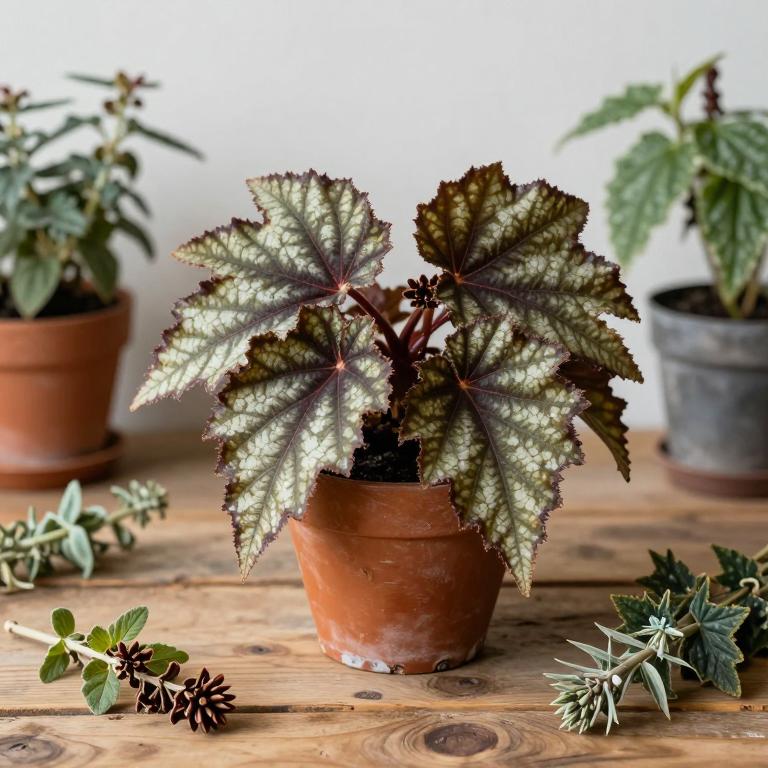
Begonia urophyllia, scientifically known as Begonia urophyllia, is a striking tropical plant celebrated for its distinctive, heart-shaped foliage and ornamental beauty. Native to specific humid forest regions, it is valued in traditional medicine and horticulture alike, offering unique botanical characteristics that make it a fascinating subject for study.
- Family
- Not available
- Native range
- Northern America
- Parts used
- Leaf
- Common names
- Not available
- Scientific synonyms
- Not available
Names and Synonyms
Scientific Names
Accepted name
Begonia urophyllaDistribution
This plant exhibits a specific geographical distribution that spans from North to Central America. In the northernmost part of its range, it can be found throughout Southeast Mexico. Moving southward into Central America, the species is established in Guatemala and Honduras. Its presence continues through the region to include Costa Rica. Finally, the distribution extends to the southern reaches of Central America in Panamá.
| Region | Area |
|---|---|
| Mexico | Mexico Southeast |
| Central America | Costa Rica |
| Central America | Guatemala |
| Central America | Honduras |
| Central America | Panamá |
| Northern South America | Venezuela |
| Western South America | Colombia |
Sources: The World Checklist of Vascular Plants (WCVP)
Botanical Identification
Ecology
The ecology of Begonia urophylla is characterized by a broad altitudinal distribution, allowing it to inhabit a diverse range of montane and lowland environments. This species thrives across a significant vertical gradient, with an elevational range extending from sea level (0 m AMSL) up to a maximum altitude of 1750 m AMSL. This wide span suggests an adaptability to varying climatic conditions, ranging from the humid, warmer conditions of tropical lowlands to the cooler, more temperate environments found in higher elevations. Within these habitats, its survival is typically linked to specific microclimates that provide the moisture and filtered light necessary for its growth patterns.
- Elevational range max:
- 1750 m AMSL
- Elevational range min:
- 0 m AMSL
Life history
The life history of Begonia urophyllia is characterized by its classification as a cryptophyte, a strategy that allows the plant to survive unfavorable environmental conditions by keeping its vital organs protected below the soil surface. More specifically, it functions as a geophyte, relying on underground storage organs such as rhizomes or tubers to persist through periods of dormancy or drought. This life form enables the plant to emerge and flourish when moisture and light conditions become optimal, typical of its specialized niche. By utilizing this underground survival mechanism, Begonia urophyllia ensures its long-term persistence in its habitat, effectively bypassing seasonal stressors that might otherwise destroy above-ground vegetative structures.
- Life form :
- geophyte
- Life form :
- cryptophyte
Morphology
The morphology of Begonia urophylla is characterized by its growth form as a non-woody herb, exhibiting a primarily terrestrial habit rather than an aquatic or epiphytic existence. As an independent organism, it does not function as a parasite, maintaining its own nutritional requirements without reliance on a host. The plant's structure is self-supporting, lacking the climbing or vining tendencies of lianas or obligatory climbers, and instead establishes itself firmly within the soil substrate. Its physical composition is entirely non-woody, consistent with its classification as a herbaceous plant that lacks a lignified stem structure.
- Aquatic :
- terrestrial
- Climber :
- self-supporting
- Epiphyte :
- terrestrial
- Growth form :
- herb
- Parasite :
- independent
- Woodiness :
- non-woody
Sources: Global Inventory of Floras and Traits (GIFT)
Plant Parts
Begonia urophylla has 1 reported plant parts identified across 1 scientific publications and several other databases that are studied for medicinal purposes. The most consistently reported plant part include leaf.
| Plant part | Supporting sources | Consensus |
|---|---|---|
| Leaf | 1 supporting sources | ★☆☆☆☆ |
Leaf
- Phytomedicine : international journal of phytotherapy and phytopharmacology
Conditions
Begonia urophylla has 3 reported investigations on conditions identified across 1 scientific publications and several other databases. The most consistently reported conditions include feeding disorders, hypertension, mental disorders.
| Condition | Supporting sources | Consensus |
|---|---|---|
| Feeding disorders | 1 supporting sources | ★☆☆☆☆ |
| Hypertension | 1 supporting sources | ★☆☆☆☆ |
| Mental disorders | 1 supporting sources | ★☆☆☆☆ |
Feeding disorders
- Phytomedicine : international journal of phytotherapy and phytopharmacology
Hypertension
- Phytomedicine : international journal of phytotherapy and phytopharmacology
Mental disorders
- Phytomedicine : international journal of phytotherapy and phytopharmacology
Preparations
Begonia urophylla has 1 reported preparations identified across 1 scientific publications and several other databases. The most consistently reported preparations include methanol:dicloromethane extracts of the leaves.
| Preparation | Supporting sources | Consensus |
|---|---|---|
| Methanol:dicloromethane extracts of the leaves | 1 supporting sources | ★☆☆☆☆ |
Methanol:dicloromethane extracts of the leaves
- Phytomedicine : international journal of phytotherapy and phytopharmacology