Begonia grandis subsp. sinensis
Begonia grandis subsp. sinensis · Accepted scientific name
Scientific literature: Very Sparse (0 studies) · ★☆☆☆☆
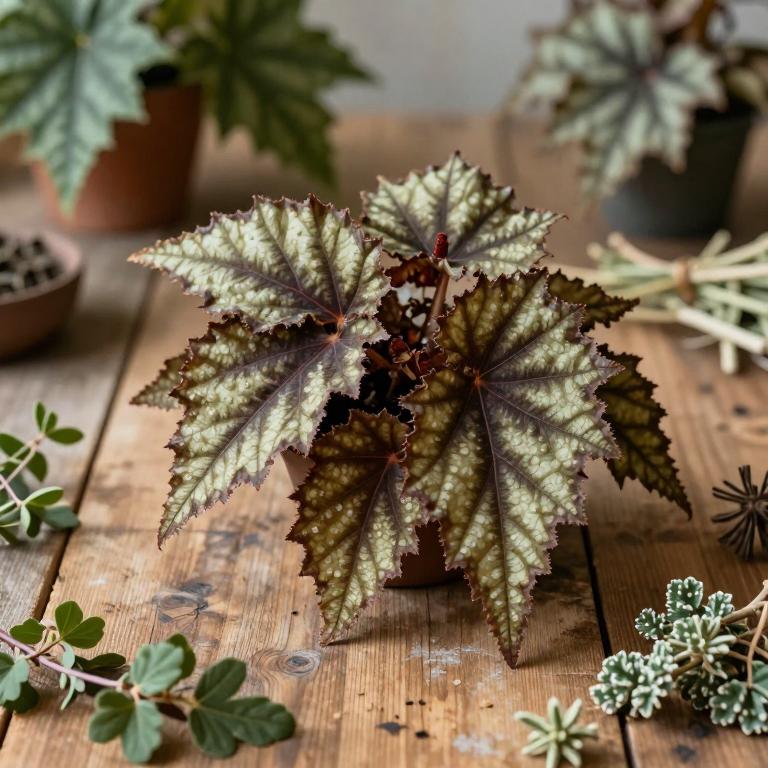
Begonia grandis subsp. sinensis is a captivating botanical specimen known for its unique structural characteristics. This plant is distinguished by its specialized rhizome, which serves as a vital storage organ for nutrients and moisture. Thriving in specific environmental niches, it offers a fascinating study of adaptation within the Begonia genus. Collectors and botanists alike appreciate its delicate form and the resilience provided by its underground growth habit. Understanding its biological makeup is essential for anyone looking to cultivate or study this intriguing subspecies.
- Synonyms
- Begonia Evansiana Var. Sinensis · Begonia Grandis Var. Villosa · 4 more
- Common names
- Not available
- Family
- Begoniaceae
- Distribution
- Not available
- Plant Parts
- Rhizome
Classification
Common Names
Begonia grandis subsp. sinensis is a distinctive species known for its striking appearance and unique botanical characteristics. In its native regions, this plant is affectionately referred to by the common name zhong hua qiu hai tang. This traditional name highlights its cultural significance and deep-rooted connection to local horticultural practices. Enthusiasts of rare flora often seek out this variety for its ability to add elegance to any collection. Understanding these linguistic relationships provides a deeper appreciation for the plant's enduring legacy in the gardening world.
Sources: Catalogue of Life (COL)
Synonyms
Begonia grandis subsp. sinensis is a botanical subject characterized by a complex web of taxonomic synonyms. This particular subspecies is closely linked to Begonia bulbosa, reflecting historical shifts in how these plants were classified. It also encompasses several distinct variations, including Begonia evansiana var. sinensis and Begonia grandis var. puberula. Furthermore, the plant's identity has been associated with Begonia grandis var. villosa and the name Begonia martini. Navigating these overlapping names is essential for anyone seeking to accurately identify this diverse species.
Sources: The World Checklist of Vascular Plants (WCVP)
Taxonomy
Begonia grandis subsp. sinensis is a distinctive botanical specimen that belongs to the diverse kingdom Plantae. Within this vast realm, it is classified under the class Equisetopsida. This specific plant is a member of the order Cucurbitales, showcasing its unique evolutionary lineage. It further falls under the family Begoniaceae, a group known for its varied and striking foliage. Ultimately, this species is defined by its placement within the well-known genus Begonia.
| Rank | Classification |
|---|---|
| Kingdom | Plantae |
| Phylum | Streptophyta |
| Class | Equisetopsida |
| Subclass | Magnoliidae |
| Order | Cucurbitales |
| Family | Begoniaceae |
| Genus | Begonia |
Sources: The World Checklist of Vascular Plants (WCVP)
Distribution
Geographic Regions
Begonia grandis subsp. sinensis is a distinct botanical variety with a specialized geographic presence across the Asian-Temperate region. Its natural range is primarily concentrated within the diverse landscapes of China. Specifically, this subspecies can be found flourishing in the North-Central territories of the country. It also maintains significant populations throughout the South-Central provinces. Furthermore, its distribution extends into the lush environments of Southeast China, showcasing its adaptability to various regional climates.
Sources: The World Checklist of Vascular Plants (WCVP)
Identification
Biological Activities
Compounds
Conditions
Preparations
Parts used
Begonia grandis subsp. sinensis possesses a specialized anatomical structure known as a rhizome. Detailed pharmacognostic studies focus on identifying the unique morphological and microscopic features of this specific part. Through transverse section analysis, researchers can observe distinct elements such as ring-thread vessels and tentacle structures. The presence of cluster needle crystals within the powder further helps in the precise identification of the material. Ultimately, understanding these rhizome characteristics is essential for distinguishing the authentic medicinal plant from other varieties.