Begonia grandis subsp. grandis
Begonia grandis subsp. grandis · Accepted scientific name
Scientific literature: Very Sparse (0 studies) · ★☆☆☆☆
Begonia grandis subsp. grandis is a distinctive botanical species that holds significant interest in both horticultural and pharmacological studies. This plant is characterized by its unique biological makeup, which includes several noteworthy phytochemical constituents. Scientific analysis has identified key compounds within its structure, such as beta-sitosterol, daucosterol, and stigmasterol. Additionally, the presence of beta-amyrin highlights its potential chemical complexity and therapeutic relevance. Understanding these specific chemical profiles provides essential insights into the plant's natural properties and medicinal value.
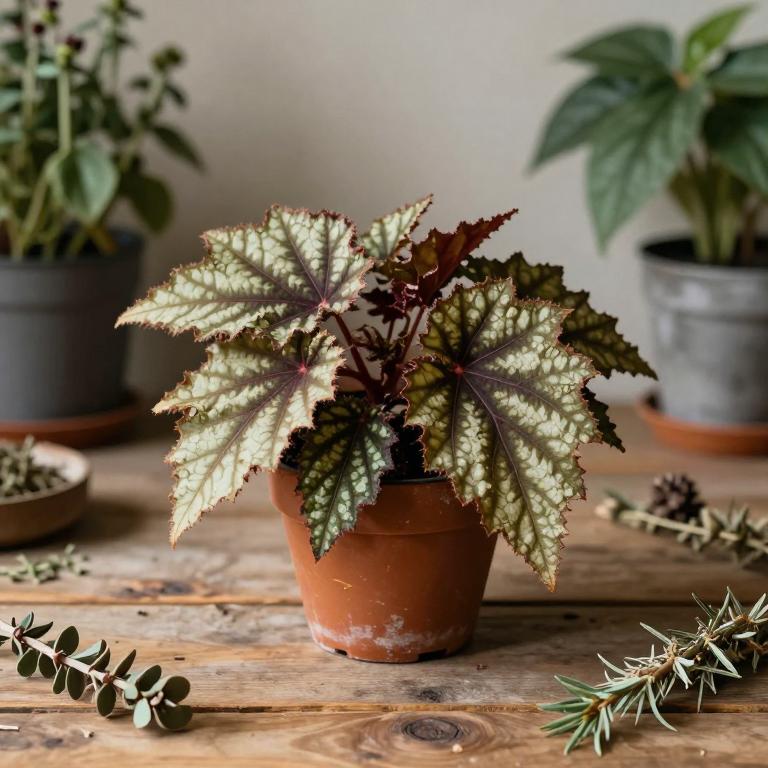
- Synonyms
- Begonia Grandis Subsp. Evansiana · Begonia Evansiana · 6 more
- Common names
- Not available
- Family
- Begoniaceae
- Distribution
- Not available
- Plant Parts
- Not available
Classification
Common Names
Begonia grandis subsp. grandis is a distinctive botanical variety known widely by its common name, qiu hai tang. This plant belongs to the diverse Begonia genus, characterized by its unique foliage and delicate flowering patterns. Collectors and gardeners often seek out qiu hai tang for its specific aesthetic appeal and ornamental qualities. Understanding its common nomenclature helps enthusiasts identify this particular subspecies within the vast landscape of tropical flora. As a result, recognizing its identity through these names ensures better care and appreciation for its natural beauty.
Sources: Catalogue of Life (COL)
Synonyms
Begonia grandis subsp. grandis is a complex taxon that is frequently associated with several important botanical synonyms. Within various taxonomic classifications, it has been identified under the name Begonia erubescens. Researchers also recognize it through the synonym Begonia evansiana, which encompasses specific variations such as Begonia evansiana var. simsii. Furthermore, the plant is linked to the designation Begonia grandis subsp. evansiana in certain studies. Finally, the name Begonia grandis var. simsii serves as another historical synonym within its diverse botanical lineage.
Sources: The World Checklist of Vascular Plants (WCVP)
Taxonomy
Begonia grandis subsp. grandis is a distinct botanical specimen belonging to the vast kingdom Plantae. Within this kingdom, the plant is classified under the class Equisetopsida, highlighting its evolutionary lineage. It further falls into the order Cucurbitales, a group that connects it to a diverse range of flowering plants. As a member of the Begoniaceae family, it exhibits the specific morphological traits characteristic of its kin. Ultimately, this subspecies is defined by its placement within the well-known genus Begonia.
| Rank | Classification |
|---|---|
| Kingdom | Plantae |
| Phylum | Streptophyta |
| Class | Equisetopsida |
| Subclass | Magnoliidae |
| Order | Cucurbitales |
| Family | Begoniaceae |
| Genus | Begonia |
Sources: The World Checklist of Vascular Plants (WCVP)
Distribution
Geographic Regions
Begonia grandis subsp. grandis is a distinctive plant species primarily distributed throughout the temperate regions of Asia. Its natural habitat spans several key provinces in China, including the North-Central, South-Central, and Southeast territories. Beyond the Chinese mainland, the subspecies extends its reach into the Eastern Asian landscapes of both Japan and Korea. This wide geographical range highlights the plant's ability to thrive across diverse temperate environments within the continent. Consequently, understanding these specific regional distributions is essential for studying its ecological presence in Asia.
Sources: The World Checklist of Vascular Plants (WCVP)
Identification
Biological Activities
Compounds
Begonia grandis subsp. grandis serves as a significant source of several important chemical compounds. Detailed analysis reveals that this plant contains the sterol beta-sitosterol alongside daucosterol. Furthermore, the presence of stigmasterol has been identified within its chemical profile. The species also harbors beta-amyrin, contributing to its complex biochemical makeup. Finally, the plant contains stigmasterol 3-O-beta-D-glucopyranoside, highlighting its diverse phytochemical properties.