Bauhinia uruguayensis
Bauhinia uruguayensis · Accepted scientific name
Scientific literature: Very Sparse (7 studies) · ★☆☆☆☆
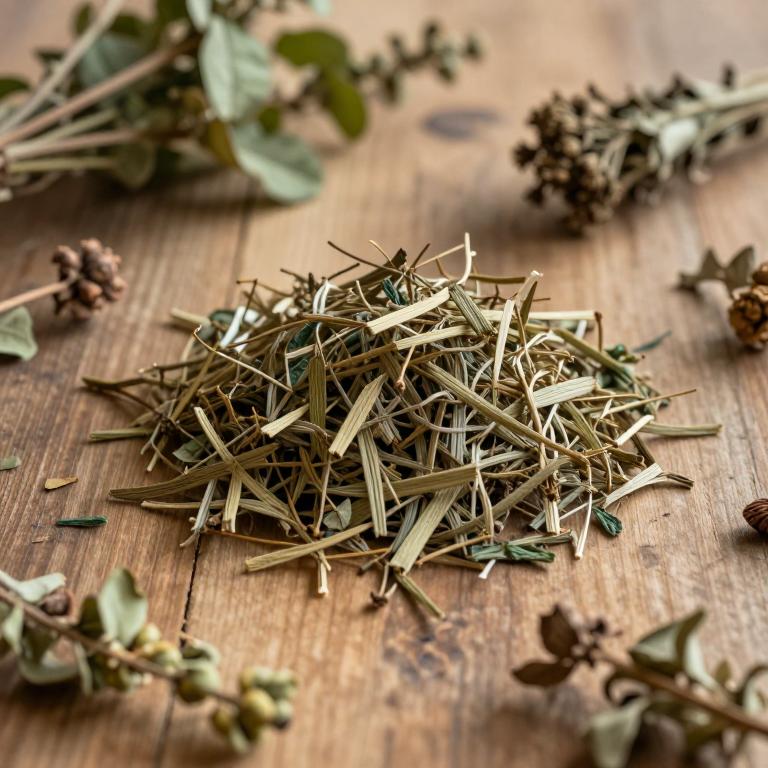
, scientifically known as Bauhinia uruguayensis, is a remarkable medicinal plant valued for its diverse therapeutic properties. Often found in South American landscapes, this species is traditionally utilized in folk medicine to address various ailments. Exploring its bioactive compounds offers promising insights into natural treatments for inflammation and healing.
- Family
- Fabaceae
- Native range
- Southern America
- Parts used
- Leaf
- Common names
- Not available
- Scientific synonyms
- Binaria Uruguayensis · Bauhinia Hermesiana · 1 more
Names and Synonyms
Scientific Names
Accepted name
Bauhinia uruguayensisSynonyms
- Binaria uruguayensis
- Bauhinia hermesiana
- Bauhinia guaranitica
Sources: Wikidata, Catalogue of Life
Taxonomical Classification
This plant belongs to the kingdom Plantae and is classified within the phylum Streptophyta and class Equisetopsida. It is further categorized under the subclass Magnoliidae and the order Fabales. Finally, it is a member of the Fabaceae family within the genus Bauhinia.
| Rank | Classification |
|---|---|
| Kingdom | Plantae |
| Phylum | Streptophyta |
| Class | Equisetopsida |
| Subclass | Magnoliidae |
| Order | Fabales |
| Family | Fabaceae |
| Genus | Bauhinia |
Sources: The World Checklist of Vascular Plants (WCVP)
Distribution
This plant is primarily found across specific regions of Southern South America. Its range extends through the northeastern parts of Argentina and encompasses the entirety of Uruguay. Additionally, it is widely distributed throughout the country of Paraguay. In the northern reaches of its territory, the species is also located in Southern Brazil. Together, these areas define the core geographical footprint of Bauhinia uruguayensis.
| Region | Area |
|---|---|
| Brazil | Brazil South |
| Southern South America | Argentina Northeast |
| Southern South America | Paraguay |
| Southern South America | Uruguay |
Sources: The World Checklist of Vascular Plants (WCVP)
Botanical Identification
Ecology
The ecology of Bauhinia uruguayensis is characterized by its ability to thrive across a diverse range of forest ecosystems, specifically inhabiting riparian forests (Floresta Ciliar ou Galeria), seasonal semideciduous forests (Floresta Estacional Decidual), and ombrophilous or rainforest environments (Floresta Ombrófila/Pluvial). This species demonstrates significant adaptability to various moisture regimes and vegetation structures within these biomes. In terms of altitudinal distribution, the plant occupies a broad vertical gradient, ranging from sea level (0 m AMSL) up to a maximum elevation of 500 m AMSL.
- Elevational range max:
- 500 m AMSL
- Elevational range min:
- 0 m AMSL
- Habitat :
- Floresta Ciliar ou Galeria, Floresta Estacional Decidual, Floresta Ombrófila (= Floresta Pluvial)
Life history
The life history of Bauhinia uruguayensis is characterized by its status as a perennial organism, allowing it to persist in its environment through multiple growing seasons. As a long-lived woody species, it does not follow the rapid cycle of annuals or the two-year pattern of biennials, but instead develops a robust structural framework that supports sustained physiological activity over many years. This perennial nature enables the plant to invest significant energy into its woody architecture and reproductive systems, ensuring its ability to endure seasonal fluctuations and contribute to the local ecosystem through long-term stability.
- Lifecycle :
- perennial
Morphology
The morphology of Bauhinia uruguayensis is characterized by a woody growth form, specifically manifesting as a shrub. This plant is a terrestrial species, existing as an independent organism without parasitic tendencies. It does not exhibit epiphytic behavior, maintaining its life cycle entirely on the ground rather than as a holoepiphyte, hemiepiphyte, or facultative epiphyte. In terms of structural habit, it is a self-supporting plant rather than a climber. The species reaches a maximum plant height of approximately 8 meters, contributing to its robust, woody architectural structure.
- Aquatic :
- terrestrial
- Climber :
- self-supporting
- Epiphyte :
- terrestrial
- Growth form :
- shrub
- Parasite :
- independent
- Plant height max:
- 8 m
- Woodiness :
- woody
Sources: Global Inventory of Floras and Traits (GIFT)
Plant Parts
Bauhinia uruguayensis has 1 reported plant parts identified across 1 scientific publications and several other databases that are studied for medicinal purposes. The most consistently reported plant part include leaf.
| Plant part | Supporting sources | Consensus |
|---|---|---|
| Leaf | 1 supporting sources | ★☆☆☆☆ |
Leaf
- Natural product research
Chemicals
Bauhinia uruguayensis has 2 reported phytochemicals identified across 1 scientific publications and several other databases. The most consistently reported chemicals include kaempferol, quercetin.
| Chemical | Supporting sources | Consensus |
|---|---|---|
| kaempferol | 1 supporting sources | ★☆☆☆☆ |
| quercetin | 1 supporting sources | ★☆☆☆☆ |
kaempferol
- Natural product research
quercetin
- Natural product research
Activities
Bauhinia uruguayensis has 1 reported activities identified across 1 scientific publications and several other databases. The most consistently reported activities include Analgesic.
| Activity | Supporting sources | Consensus |
|---|---|---|
| Analgesic | 1 supporting sources | ★☆☆☆☆ |
Analgesic
- Natural product research
Conditions
Bauhinia uruguayensis has 3 reported investigations on conditions identified across 1 scientific publications and several other databases. The most consistently reported conditions include analgesic, infections, pain.
| Condition | Supporting sources | Consensus |
|---|---|---|
| Analgesic | 1 supporting sources | ★☆☆☆☆ |
| Infections | 1 supporting sources | ★☆☆☆☆ |
| Pain | 1 supporting sources | ★☆☆☆☆ |
Analgesic
- Natural product research
Infections
- Natural product research
Pain
- Natural product research