Bauhinia rufescens
Bauhinia rufescens · Accepted scientific name
Scientific literature: Very Sparse (17 studies) · ★☆☆☆☆
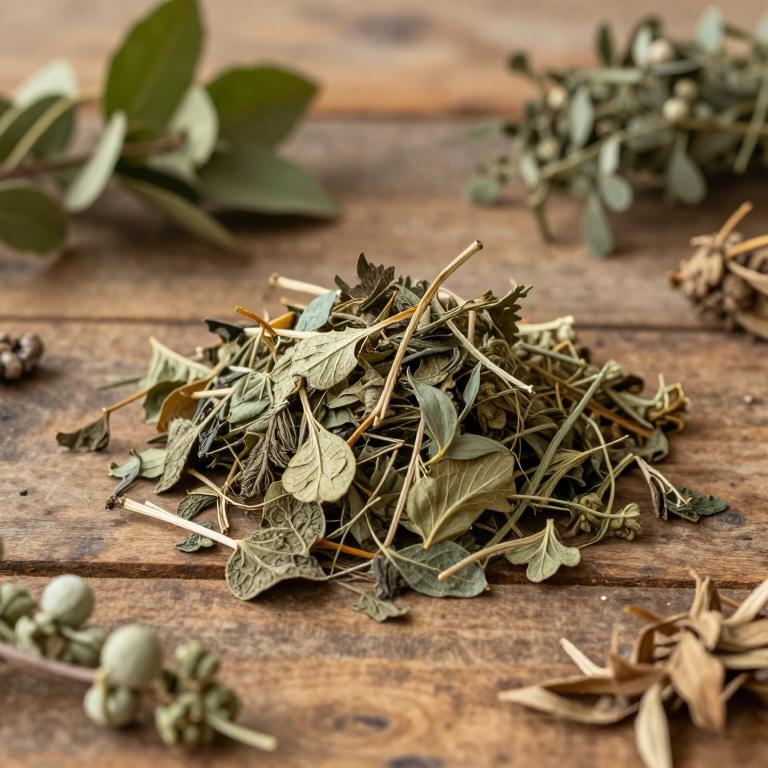
, scientifically known as Bauhinia rufescens, is a remarkable medicinal shrub valued for its diverse therapeutic properties. Native to various tropical regions, this plant features distinct foliage and vibrant blooms. It is traditionally utilized in holistic practices to address inflammatory conditions, skin ailments, and various internal imbalances effectively.
- Family
- Fabaceae
- Native range
- Africa
- Parts used
- Not available
- Common names
- Not available
- Scientific synonyms
- Piliostigma Rufescens · Adenolobus Rufescens · 2 more
Names and Synonyms
Scientific Names
Accepted name
Bauhinia rufescensSynonyms
- Piliostigma rufescens
- Adenolobus rufescens
- Bauhinia adansoniana
- Bauhinia rubescens
Sources: Wikidata
Taxonomical Classification
This plant belongs to the kingdom Plantae and the phylum Streptophyta, falling under the class Equisetopsida and subclass Magnoliidae. Within the order Fabales, it is classified under the family Fabaceae. Finally, its taxonomic identity is defined by the genus Bauhinia.
| Rank | Classification |
|---|---|
| Kingdom | Plantae |
| Phylum | Streptophyta |
| Class | Equisetopsida |
| Subclass | Magnoliidae |
| Order | Fabales |
| Family | Fabaceae |
| Genus | Bauhinia |
Sources: The World Checklist of Vascular Plants (WCVP)
Distribution
This plant exhibits a wide geographical distribution across several distinct regions of the African continent. In Northern Africa, its presence is specifically noted within the borders of Algeria. Moving toward the western region, it can be found across multiple West Tropical African nations. This includes its occurrence in Benin, Burkina, and the Gambia. Additionally, the species extends its range further south into Ghana.
| Region | Area |
|---|---|
| Northern Africa | Algeria |
| West Tropical Africa | Benin |
| West Tropical Africa | Burkina |
| West Tropical Africa | Gambia |
| West Tropical Africa | Ghana |
| West Tropical Africa | Guinea-Bissau |
| West Tropical Africa | Guinea |
| West Tropical Africa | Ivory Coast |
| West Tropical Africa | Mali |
| West Tropical Africa | Mauritania |
Sources: The World Checklist of Vascular Plants (WCVP)
Botanical Identification
Life history
The life history of Bauhinia rufescens is characterized by its status as a perennial organism, allowing it to persist through multiple growing seasons and establish a stable presence within its ecosystem. As a phanerophyte, the plant maintains its primary photosynthetic and regenerative tissues well above the ground level, typically developing a woody structure that ensures long-term survival and structural resilience. This life strategy enables it to navigate seasonal environmental shifts by investing in robust perennial growth patterns and elevated meristematic tissues.
- Life form :
- phanerophyte
- Lifecycle :
- perennial
Morphology
The morphology of Bauhinia rufescens is characterized by its woody structure and a growth form primarily classified as a shrub. As a terrestrial plant, it grows independently of other organisms, functioning as a non-parasitic species. The plant exhibits a self-supporting habit rather than acting as a liana or vine, meaning it does not require external support to maintain its structure. In terms of stature, it reaches a maximum height of approximately 7.62 meters, with a mean plant height recorded at 10 meters.
- Aquatic :
- terrestrial
- Climber :
- self-supporting
- Epiphyte :
- terrestrial
- Growth form :
- shrub
- Parasite :
- independent
- Plant height max:
- 7.62009266 m
- Plant height mean:
- 10 m
- Woodiness :
- woody
Physiology
The physiology of Bauhinia rufescens is characterized by a C3 photosynthetic pathway, meaning it utilizes the Calvin cycle for carbon fixation through the direct carboxylation of ribulose-1,5-bisphosphate by the enzyme RuBisCO. This metabolic process involves the standard three-carbon intermediate production during the initial stages of photosynthesis, which is typical for many woody dicotyledonous species in this genus. Regarding its nutrient acquisition processes, the plant does not function as a nitrogen fixer, as it lacks the symbiotic relationship with nitrogen-fixing bacteria, such as Rhizobium, required to convert atmospheric nitrogen into bioavailable forms. Consequently, its nitrogen requirements must be met through the uptake of nitrates or ammonium ions from the soil via its root system.
- Nitrogen fixer :
- no
- Photosynthetic pathway :
- C3
Reproduction
The reproduction of Bauhinia rufescens is driven by biotic pollination syndromes, relying on living organisms to facilitate the transfer of pollen. Specifically, the plant utilizes an insect-based pollination strategy, with bees playing a primary role in the fertilization process. Following successful pollination, the plant produces seeds that exhibit significant variability in size. The seed mass ranges from a minimum of 0.01133 g to a maximum of 0.13366 g, with an average seed mass of approximately 0.085095 g.
- Pollination syndrome :
- insect
- Pollination syndrome :
- bee
- Pollination syndrome :
- biotic
- Seed mass max:
- 0.13366 g
- Seed mass mean:
- 0.085095 g
- Seed mass min:
- 0.01133 g
Sources: Global Inventory of Floras and Traits (GIFT)
Chemicals
Bauhinia rufescens has 9 reported phytochemicals identified across 0 scientific publications and several other databases. The most consistently reported chemicals include ERIODICTYOL, Epicatechin, MENISDAURIN, Procyanidin B, RUTIN.
| Chemical | Supporting sources | Consensus |
|---|---|---|
| ERIODICTYOL | 1 supporting sources | ★☆☆☆☆ |
| Epicatechin | 1 supporting sources | ★☆☆☆☆ |
| MENISDAURIN | 1 supporting sources | ★☆☆☆☆ |
| Procyanidin B | 1 supporting sources | ★☆☆☆☆ |
| RUTIN | 1 supporting sources | ★☆☆☆☆ |
| Sequoyitol | 1 supporting sources | ★☆☆☆☆ |
| alpha-Amyrin acetate | 1 supporting sources | ★☆☆☆☆ |
| beta-Sitosterol-3-O-beta-D-xylopyranoside | 1 supporting sources | ★☆☆☆☆ |
| quercetin | 1 supporting sources | ★☆☆☆☆ |
ERIODICTYOL
- Journal of receptor and signal transduction research
Epicatechin
- Molecules (Basel, Switzerland)
MENISDAURIN
- Natural product communications
Procyanidin B
- Molecules (Basel, Switzerland)
RUTIN
- Journal of receptor and signal transduction research
Sequoyitol
- Natural product communications
alpha-Amyrin acetate
- Natural product communications
beta-Sitosterol-3-O-beta-D-xylopyranoside
- Natural product communications
quercetin
- Molecules (Basel, Switzerland)
Activities
Bauhinia rufescens has 2 reported activities identified across 0 scientific publications and several other databases. The most consistently reported activities include Antidiabetic, Tyrosinase-Inhibitor.
| Activity | Supporting sources | Consensus |
|---|---|---|
| Antidiabetic | 1 supporting sources | ★☆☆☆☆ |
| Tyrosinase-Inhibitor | 1 supporting sources | ★☆☆☆☆ |
Antidiabetic
- Journal of receptor and signal transduction research
Tyrosinase-Inhibitor
- Natural product communications
Conditions
Bauhinia rufescens has 6 reported investigations on conditions identified across 0 scientific publications and several other databases. The most consistently reported conditions include antidiabetic, fevers, gastroenteritis, hypoglycemic, infectious diseases.
| Condition | Supporting sources | Consensus |
|---|---|---|
| Antidiabetic | 1 supporting sources | ★☆☆☆☆ |
| Fevers | 1 supporting sources | ★☆☆☆☆ |
| Gastroenteritis | 1 supporting sources | ★☆☆☆☆ |
| Hypoglycemic | 1 supporting sources | ★☆☆☆☆ |
| Infectious diseases | 1 supporting sources | ★☆☆☆☆ |
| Tyrosinase | 1 supporting sources | ★☆☆☆☆ |
Antidiabetic
- Journal of receptor and signal transduction research
Fevers
- Molecules (Basel, Switzerland)
Gastroenteritis
- Molecules (Basel, Switzerland)
Hypoglycemic
- Journal of receptor and signal transduction research
Infectious diseases
- Molecules (Basel, Switzerland)
Tyrosinase
- Natural product communications
Preparations
Bauhinia rufescens has 5 reported preparations identified across 0 scientific publications and several other databases. The most consistently reported preparations include Ethanolic extracts, ethyl acetate fractions, extracts, fractions, solvent fractions.
| Preparation | Supporting sources | Consensus |
|---|---|---|
| Ethanolic extracts | 1 supporting sources | ★☆☆☆☆ |
| Ethyl acetate fractions | 1 supporting sources | ★☆☆☆☆ |
| Extracts | 1 supporting sources | ★☆☆☆☆ |
| Fractions | 1 supporting sources | ★☆☆☆☆ |
| Solvent fractions | 1 supporting sources | ★☆☆☆☆ |
Ethanolic extracts
- Molecules (Basel, Switzerland)
Ethyl acetate fractions
- Molecules (Basel, Switzerland)
Extracts
- Molecules (Basel, Switzerland)
Fractions
- Molecules (Basel, Switzerland)
Solvent fractions
- Molecules (Basel, Switzerland)