cow's pow
Bauhinia holophylla · Accepted scientific name
Scientific literature: Very Sparse (19 studies) · ★☆☆☆☆
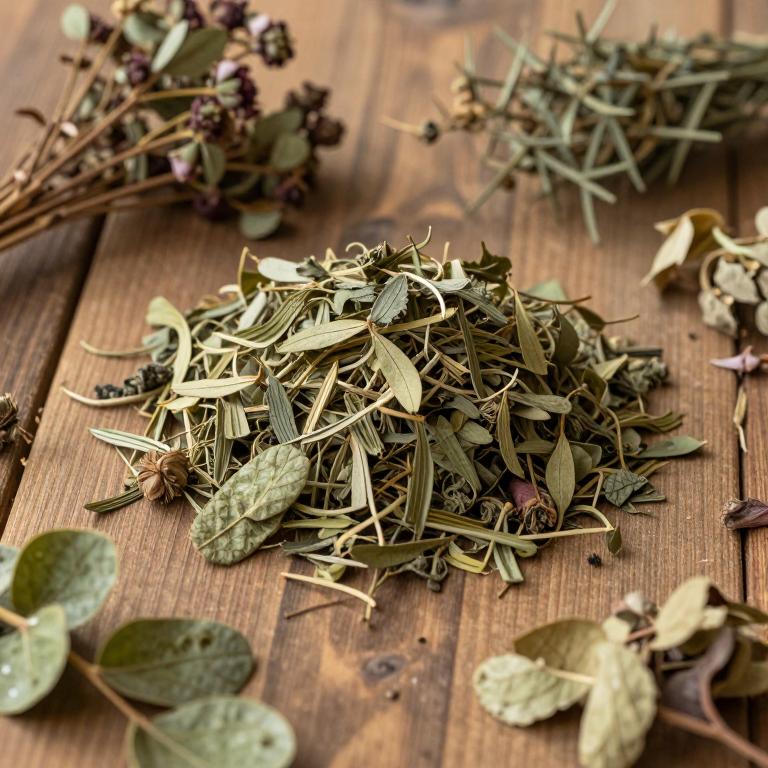
Cow's pow, scientifically known as Bauhinia holophylla, is a versatile medicinal plant valued in traditional healing practices. Renowned for its therapeutic properties, it is frequently utilized to treat various ailments, including inflammation and digestive issues. This botanical treasure offers significant pharmacological potential for modern integrative medicine and wellness.
- Family
- Fabaceae
- Native range
- Southern America
- Parts used
- Leaf
- Common names
- Not available
- Scientific synonyms
- Bauhinia Dodecandra · Pauletia Holophylla · 6 more
Names and Synonyms
Scientific Names
Accepted name
Bauhinia holophyllaSynonyms
- Bauhinia dodecandra
- Pauletia holophylla
- Pauletia dodecandra
- Pauletia rufa var. cordata
- Bauhinia cordata
- Pauletia rufa var. dodecandra
- Bauhinia rufa var. cordata
- Bauhinia rufa var. dodecandra
Sources: Wikidata
Taxonomical Classification
This plant belongs to the kingdom Plantae and the phylum Streptophyta, falling under the class Equisetopsida and subclass Magnoliidae. Within the order Fabales, it is classified under the family Fabaceae and the genus Bauhinia. Specifically, its taxonomic identity is defined as Bauhinia holophyllla.
| Rank | Classification |
|---|---|
| Kingdom | Plantae |
| Phylum | Streptophyta |
| Class | Equisetopsida |
| Subclass | Magnoliidae |
| Order | Fabales |
| Family | Fabaceae |
| Genus | Bauhinia |
Sources: The World Checklist of Vascular Plants (WCVP)
Distribution
This plant exhibits a broad geographical distribution across the South American continent. It can be found in Western South America, specifically within the borders of Bolivia. Its presence is also widely documented throughout various regions of Brazil. Within Brazil, it inhabits the North, South, and Southeast territories. Additionally, the species is known to grow in the West-Central region of the country.
| Region | Area |
|---|---|
| Western South America | Bolivia |
| Brazil | Brazil West-Central |
| Brazil | Brazil Southeast |
| Brazil | Brazil North |
| Brazil | Brazil South |
| Southern South America | Paraguay |
Sources: The World Checklist of Vascular Plants (WCVP)
Botanical Identification
Ecology
The ecology of Bauhinia holophylla is characterized by its presence within the Cerrado (latu sensu) habitat, where it thrives in specific environmental conditions. This species occupies a diverse altitudinal gradient, ranging from sea level up to an elevation of 500 m AMSL. Its distribution within these low-to-mid elevation tropical landscapes suggests an adaptation to the unique soil compositions and seasonal moisture patterns typical of the Cerrado biome.
- Elevational range max:
- 500 m AMSL
- Elevational range min:
- 0 m AMSL
- Habitat :
- Cerrado (lato sensu)
Life history
The life history of Bauhinia holophyllla is characterized by its status as a perennial organism, meaning it persists through multiple growing seasons rather than completing its cycle in a single year. As a long-lived woody species, its life cycle involves a continuous process of vegetative growth and seasonal reproductive phases. Following the initial establishment from a seed, the plant undergoes a maturation period during which it develops a robust structural framework of branches and foliage. Throughout its perennial existence, it undergoes periodic cycles of flowering and seed production, ensuring the continuation of the species through successive generations while maintaining the individual plant's longevity in its natural habitat.
- Lifecycle :
- perennial
Morphology
The morphology of Bauhinia holophylla is characterized by its growth form as a woody subshrub that reaches a maximum plant height of approximately 4 meters. It is a terrestrial species, functioning as an independent organism rather than a parasite, and it does not exhibit epiphytic behavior, maintaining a strictly terrestrial habit. Unlike climbing species that require external support, this plant is self-supporting in its structural development.
- Aquatic :
- terrestrial
- Climber :
- self-supporting
- Epiphyte :
- terrestrial
- Growth form :
- subshrub
- Parasite :
- independent
- Plant height max:
- 4 m
- Woodiness :
- woody
Physiology
The physiology of Bauhinia holophylla is primarily characterized by its metabolic processes, most notably its photosynthetic pathway, which follows the C3 mechanism. As a C3 plant, it utilizes the Calvin cycle to fix atmospheric carbon dioxide directly through the enzyme RuBisCO, a process that typically occurs during the day when stomata are open to facilitate gas exchange. This metabolic strategy influences the plant's water-use efficiency and transpiration rates, as the reliance on C3 photosynthesis necessitates a careful balance between CO2 uptake and moisture loss, particularly in varying environmental conditions. This carbon fixation method dictates the plant's energy production efficiency and its overall growth patterns in response to light intensity and temperature fluctuations.
- Photosynthetic pathway :
- C3
Sources: Global Inventory of Floras and Traits (GIFT)
Plant Parts
Bauhinia holophylla has 1 reported plant parts identified across 2 scientific publications and several other databases that are studied for medicinal purposes. The most consistently reported plant part include leaf.
| Plant part | Supporting sources | Consensus |
|---|---|---|
| Leaf | 2 supporting sources | ★☆☆☆☆ |
Leaf
- Plants (Basel, Switzerland)
- PloS one
Chemicals
Bauhinia holophylla has 7 reported phytochemicals identified across 2 scientific publications and several other databases. The most consistently reported chemicals include kaempferol, myricetin, Epicatechin, Flavonoids, RUTIN.
| Chemical | Supporting sources | Consensus |
|---|---|---|
| kaempferol | 2 supporting sources | ★☆☆☆☆ |
| myricetin | 2 supporting sources | ★☆☆☆☆ |
| Epicatechin | 1 supporting sources | ★☆☆☆☆ |
| Flavonoids | 1 supporting sources | ★☆☆☆☆ |
| RUTIN | 1 supporting sources | ★☆☆☆☆ |
| luteolin | 1 supporting sources | ★☆☆☆☆ |
| quercetin | 1 supporting sources | ★☆☆☆☆ |
kaempferol
- Plants (Basel, Switzerland)
- Pharmaceutical biology
myricetin
- Plants (Basel, Switzerland)
- Pharmaceutical biology
Epicatechin
- Archives of oral biology
Flavonoids
- PloS one
RUTIN
- Archives of oral biology
luteolin
- Pharmaceutical biology
quercetin
- Plants (Basel, Switzerland)
Activities
Bauhinia holophylla has 1 reported activities identified across 2 scientific publications and several other databases. The most consistently reported activities include Antidiabetic.
| Activity | Supporting sources | Consensus |
|---|---|---|
| Antidiabetic | 1 supporting sources | ★☆☆☆☆ |
Antidiabetic
- Plants (Basel, Switzerland)
Conditions
Bauhinia holophylla has 6 reported investigations on conditions identified across 2 scientific publications and several other databases. The most consistently reported conditions include Candida albicans, analgesic, antidiabetic, hypoglycemic agent, infections.
| Condition | Supporting sources | Consensus |
|---|---|---|
| Candida albicans | 1 supporting sources | ★☆☆☆☆ |
| Analgesic | 1 supporting sources | ★☆☆☆☆ |
| Antidiabetic | 1 supporting sources | ★☆☆☆☆ |
| Hypoglycemic agent | 1 supporting sources | ★☆☆☆☆ |
| Infections | 1 supporting sources | ★☆☆☆☆ |
| Oral candidiasis | 1 supporting sources | ★☆☆☆☆ |
Candida albicans
- Archives of oral biology
Analgesic
- Plants (Basel, Switzerland)
Antidiabetic
- Plants (Basel, Switzerland)
Hypoglycemic agent
- Plants (Basel, Switzerland)
Infections
- Plants (Basel, Switzerland)
Oral candidiasis
- Archives of oral biology
Preparations
Bauhinia holophylla has 5 reported preparations identified across 2 scientific publications and several other databases. The most consistently reported preparations include Flavonoid-Rich Fractions, aqueous extract, ethanolic extract, extract, fractions.
| Preparation | Supporting sources | Consensus |
|---|---|---|
| Flavonoid-rich fractions | 1 supporting sources | ★☆☆☆☆ |
| Aqueous extract | 1 supporting sources | ★☆☆☆☆ |
| Ethanolic extract | 1 supporting sources | ★☆☆☆☆ |
| Extract | 1 supporting sources | ★☆☆☆☆ |
| Fractions | 1 supporting sources | ★☆☆☆☆ |
Flavonoid-rich fractions
- Plants (Basel, Switzerland)
Aqueous extract
- Archives of oral biology
Ethanolic extract
- Archives of oral biology
Extract
- Plants (Basel, Switzerland)
Fractions
- Plants (Basel, Switzerland)