Bauhinia forficata subsp. pruinosa
Bauhinia forficata subsp. pruinosa · Accepted scientific name
Scientific literature: Very Sparse (3 studies) · ★☆☆☆☆
, scientifically known as Bauhinia forficata subsp. pruinosa, is a medicinal shrub valued in traditional healing. Often referred to as "pau-de-vassoura," its leaves and bark are utilized for their potential anti-inflammatory and antioxidant properties. This plant holds significant interest in ethnobotany for treating various ailments in diverse folk medicine practices.
- Family
- Fabaceae
- Native range
- Southern America
- Parts used
- Not available
- Common names
- Not available
- Scientific synonyms
- Bauhinia Forficata Var. Pruinosa · Bauhinia Forficata Var. Candicans · 4 more
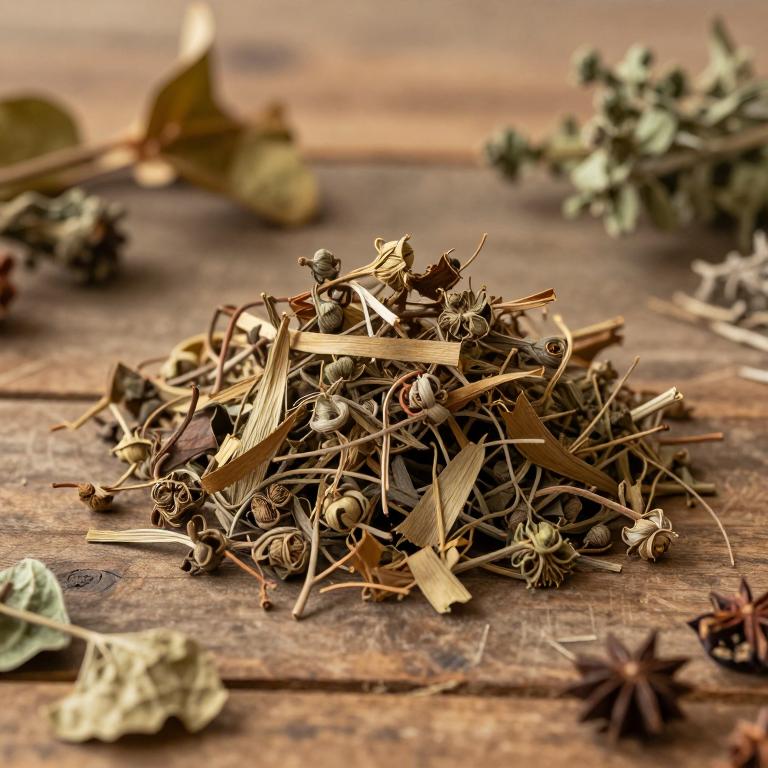
Names and Synonyms
Scientific Names
Accepted name
Bauhinia forficata subsp. pruinosaSynonyms
- Bauhinia forficata var. pruinosa
- Bauhinia forficata var. candicans
- Bauhinia pruinosa
- Pauletia pruinosa
- Pauletia candicans
- Bauhinia candicans
Regional and Traditional Names
Spanish:
- Pata de vaca
Sources: Wikidata, Catalogue of Life
Taxonomical Classification
This plant belongs to the kingdom Plantae and the phylum Streptophyta, falling under the class Equisetopsida and subclass Magnoliidae. Within the order Fabales, it is classified under the family Fabaceae and the genus Bauhinia. Specifically, its taxonomic identity is completed as Bauhinia forficata subsp. pruinosa.
| Rank | Classification |
|---|---|
| Kingdom | Plantae |
| Phylum | Streptophyta |
| Class | Equisetopsida |
| Subclass | Magnoliidae |
| Order | Fabales |
| Family | Fabaceae |
| Genus | Bauhinia |
Sources: The World Checklist of Vascular Plants (WCVP)
Distribution
This plant exhibits a broad distribution across several regions of South America. In Western South America, its presence is recorded in Bolivia. Within Brazil, it can be found specifically in the Southeast and South regions. Moving toward Southern South America, the species inhabits the Northeast and Northwest areas of Argentina. Consequently, its range spans diverse ecological zones across the continent.
| Region | Area |
|---|---|
| Western South America | Bolivia |
| Brazil | Brazil Southeast |
| Brazil | Brazil South |
| Southern South America | Argentina Northeast |
| Southern South America | Argentina Northwest |
| Southern South America | Paraguay |
| Southern South America | Uruguay |
Sources: The World Checklist of Vascular Plants (WCVP)
Chemicals
Bauhinia forficata subsp. pruinosa has 2 reported phytochemicals identified across 0 scientific publications and several other databases. The most consistently reported chemicals include Flavonoids, Kaempferitrin.
| Chemical | Supporting sources | Consensus |
|---|---|---|
| Flavonoids | 1 supporting sources | ★☆☆☆☆ |
| Kaempferitrin | 1 supporting sources | ★☆☆☆☆ |
Flavonoids
- Acta biologica Hungarica
Kaempferitrin
- Natural product research
Activities
Bauhinia forficata subsp. pruinosa has 1 reported activities identified across 0 scientific publications and several other databases. The most consistently reported activities include Antioxidant.
| Activity | Supporting sources | Consensus |
|---|---|---|
| Antioxidant | 1 supporting sources | ★☆☆☆☆ |
Antioxidant
- Acta biologica Hungarica
Preparations
Bauhinia forficata subsp. pruinosa has 2 reported preparations identified across 0 scientific publications and several other databases. The most consistently reported preparations include hydro-ethanolic extracts obtained from dried and fresh leaves, hydro-ethanolic leaf extracts.
| Preparation | Supporting sources | Consensus |
|---|---|---|
| Hydro-ethanolic extracts obtained from dried and fresh leaves | 1 supporting sources | ★☆☆☆☆ |
| Hydro-ethanolic leaf extracts | 1 supporting sources | ★☆☆☆☆ |
Hydro-ethanolic extracts obtained from dried and fresh leaves
- Acta biologica Hungarica
Hydro-ethanolic leaf extracts
- Acta biologica Hungarica