Mexican-fireweed
Bassia scoparia · Accepted scientific name
Scientific literature: Very Sparse (26 studies) · ★☆☆☆☆
Mexican-fireweed, scientifically known as Bassia scoparia, is a versatile annual herb belonging to the Amaranthaceae family. Renowned for its resilience in arid climates, this plant offers significant medicinal potential. It is traditionally utilized to treat various ailments, ranging from digestive issues to inflammatory conditions, through its unique bioactive compounds.
- Family
- Amaranthaceae
- Native range
- Europe
- Parts used
- Fruit
- Common names
- Not available
- Scientific synonyms
- Kochia Scoparia · Kochia Densiflora · 48 more
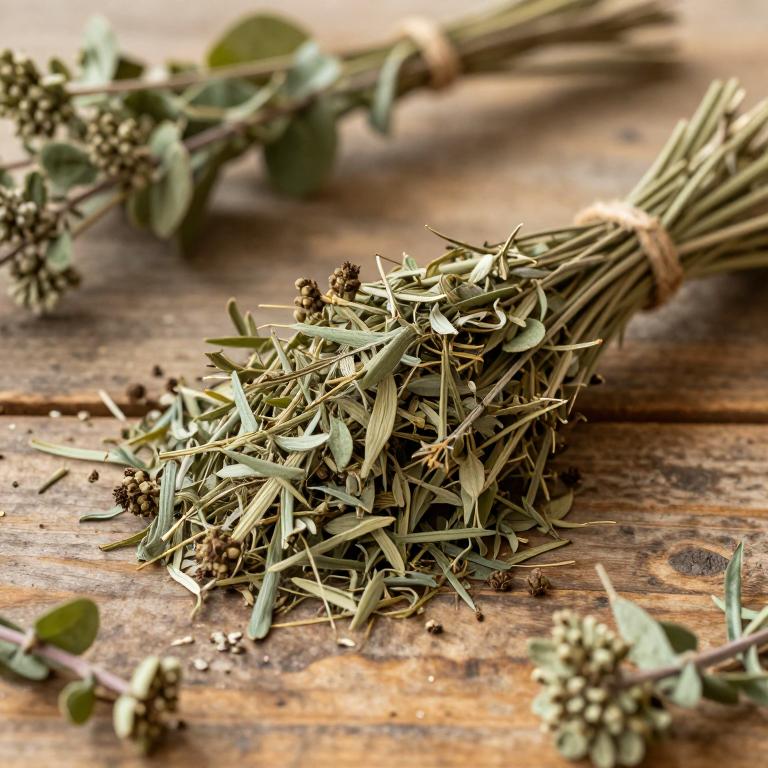
Names and Synonyms
Scientific Names
Accepted name
Bassia scopariaSynonyms
- Kochia scoparia
- Kochia densiflora
- Salsola scoparia
- Kochia scoparia var. trichophylla
- Bushiola scoparia
- Kochia scoparia var. culta
- Bassia angustifolia
- Bassia littorea
- Kochia scoparia sieversiana
- Kochia scoparia var. songarica
- Kochia sieversiana
- Kochia scoparia var. sieversiana
- Bassia sieversiana
- Kochia scoparia var. alata
- Kochia scoparia var. angustifolia
- Kochia scoparia var. littorea
- Chenopodium scoparia
- Bassia scoparia var. culta
- Kochia scoparia var. subvillosa
- Kochia alata
- Kochia albovillosa
- Kochia sicorica
- Kochia scoparia f. suaedifolia
- Kochia scoparia subsp. hirsutissima
- Kochia virgata
- Kochia trichophylla
- Kochia scoparia f. densa
- Kochia parodii
- Suaeda cinerea
- Suaeda sieversiana
- Salsola songarica
- Bassia scoparia subsp. culta
- Bassia scoparia subsp. densiflora
- Bassia scoparia var. subvillosa
- Bassia scoparia f. trichophylla
- Bassia sicorica
- Kochia scoparia f. densiflora
- Bassia alata
- Atriplex scoparia
- Kochia scoparia subsp. culta
- Kochia littorea
- Kochia angustifolia
- Kochia parodii var. glabrescens
- Kochia parodii var. elongata
- Kochia parodii var. densa
- Kochia scoparia var. albovillosa
- Kochia scoparia subsp. densiflora
- Kochia scoparia var. subglabra
- Kochia scoparia f. trichophylla
- Kochia scoparia f. littorea
Regional and Traditional Names
Spanish:
- Kochia scoparia
- Tonburi
- Atriplex scoparia
- Bassia sicorica
- Bassia sieversiana
- Bushiola scoparia
- Chenopodium scoparia
- Kochia densiflora
- Kochia parodii
- Kochia sicorica
- Kochia sieversiana
- Kochia trichophylla
- Salsola scoparia
- Salsola sieversiana
- Salsola songarica
- Suaeda cinerea
- Suaeda sieversiana
- Ayuga
German:
- Besen-Radmelde
- Sommerzypresse
- Kochia scoparia
- Chenopodium scoparium
- Atriplex scoparia
- Salsola scoparia
- Bushiola scoparia
- Kochia alata
- Bassia alata
- Suaeda sieversiana
- Bassia sieversiana
- Kochia sieversiana
- Salsola sieversiana
- Kochia sicorica
- Bassia sicorica
- Kochia parodii
- Kochia densiflora
Sources: Wikidata, Catalogue of Life
Taxonomical Classification
This plant belongs to the kingdom Plantae and is classified under the phylum Streptophyta within the class Equisetopsida. It is further categorized under the subclass Magnoliidae and the order Caryophyllales, falling into the family Amaranthaceae. Ultimately, its taxonomic identity is defined by the genus Bassia.
| Rank | Classification |
|---|---|
| Kingdom | Plantae |
| Phylum | Streptophyta |
| Class | Equisetopsida |
| Subclass | Magnoliidae |
| Order | Caryophyllales |
| Family | Amaranthaceae |
| Genus | Bassia |
Sources: The World Checklist of Vascular Plants (WCVP)
Distribution
This plant, known scientifically as Bassia scoparia, exhibits a specific distribution across several regions of Northern Europe. It can be found growing within the borders of Denmark. Its presence is also documented throughout the landscapes of Finland. Furthermore, the species is widely distributed across Great Britain and Ireland. Finally, its geographical range extends into the northern territories of Norway.
| Region | Area |
|---|---|
| Northern Europe | Denmark |
| Northern Europe | Finland |
| Northern Europe | Great Britain |
| Northern Europe | Ireland |
| Northern Europe | Norway |
| Northern Europe | Sweden |
| Middle Europe | Austria |
| Middle Europe | Belgium |
| Middle Europe | Czechia-Slovakia |
| Middle Europe | Germany |
Sources: The World Checklist of Vascular Plants (WCVP)
Botanical Identification
Ecology
The ecology of Bassia scoparia is characterized by its broad adaptability to varying topographical positions, primarily thriving in lowland habitats. This species exhibits a wide vertical distribution across different altitudinal gradients, with an elevational range that begins at sea level (0 m AMSL) and extends up to a maximum of 1500 m AMSL. While it is frequently found in lower-lying regions, its presence across these elevations results in an average elevational range of approximately 1800 m AMSL, reflecting its ability to colonize diverse landscape niches within these specific environmental parameters.
- Elevational range max:
- 1500 m AMSL
- Elevational range mean:
- 1800 m AMSL
- Elevational range min:
- 0 m AMSL
- Habitat :
- Lowland
Life history
The life history of Bassia scoparia is characterized by an annual lifecycle, meaning the plant completes its entire biological progression from germination to seed production within a single growing season. In terms of its ecological classification and growth habit, it is categorized as a therophyte, a life form defined by completing its life cycle rapidly and surviving unfavorable seasons in the form of resistant seeds. This strategy allows the species to colonize disturbed or seasonal environments effectively, relying on its annual reproductive cycle to ensure persistence across generations.
- Life form :
- therophyte
- Lifecycle :
- annual
Morphology
The morphology of Bassia scoparia is characterized by its growth form as a non-woody herb and forb, functioning as a self-supporting, independent organism that does not exhibit parasitic or epiphytic behavior, maintaining a strictly terrestrial existence. The plant displays an erect shoot orientation and is categorized as a self-supporting structure rather than a climber, vine, or liana. In terms of stature, it exhibits significant variability in plant height, with minimum measurements recorded at 0.1 m, a mean height of approximately 0.99 m, and a maximum height reaching up to 2 m.
- Aquatic :
- terrestrial
- Climber :
- self-supporting
- Epiphyte :
- terrestrial
- Growth form :
- herb
- Growth form :
- forb
- Parasite :
- independent
- Plant height max:
- 2 m
- Plant height mean:
- 0.99 m
- Plant height min:
- 0.1 m
- Shoot orientation :
- erect
- Woodiness :
- non-woody
Physiology
The physiology of Bassia scoparia is characterized by a highly efficient metabolic and morphological framework optimized for its environmental niche. The plant utilizes a C4 photosynthetic pathway, a specialized mechanism that enhances carbon fixation efficiency and minimizes photorespiration, particularly in warmer or drier conditions. Its foliage consists of lanceolate leaves with entire margins, lacking both thorns and spines, and is classified as non-carnivorous. Morphologically, the leaves exhibit a range of dimensions, with lengths varying from a minimum of 1.5 cm to a maximum of 2.5 cm, while the width fluctuates between a minimum and maximum of 0.2 cm to 0.5 cm, resulting in a mean leaf width of 0.2 cm. The average leaf size is measured at 0.95375 cm², reflecting a compact leaf structure. Furthermore, the Specific Leaf Area (SLA) provides insight into its resource allocation and leaf density, with values ranging from a minimum of 386.3141071 cm²/g to a maximum of 386.3141071 cm²/g, yielding a mean SLA of 301.90705355 cm²/g.
- Carnivory :
- non-carnivorous
- Leaf form :
- lanceolate
- Leaf length max:
- 2.5 cm
- Leaf length min:
- 1.5 cm
- Leaf margin :
- entire
- Leaf size mean:
- 0.95375 cm²
- Leaf spines :
- no
- Leaf thorns :
- no
- Leaf width max:
- 0.5 cm
- Leaf width mean:
- 0.2 cm
- Photosynthetic pathway :
- C4
- Specific Leaf Area (SLA) mean:
- 301.90705355 cm²/g
- Specific Leaf Area (SLA) min:
- 386.3141071 cm²/g
Reproduction
The reproduction of Bassia scoparia is primarily a sexual process, as asexual reproduction is absent. The flowering period typically commences in July and continues through October. This reproductive cycle relies on abiotic pollination, specifically utilizing a wind pollination syndrome to facilitate fertilization, as self-fertilization is absent. The resulting fruit is classified as an achene and is indehiscent. The seeds produced are characterized by a highly consistent length of 1.8 mm (with both minimum and maximum values at 1.8 mm) and a mean mass of approximately 0.00104 g, though individual seed masses can range from a minimum of 0.00012 g to a maximum of 0.0058 g. For the spread of the species, Bassia scoparia employs an anemochorous dispersal syndrome, relying on the wind to transport its seeds to new locations.
- Dehiscence :
- indehiscent
- Dispersal syndrome :
- anemochorous
- Flowering time :
- Jul
- Flowering time :
- Oct
- Fruit type :
- achene
- Pollination syndrome :
- wind
- Pollination syndrome :
- abiotic
- Reproduction asexual :
- absent
- Seed length mean:
- 1.8 mm
- Seed mass max:
- 0.0058 g
- Seed mass mean:
- 0.00104333333333333 g
- Seed mass min:
- 0.00012 g
- Self fertilization :
- absent
Sources: Global Inventory of Floras and Traits (GIFT)
Plant Parts
Bassia scoparia has 1 reported plant parts identified across 4 scientific publications and several other databases that are studied for medicinal purposes. The most consistently reported plant part include fruit.
| Plant part | Supporting sources | Consensus |
|---|---|---|
| Fruit | 4 supporting sources | ★★☆☆☆ |
Fruit
- Zhongguo Zhong yao za zhi = Zhongguo zhongyao zazhi = China journal of Chinese materia medica
- Planta medica
- Journal of ethnopharmacology
- Current issues in molecular biology
Chemicals
Bassia scoparia has 17 reported phytochemicals identified across 4 scientific publications and several other databases. The most consistently reported chemicals include OLEANOLIC ACID, 5,2'-Dihydroxy-6,7-methylenedioxyisoflavone, CHLOROFORM, Daucosterol, ETHYL ACETATE.
| Chemical | Supporting sources | Consensus |
|---|---|---|
| OLEANOLIC ACID | 2 supporting sources | ★☆☆☆☆ |
| 5,2'-Dihydroxy-6,7-methylenedioxyisoflavone | 1 supporting sources | ★☆☆☆☆ |
| CHLOROFORM | 1 supporting sources | ★☆☆☆☆ |
| Daucosterol | 1 supporting sources | ★☆☆☆☆ |
| ETHYL ACETATE | 1 supporting sources | ★☆☆☆☆ |
| Fumalicacid | 1 supporting sources | ★☆☆☆☆ |
| Iriflogenin | 1 supporting sources | ★☆☆☆☆ |
| Momordin Ic | 1 supporting sources | ★☆☆☆☆ |
| N-trans-feruloylmethoxytyramine | 1 supporting sources | ★☆☆☆☆ |
| PETROLEUM ETHER | 1 supporting sources | ★☆☆☆☆ |
OLEANOLIC ACID
- Biological & pharmaceutical bulletin
- Zhong yao cai = Zhongyaocai = Journal of Chinese medicinal materials
5,2'-Dihydroxy-6,7-methylenedioxyisoflavone
- Zhong yao cai = Zhongyaocai = Journal of Chinese medicinal materials
CHLOROFORM
- Parasitology research
Daucosterol
- Zhong yao cai = Zhongyaocai = Journal of Chinese medicinal materials
ETHYL ACETATE
- Parasitology research
Fumalicacid
- Zhong yao cai = Zhongyaocai = Journal of Chinese medicinal materials
Iriflogenin
- Zhong yao cai = Zhongyaocai = Journal of Chinese medicinal materials
Momordin Ic
- Zhongguo Zhong yao za zhi = Zhongguo zhongyao zazhi = China journal of Chinese materia medica
N-trans-feruloylmethoxytyramine
- Zhong yao cai = Zhongyaocai = Journal of Chinese medicinal materials
PETROLEUM ETHER
- Parasitology research
Activities
Bassia scoparia has 2 reported activities identified across 4 scientific publications and several other databases. The most consistently reported activities include Antipruritic, Moisturizing.
| Activity | Supporting sources | Consensus |
|---|---|---|
| Antipruritic | 1 supporting sources | ★☆☆☆☆ |
| Moisturizing | 1 supporting sources | ★☆☆☆☆ |
Antipruritic
- Biological & pharmaceutical bulletin
Moisturizing
- Current issues in molecular biology
Conditions
Bassia scoparia has 2 reported investigations on conditions identified across 4 scientific publications and several other databases. The most consistently reported conditions include inflammation, wound.
| Condition | Supporting sources | Consensus |
|---|---|---|
| Inflammation | 1 supporting sources | ★☆☆☆☆ |
| Wound | 1 supporting sources | ★☆☆☆☆ |
Inflammation
- Current issues in molecular biology
Wound
- Current issues in molecular biology
Preparations
Bassia scoparia has 5 reported preparations identified across 4 scientific publications and several other databases. The most consistently reported preparations include EtOAc-soluble portion, Kochiae Fructus, extracts, fruit, mature fruit.
| Preparation | Supporting sources | Consensus |
|---|---|---|
| Etoac-soluble portion | 1 supporting sources | ★☆☆☆☆ |
| Kochiae fructus | 1 supporting sources | ★☆☆☆☆ |
| Extracts | 1 supporting sources | ★☆☆☆☆ |
| Fruit | 1 supporting sources | ★☆☆☆☆ |
| Mature fruit | 1 supporting sources | ★☆☆☆☆ |
Etoac-soluble portion
- Zhong yao cai = Zhongyaocai = Journal of Chinese medicinal materials
Kochiae fructus
- Current issues in molecular biology
Extracts
- Fitoterapia
Fruit
- Planta medica
Mature fruit
- Journal of ethnopharmacology