Bassia indica
Bassia indica · Accepted scientific name
Scientific literature: Very Sparse (39 studies) · ★☆☆☆☆
Bassia indica, scientifically known as Bassia indica, is a versatile medicinal herb primarily found in the arid regions of India. Renowned in traditional medicine, it possesses significant therapeutic properties, including anti-inflammatory and antioxidant effects. This plant is frequently utilized to treat various ailments, offering valuable natural healing potential.
- Family
- Amaranthaceae
- Native range
- Europe
- Parts used
- Not available
- Common names
- Not available
- Scientific synonyms
- Kochia Scoparia Subsp. Indica · Bassia Joppensis · 2 more
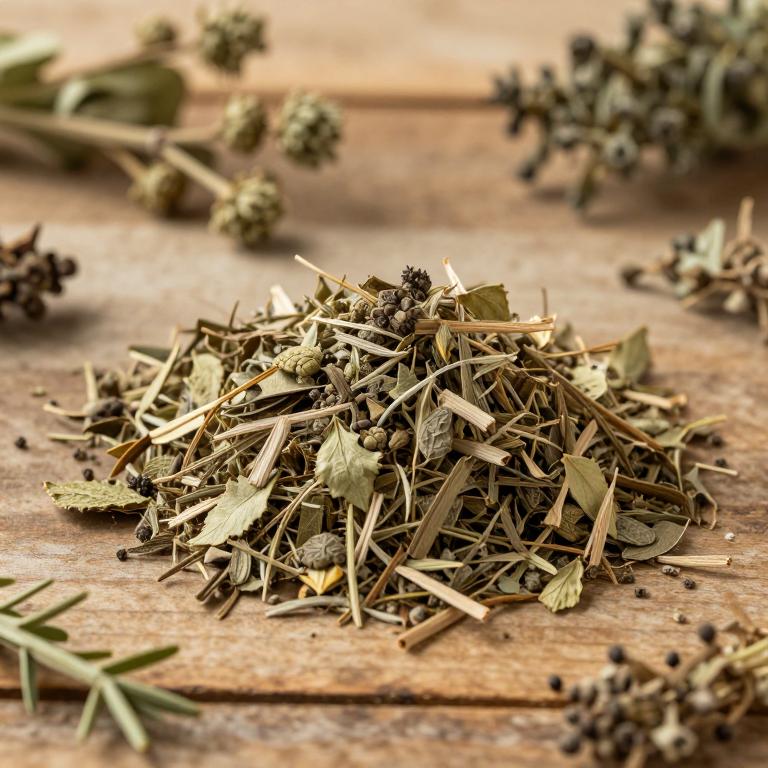
Names and Synonyms
Scientific Names
Accepted name
Bassia indicaSynonyms
- Kochia scoparia subsp. indica
- Bassia joppensis
- Kochia griffithii
- Kochia indica
Regional and Traditional Names
German:
- Kochia indica
- Kochia scoparia subsp. indica
- Bassia joppensis
Sources: Wikidata, Catalogue of Life
Taxonomical Classification
This plant belongs to the kingdom Plantae within the phylum Streptophyta and the class Equisetopsida. It is further classified under the subclass Magnoliidae and the order Caryophyllales. Finally, it is a member of the family Amaranthaceae and is identified by the genus Bassia.
| Rank | Classification |
|---|---|
| Kingdom | Plantae |
| Phylum | Streptophyta |
| Class | Equisetopsida |
| Subclass | Magnoliidae |
| Order | Caryophyllales |
| Family | Amaranthaceae |
| Genus | Bassia |
Sources: The World Checklist of Vascular Plants (WCVP)
Distribution
This plant exhibits a specific geographical distribution across the Mediterranean region. In Southwestern Europe, its presence is noted within the borders of Spain. The species also extends into Northern Africa, where it can be found in Algeria. Furthermore, its range covers several other North African nations, including Egypt and Libya. Finally, the distribution reaches as far west as Morocco.
| Region | Area |
|---|---|
| Southwestern Europe | Spain |
| Northern Africa | Algeria |
| Northern Africa | Egypt |
| Northern Africa | Libya |
| Northern Africa | Morocco |
| Northern Africa | Tunisia |
| Northeast Tropical Africa | Sudan-South Sudan |
| East Tropical Africa | Kenya |
| Southern Africa | Free State |
| Western Asia | Afghanistan |
Sources: The World Checklist of Vascular Plants (WCVP)
Botanical Identification
Ecology
The ecology of Bassia indica is defined by its adaptation to specific altitudinal gradients within its native habitat. This species thrives within a distinct elevational range, typically occurring at altitudes starting from a minimum of 500 m AMSL and extending up to a maximum of 1340 m AMSL. This vertical distribution suggests an ability to inhabit diverse ecological niches ranging from lower subtropical foothills to mid-elevation montane environments. By occupying this specific range, the plant interacts with varying temperature regimes and moisture availability characteristic of these shifting elevations, which dictates its distribution patterns across the landscape.
- Elevational range max:
- 1340 m AMSL
- Elevational range min:
- 500 m AMSL
Life history
The life history of Bassia indica is characterized by an annual lifecycle, meaning the plant completes its entire developmental process from germination to seed production within a single growing season. In terms of its growth habit and structural classification, it is categorized as a therophyte, a life form defined by plants that survive unfavorable seasons as ephemeral seeds rather than through specialized underground organs or woody structures. This classification as a therophyte is consistent across its morphological assessment, establishing it as a plant that relies on rapid maturation and high seed output to maintain its presence in its ecological niche.
- Life form :
- therophyte
- Lifecycle :
- annual
Morphology
The morphology of Bassia indica is characterized by its growth form as a non-woody herb and a small-statured forb, reaching a maximum plant height of 0.25 m. This species is primarily terrestrial in its habitat, lacking aquatic or semiaquatic tendencies, and it functions as an independent organism rather than a parasite or epiphyte. Structurally, the plant is self-supporting rather than a climber, maintaining an upright or spreading herbaceous habit throughout its life cycle.
- Aquatic :
- terrestrial
- Climber :
- self-supporting
- Epiphyte :
- terrestrial
- Growth form :
- herb
- Parasite :
- independent
- Plant height max:
- 0.25 m
- Woodiness :
- non-woody
Physiology
The physiology of Bassia indica is characterized by a highly efficient metabolic framework designed to optimize carbon fixation under varying environmental conditions. A defining physiological trait of this species is its photosynthetic pathway, which is classified as C4. This specialized pathway allows the plant to concentrate carbon dioxide around the enzyme Rubisco, significantly reducing photorespiration and enhancing water-use efficiency compared to C3 plants. By utilizing a spatial separation between initial carbon fixation in mesophyll cells and the Calvin cycle in bundle sheath cells, Bassia indica can maintain high rates of photosynthesis even in high-temperature or arid environments. This C4 mechanism facilitates rapid biomass production and ensures robust metabolic activity by minimizing the energy loss typically associated with the oxygenase activity of Rubisco.
- Photosynthetic pathway :
- C4
Sources: Global Inventory of Floras and Traits (GIFT)
Chemicals
Bassia indica has 30 reported phytochemicals identified across 0 scientific publications and several other databases. The most consistently reported chemicals include 3,4-Di-O-Caffeoylquinic acid, 3,5-Di-O-galloyl-4-O-digalloylquinic acid, 6,7-DIHYDROXYCOUMARIN, Alcohols, Alkanes.
| Chemical | Supporting sources | Consensus |
|---|---|---|
| 3,4-Di-O-Caffeoylquinic acid | 1 supporting sources | ★☆☆☆☆ |
| 3,5-Di-O-galloyl-4-O-digalloylquinic acid | 1 supporting sources | ★☆☆☆☆ |
| 6,7-DIHYDROXYCOUMARIN | 1 supporting sources | ★☆☆☆☆ |
| Alcohols | 1 supporting sources | ★☆☆☆☆ |
| Alkanes | 1 supporting sources | ★☆☆☆☆ |
| Betavulgaroside I | 1 supporting sources | ★☆☆☆☆ |
| Betavulgaroside II | 1 supporting sources | ★☆☆☆☆ |
| Betavulgaroside IV | 1 supporting sources | ★☆☆☆☆ |
| Betavulgaroside X | 1 supporting sources | ★☆☆☆☆ |
| Chikusetsusaponin IV | 1 supporting sources | ★☆☆☆☆ |
3,4-Di-O-Caffeoylquinic acid
- BMC complementary medicine and therapies
3,5-Di-O-galloyl-4-O-digalloylquinic acid
- BMC complementary medicine and therapies
6,7-DIHYDROXYCOUMARIN
- Fitoterapia
Alcohols
- Plants (Basel, Switzerland)
Alkanes
- Plants (Basel, Switzerland)
Betavulgaroside I
- BMC complementary medicine and therapies
Betavulgaroside II
- BMC complementary medicine and therapies
Betavulgaroside IV
- BMC complementary medicine and therapies
Betavulgaroside X
- BMC complementary medicine and therapies
Chikusetsusaponin IV
- BMC complementary medicine and therapies
Activities
Bassia indica has 1 reported activities identified across 0 scientific publications and several other databases. The most consistently reported activities include Cardioprotective.
| Activity | Supporting sources | Consensus |
|---|---|---|
| Cardioprotective | 1 supporting sources | ★☆☆☆☆ |
Cardioprotective
- Frontiers in pharmacology
Conditions
Bassia indica has 6 reported investigations on conditions identified across 0 scientific publications and several other databases. The most consistently reported conditions include Myocardial infarction, Trichinella spiralis, Trichinellosis, cardiac disorders, coronary heart disease.
| Condition | Supporting sources | Consensus |
|---|---|---|
| Myocardial infarction | 1 supporting sources | ★☆☆☆☆ |
| Trichinella spiralis | 1 supporting sources | ★☆☆☆☆ |
| Trichinellosis | 1 supporting sources | ★☆☆☆☆ |
| Cardiac disorders | 1 supporting sources | ★☆☆☆☆ |
| Coronary heart disease | 1 supporting sources | ★☆☆☆☆ |
| Infections | 1 supporting sources | ★☆☆☆☆ |
Myocardial infarction
- Frontiers in pharmacology
Trichinella spiralis
- BMC complementary medicine and therapies
Trichinellosis
- BMC complementary medicine and therapies
Cardiac disorders
- Frontiers in pharmacology
Coronary heart disease
- Frontiers in pharmacology
Infections
- Plants (Basel, Switzerland)
Preparations
Bassia indica has 2 reported preparations identified across 0 scientific publications and several other databases. The most consistently reported preparations include BuOH frac., aqueous methanol extract.
| Preparation | Supporting sources | Consensus |
|---|---|---|
| Buoh frac. | 1 supporting sources | ★☆☆☆☆ |
| Aqueous methanol extract | 1 supporting sources | ★☆☆☆☆ |
Buoh frac.
- BMC complementary medicine and therapies
Aqueous methanol extract
- Fitoterapia