Bassecoia hookeri
Bassecoia hookeri · Accepted scientific name
Scientific literature: Very Sparse (9 studies) · ★☆☆☆☆
Bassecoia hookeri, scientifically known as Bassecoia hookeri, is a significant medicinal plant native to specific subtropical regions. Renowned for its diverse therapeutic properties, it is traditionally used to treat various ailments. This resilient species offers valuable bioactive compounds, making it a subject of interest for modern pharmacological research.
- Family
- Caprifoliaceae
- Native range
- Asia-Temperate
- Parts used
- Not available
- Common names
- Not available
- Scientific synonyms
- Pterocephalodes Hookeri · Pterocephalus Hookeri · 2 more
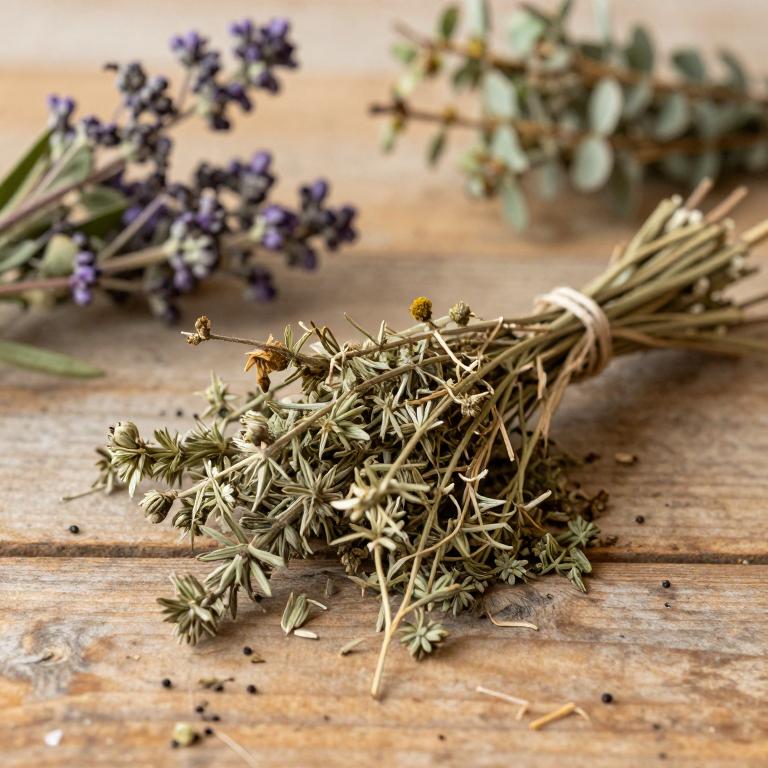
Names and Synonyms
Scientific Names
Accepted name
Bassecoia hookeriSynonyms
- Pterocephalodes hookeri
- Pterocephalus hookeri
- Scabiosa hookeri
- Pterocephalus bantangensis
Sources: Wikidata, Catalogue of Life
Taxonomical Classification
This plant belongs to the kingdom Plantae and the phylum Streptophyta. Within the class Equisetopsida and subclass Magnoliidae, it is classified under the order Dipsacales. Finally, it is a member of the family Caprifoliaceae and is identified by the genus Bassecoia.
| Rank | Classification |
|---|---|
| Kingdom | Plantae |
| Phylum | Streptophyta |
| Class | Equisetopsida |
| Subclass | Magnoliidae |
| Order | Dipsacales |
| Family | Caprifoliaceae |
| Genus | Bassecoia |
Sources: The World Checklist of Vascular Plants (WCVP)
Distribution
This plant exhibits a wide geographical distribution across several key regions in Asia. In China, it can be found throughout the South-Central areas as well as in the provinces of Qinghai and Tibet. Moving toward the Indian Subcontinent, its range extends into the East Himalaya region. Furthermore, the species is documented to grow within the borders of Nepal. Together, these locations highlight the plant's preference for high-altitude and diverse mountainous terrains.
| Region | Area |
|---|---|
| China | China South-Central |
| China | Qinghai |
| China | Tibet |
| Indian Subcontinent | East Himalaya |
| Indian Subcontinent | Nepal |
| Indian Subcontinent | West Himalaya |
Sources: The World Checklist of Vascular Plants (WCVP)
Botanical Identification
Ecology
The ecology of Bassettia hookeri is defined by its presence in high-altitude alpine and sub-alpine environments, specifically occupying a distinct elevational niche. This species thrives within a specialized vertical range, occurring at altitudes starting from a minimum of 3000 m AMSL and extending up to a maximum elevation of 4900 m AMSL. Such a distribution indicates an adaptation to extreme environmental conditions typical of high-mountain ecosystems, including intense ultraviolet radiation, significant diurnal temperature fluctuations, and potentially thinner atmospheric pressures. Its ability to persist across this nearly 2000-meter elevational gradient suggests a high degree of physiological resilience to the varied microclimates found within these high-altitude zones.
- Elevational range max:
- 4900 m AMSL
- Elevational range min:
- 3000 m AMSL
Morphology
The morphology of Bassecoya hookeri is characterized by its growth form as a herb, which lacks a significant woody structure and is classified as non-woody. As a climbing plant, it exhibits a self-supporting habit, allowing it to ascend through its environment without the need for external hosts. Furthermore, its ecological positioning is terrestrial, as it grows in soil rather than functioning as an epiphyte.
- Climber :
- self-supporting
- Epiphyte :
- terrestrial
- Growth form :
- herb
- Woodiness :
- non-woody
Sources: Global Inventory of Floras and Traits (GIFT)
Chemicals
Bassecoia hookeri has 5 reported phytochemicals identified across 0 scientific publications and several other databases. The most consistently reported chemicals include Loganin, OLEANOLIC ACID, PA, Sweroside, Ursolic acid.
| Chemical | Supporting sources | Consensus |
|---|---|---|
| Loganin | 1 supporting sources | ★☆☆☆☆ |
| OLEANOLIC ACID | 1 supporting sources | ★☆☆☆☆ |
| PA | 1 supporting sources | ★☆☆☆☆ |
| Sweroside | 1 supporting sources | ★☆☆☆☆ |
| Ursolic acid | 1 supporting sources | ★☆☆☆☆ |
Loganin
- Zhongguo Zhong yao za zhi = Zhongguo zhongyao zazhi = China journal of Chinese materia medica
OLEANOLIC ACID
- Journal of pharmaceutical and biomedical analysis
PA
- Phytomedicine : international journal of phytotherapy and phytopharmacology
Sweroside
- Molecules (Basel, Switzerland)
Ursolic acid
- Journal of pharmaceutical and biomedical analysis
Activities
Bassecoia hookeri has 2 reported activities identified across 0 scientific publications and several other databases. The most consistently reported activities include Analgesic, Antinociceptive.
| Activity | Supporting sources | Consensus |
|---|---|---|
| Analgesic | 2 supporting sources | ★☆☆☆☆ |
| Antinociceptive | 1 supporting sources | ★☆☆☆☆ |
Analgesic
- Journal of ethnopharmacology
- Pharmaceutical biology
Antinociceptive
- Journal of ethnopharmacology
Preparations
Bassecoia hookeri has 5 reported preparations identified across 0 scientific publications and several other databases. The most consistently reported preparations include n-butanol extract (BUE), afraction of bis-iridoid constituents of P. hookeri (BCPH), ethyl acetate extract (EAE), extract, total glycosides.
| Preparation | Supporting sources | Consensus |
|---|---|---|
| N-butanol extract (bue) | 2 supporting sources | ★☆☆☆☆ |
| Afraction of bis-iridoid constituents of p. hookeri (bcph) | 1 supporting sources | ★☆☆☆☆ |
| Ethyl acetate extract (eae) | 1 supporting sources | ★☆☆☆☆ |
| Extract | 1 supporting sources | ★☆☆☆☆ |
| Total glycosides | 1 supporting sources | ★☆☆☆☆ |
N-butanol extract (bue)
- Toxins
- Phytomedicine : international journal of phytotherapy and phytopharmacology
Afraction of bis-iridoid constituents of p. hookeri (bcph)
- Journal of ethnopharmacology
Ethyl acetate extract (eae)
- Toxins
Extract
- Zhongguo Zhong yao za zhi = Zhongguo zhongyao zazhi = China journal of Chinese materia medica
Total glycosides
- Pharmaceutical biology