Grey Barleria
Barleria albostellata · Accepted scientific name
Scientific literature: Very Sparse (17 studies) · ★☆☆☆☆
Grey Barleria, scientifically known as Barleria albostellata, is a versatile medicinal shrub native to various African regions. Renowned for its therapeutic properties, this plant is widely utilized in traditional medicine to treat ailments such as skin infections, inflammation, and gastrointestinal issues, offering significant potential for modern pharmacological research.
- Family
- Acanthaceae
- Native range
- Africa
- Parts used
- Leaf · Stem
- Common names
- Grey Barleria · Grey Bushviolet
- Scientific synonyms
- Not available
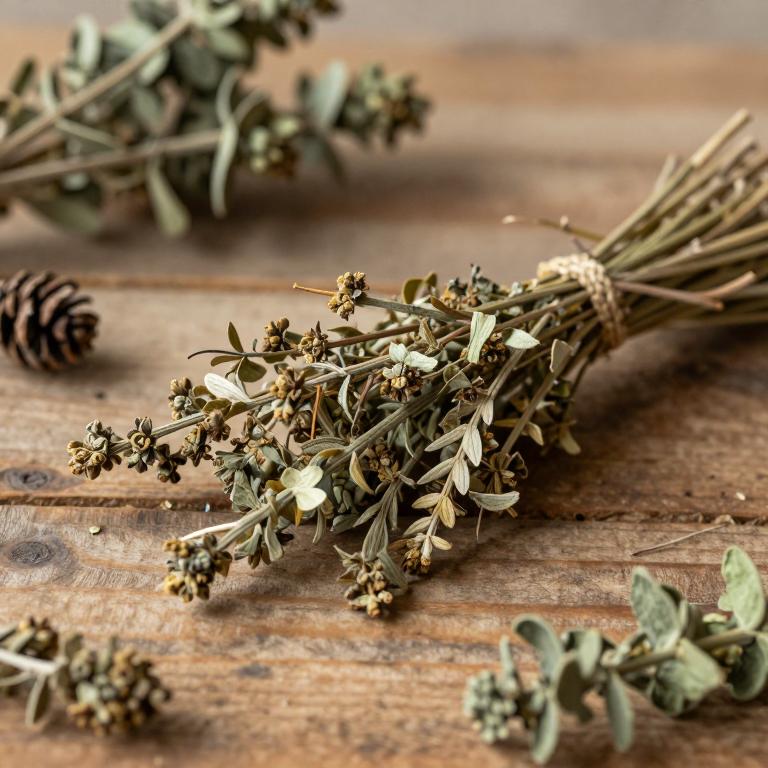
Names and Synonyms
Common Names
- Grey Barleria
- Grey Bushviolet
Scientific Names
Accepted name
Barleria albostellataSources: Wikidata, Catalogue of Life
Taxonomical Classification
This plant belongs to the kingdom Plantae and the phylum Streptophyta, falling under the class Equisetopsida and subclass Magnoliidae. Within the order Lamiales, it is classified under the family Acanthaceae. It is specifically identified by the genus Barleria, with the species name Barleria albostellata.
| Rank | Classification |
|---|---|
| Kingdom | Plantae |
| Phylum | Streptophyta |
| Class | Equisetopsida |
| Subclass | Magnoliidae |
| Order | Lamiales |
| Family | Acanthaceae |
| Genus | Barleria |
Sources: The World Checklist of Vascular Plants (WCVP)
Distribution
This plant exhibits a specific distribution pattern across various regions of the African continent. In South Tropical Africa, it can be found growing within the borders of Mozambique and Zimbabwe. The species also extends its range into Southern Africa, specifically inhabiting the country of Botswana. Furthermore, its presence is noted within the Northern Provinces of the Southern African region. Collectively, these locations highlight the plant's preference for these particular subtropical environments.
| Region | Area |
|---|---|
| South Tropical Africa | Mozambique |
| South Tropical Africa | Zimbabwe |
| Southern Africa | Botswana |
| Southern Africa | Northern Provinces |
Sources: The World Checklist of Vascular Plants (WCVP)
Botanical Identification
Ecology
The ecology of Barleria albostellata is defined by its ability to thrive within specific altitudinal gradients across its natural habitat. This species is predominantly found in varied landscapes that accommodate an elevational range spanning from a minimum of 460 m AMSL to a maximum of 1065 m AMSL. Within this vertical distribution, the plant occupies diverse ecological niches, adapting to the varying climatic conditions and soil compositions found between these low-to-mid altitude zones. Its presence is often indicative of specific environmental stability required to support its growth throughout these varying elevations.
- Elevational range max:
- 1065 m AMSL
- Elevational range min:
- 460 m AMSL
Life history
The life history of Barleria albostellata is characterized by its status as a perennial species, allowing it to persist in its environment over multiple growing seasons. As a long-lived plant, it follows a lifecycle that extends far beyond the single-season patterns of annuals or the two-year cycles of biennials, establishing a stable presence within its ecological niche. This perennial nature enables the plant to develop robust structures that support continuous growth and repeated reproductive efforts throughout its lifespan.
- Lifecycle :
- perennial
Morphology
The morphology of Barleria albostellata is characterized by its growth form as a woody shrub. It functions as an independent organism, neither acting as a parasite nor as an epiphyte, maintaining a terrestrial existence. As a self-supporting plant, it does not exhibit climbing tendencies such as a liana or vine, instead relying on its own structural integrity. The plant reaches a height ranging from a minimum of 1 meter to a maximum of 2 meters.
- Aquatic :
- terrestrial
- Climber :
- self-supporting
- Epiphyte :
- terrestrial
- Growth form :
- shrub
- Parasite :
- independent
- Plant height max:
- 2 m
- Plant height min:
- 1 m
- Woodiness :
- woody
Reproduction
The reproduction of Barleria albostellata is primarily driven by the production of seeds, which serve as the fundamental units for propagation and dispersal. Based on specific morphological data, the seeds produced by this species exhibit a highly consistent and uniform mass. The seed mass is characterized by a mean value of 0.01673 g, with both the maximum and minimum recorded values also being exactly 0.01673 g. This lack of variance in seed mass suggests a highly standardized reproductive output per seed, which is a critical factor in the plant's ability to establish new individuals within its ecological niche. Such uniformity in seed size often influences the energy reserves available to each embryo during the initial stages of germination and subsequent seedling development.
- Seed mass mean:
- 0.01673 g
Sources: Global Inventory of Floras and Traits (GIFT)
Plant Parts
Barleria albostellata has 2 reported plant parts identified across 2 scientific publications and several other databases that are studied for medicinal purposes. The most consistently reported plant part include leaf, stem.
| Plant part | Supporting sources | Consensus |
|---|---|---|
| Leaf | 1 supporting sources | ★☆☆☆☆ |
| Stem | 1 supporting sources | ★☆☆☆☆ |
Leaf
- Plants (Basel, Switzerland)
Stem
- Plants (Basel, Switzerland)
Chemicals
Barleria albostellata has 7 reported phytochemicals identified across 2 scientific publications and several other databases. The most consistently reported chemicals include FLAVONE, Phytol, Phytol acetate, STIGMASTEROL, alpha-Amyrin.
| Chemical | Supporting sources | Consensus |
|---|---|---|
| FLAVONE | 1 supporting sources | ★☆☆☆☆ |
| Phytol | 1 supporting sources | ★☆☆☆☆ |
| Phytol acetate | 1 supporting sources | ★☆☆☆☆ |
| STIGMASTEROL | 1 supporting sources | ★☆☆☆☆ |
| alpha-Amyrin | 1 supporting sources | ★☆☆☆☆ |
| phenol | 1 supporting sources | ★☆☆☆☆ |
| squalene | 1 supporting sources | ★☆☆☆☆ |
FLAVONE
- Plants (Basel, Switzerland)
Phytol
- Plants (Basel, Switzerland)
Phytol acetate
- Plants (Basel, Switzerland)
STIGMASTEROL
- Plants (Basel, Switzerland)
alpha-Amyrin
- Plants (Basel, Switzerland)
phenol
- Plants (Basel, Switzerland)
squalene
- Plants (Basel, Switzerland)
Activities
Barleria albostellata has 1 reported activities identified across 2 scientific publications and several other databases. The most consistently reported activities include Antibacterial.
| Activity | Supporting sources | Consensus |
|---|---|---|
| Antibacterial | 1 supporting sources | ★☆☆☆☆ |
Antibacterial
- Plants (Basel, Switzerland)
Preparations
Barleria albostellata has 1 reported preparations identified across 2 scientific publications and several other databases. The most consistently reported preparations include leaf and stem powdered material.
| Preparation | Supporting sources | Consensus |
|---|---|---|
| Leaf and stem powdered material | 1 supporting sources | ★☆☆☆☆ |
Leaf and stem powdered material
- Plants (Basel, Switzerland)