Barbeya oleoides
Barbeya oleoides · Accepted scientific name
Scientific literature: Very Sparse (5 studies) · ★☆☆☆☆
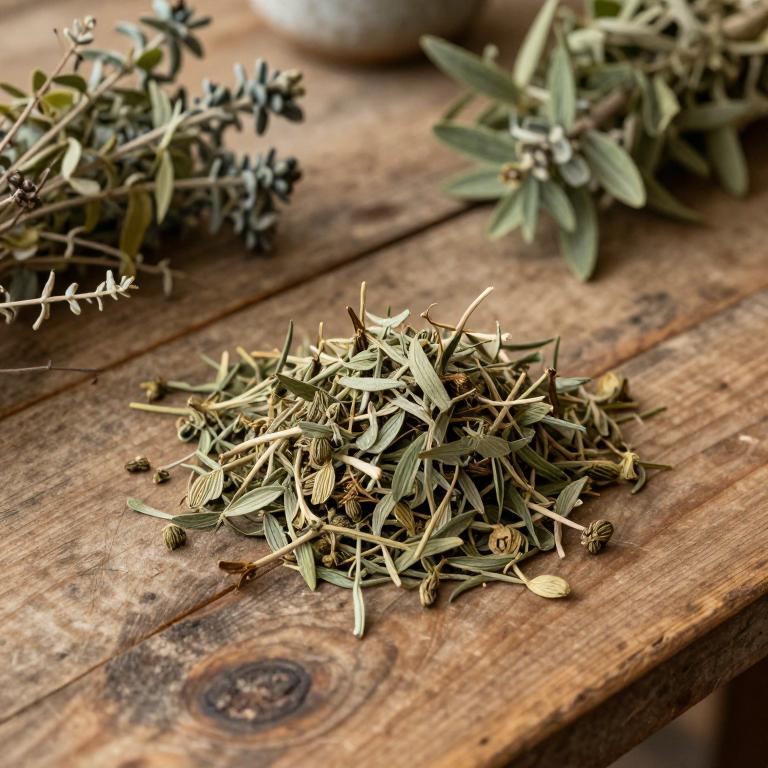
Barbeya oleoides, scientifically known as Barbeya oleoides, is a remarkable medicinal shrub native to arid regions. Renowned for its diverse therapeutic properties, this plant is traditionally used in various cultures to treat ailments ranging from inflammation to digestive issues, offering significant potential for modern pharmacological research and development.
- Family
- Barbeyaceae
- Native range
- Africa
- Parts used
- Leaf
- Common names
- Not available
- Scientific synonyms
- Barbeya Oleoides Subsp. Arussorum
Names and Synonyms
Scientific Names
Accepted name
Barbeya oleoidesSynonyms
- Barbeya oleoides subsp. arussorum
Regional and Traditional Names
Spanish:
- Barbeyaceae
German:
- Barbeyaceae
French:
- Barbeyacées
- Barbeyacée
Sources: Wikidata, Catalogue of Life
Taxonomical Classification
This plant belongs to the kingdom Plantae and the phylum Streptophyta, falling under the class Equisetopsida and subclass Magnoliidae. Within the order Rosales, it is classified under the family Barbeyaceae. Finally, its taxonomic identity is defined by the genus Barbeya.
| Rank | Classification |
|---|---|
| Kingdom | Plantae |
| Phylum | Streptophyta |
| Class | Equisetopsida |
| Subclass | Magnoliidae |
| Order | Rosales |
| Family | Barbeyaceae |
| Genus | Barbeya |
Sources: The World Checklist of Vascular Plants (WCVP)
Distribution
This plant exhibits a specific distribution across the Northeast Tropical Africa and the Arabian Peninsula. Within Northeast Tropical Africa, it can be found inhabiting the regions of Eritrea, Ethiopia, and Somalia. Its range also extends into the Arabian Peninsula, where it is documented in Saudi Arabia. Additionally, the species is present in the territory of Yemen. Together, these locations define the primary geographical footprint of Barbeya oleoides.
| Region | Area |
|---|---|
| Northeast Tropical Africa | Eritrea |
| Northeast Tropical Africa | Ethiopia |
| Northeast Tropical Africa | Somalia |
| Arabian Peninsula | Saudi Arabia |
| Arabian Peninsula | Yemen |
Sources: The World Checklist of Vascular Plants (WCVP)
Botanical Identification
Life history
The life history of Barbeya oleoides is characterized by a distinct growth strategy categorized by its structural life forms. This species exhibits a dual potential in its developmental stages or environmental adaptations, manifesting as both a phanerophyte and a nanophanerophyte. As a phanerophyte, the plant maintains its buds well above the ground level, allowing it to persist through varying seasonal conditions. Concurrently, its classification as a nanophanerophyte indicates that its reproductive and vegetative buds are held at a relatively low height, just above the substrate, which influences its interaction with the surrounding microclimate and its ability to thrive within its specific ecological niche.
- Life form :
- nanophanerophyte
- Life form :
- phanerophyte
Morphology
The morphology of Barbeya oleoides is characterized by its distinct growth form and structural composition. It is classified as a tree, exhibiting a robust and woody constitution that provides its primary structural support. In terms of its ecological positioning, the plant is fundamentally terrestrial, rather than aquatic or semiaquatic, and it functions as an independent organism, lacking any parasitic or obligatory epiphytic tendencies. Unlike climbing vines or lianas, it is a self-supporting species that does not require external structures for upward growth, maintaining a stable, upright habit through its woody development.
- Aquatic :
- terrestrial
- Climber :
- self-supporting
- Epiphyte :
- terrestrial
- Growth form :
- tree
- Parasite :
- independent
- Woodiness :
- woody
Sources: Global Inventory of Floras and Traits (GIFT)
Plant Parts
Barbeya oleoides has 1 reported plant parts identified across 1 scientific publications and several other databases that are studied for medicinal purposes. The most consistently reported plant part include leaf.
| Plant part | Supporting sources | Consensus |
|---|---|---|
| Leaf | 1 supporting sources | ★☆☆☆☆ |
Leaf
- Molecules (Basel, Switzerland)
Chemicals
Barbeya oleoides has 2 reported phytochemicals identified across 1 scientific publications and several other databases. The most consistently reported chemicals include Tannins, polyphenols.
| Chemical | Supporting sources | Consensus |
|---|---|---|
| Tannins | 1 supporting sources | ★☆☆☆☆ |
| polyphenols | 1 supporting sources | ★☆☆☆☆ |
Tannins
- Molecules (Basel, Switzerland)
polyphenols
- Molecules (Basel, Switzerland)
Conditions
Barbeya oleoides has 1 reported investigations on conditions identified across 1 scientific publications and several other databases. The most consistently reported conditions include type 2 diabetes mellitus.
| Condition | Supporting sources | Consensus |
|---|---|---|
| Type 2 diabetes mellitus | 1 supporting sources | ★☆☆☆☆ |
Type 2 diabetes mellitus
- Molecules (Basel, Switzerland)
Preparations
Barbeya oleoides has 3 reported preparations identified across 1 scientific publications and several other databases. The most consistently reported preparations include different solvent extracts of leaves, ethanolic extracts, methanol extract.
| Preparation | Supporting sources | Consensus |
|---|---|---|
| Different solvent extracts of leaves | 1 supporting sources | ★☆☆☆☆ |
| Ethanolic extracts | 1 supporting sources | ★☆☆☆☆ |
| Methanol extract | 1 supporting sources | ★☆☆☆☆ |
Different solvent extracts of leaves
- Molecules (Basel, Switzerland)
Ethanolic extracts
- Journal of gastrointestinal cancer
Methanol extract
- Molecules (Basel, Switzerland)