blue false indigo
Baptisia australis · Accepted scientific name
Scientific literature: Very Sparse (4 studies) · ★☆☆☆☆
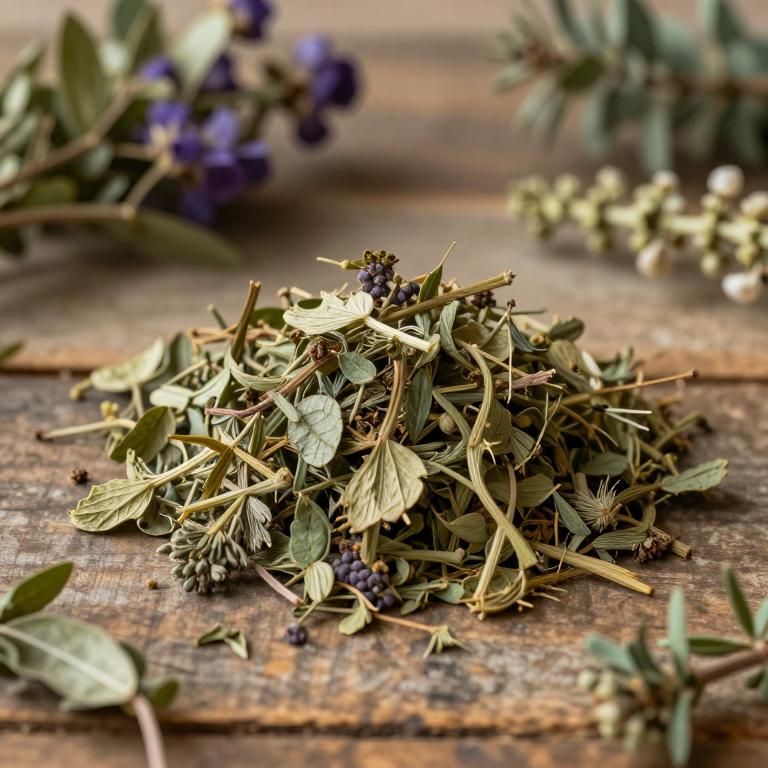
Blue false indigo, scientifically known as Baptisia australis, is a striking perennial native to North American prairies. Renowned for its dramatic deep blue flowers and architectural foliage, this hardy plant offers both ornamental beauty and medicinal potential. Historically used in traditional practices, it remains a favorite for sustainable landscaping.
- Family
- Fabaceae
- Native range
- Europe
- Parts used
- Root
- Common names
- Blue False Indigo · Blue Wild Indigo · 4 more
- Scientific synonyms
- Podalyria Australis · Sophora Australis
Names and Synonyms
Common Names
- blue false indigo
- blue wild indigo
- streamside blue indigo
- tall wild blue indigo
- wild false indigo
- baptisia
Scientific Names
Accepted name
Baptisia australisSynonyms
- Podalyria australis
- Sophora australis
Regional and Traditional Names
German:
- Indigolupine
- Blaue Färberhülse
- Australische Färberhülse
French:
- Lupin indigo
- Sophora australis
- baptisie australe
- baptisie bleue
Sources: Wikidata, Catalogue of Life
Taxonomical Classification
This plant belongs to the kingdom Plantae and the phylum Streptophyta, falling under the class Equisetopsida and subclass Magnoliidae. Within the order Fabales, it is classified under the family Fabaceae and is identified by the genus Baptisia.
| Rank | Classification |
|---|---|
| Kingdom | Plantae |
| Phylum | Streptophyta |
| Class | Equisetopsida |
| Subclass | Magnoliidae |
| Order | Fabales |
| Family | Fabaceae |
| Genus | Baptisia |
Sources: The World Checklist of Vascular Plants (WCVP)
Distribution
This plant exhibits a broad geographical range that spans across several distinct regions. In North America, it can be found growing in the eastern reaches of Canada, specifically within Ontario. Moving into the North-Central United States, its presence is well-established in Illinois, Iowa, and Kansas. Beyond the North American continent, its distribution also extends into Middle Europe. Specifically, the species is documented to occur within the borders of Austria.
| Region | Area |
|---|---|
| Middle Europe | Austria |
| Eastern Canada | Ontario |
| North-Central U.S.A. | Illinois |
| North-Central U.S.A. | Iowa |
| North-Central U.S.A. | Kansas |
| North-Central U.S.A. | Minnesota |
| North-Central U.S.A. | Missouri |
| North-Central U.S.A. | Nebraska |
| North-Central U.S.A. | Oklahoma |
| North-Central U.S.A. | Wisconsin |
Sources: The World Checklist of Vascular Plants (WCVP)
Botanical Identification
Life history
The life history of Baptisia australis is characterized by its classification as a perennial, meaning it lives for multiple years and establishes a robust presence in its habitat over time. As a long-lived species, it typically begins its development from seed, often requiring a period of stratification to trigger germination. During its early stages, the plant focuses on developing a deep, woody taproot system, which serves as a vital energy storage organ that allows it to survive dormant periods and resist drought. As it matures, the plant produces upright, bushy foliage that undergoes seasonal cycles, regrowing each spring from the established rootstock. The reproductive phase involves the emergence of vibrant blue flowers, which, once pollinated, lead to the development of distinctive seed pods. These seeds are released to facilitate the next generation, ensuring the plant's continued persistence within its ecological niche through its enduring perennial nature.
- Lifecycle :
- perennial
Morphology
The morphology of Baptisia australis is characterized by its classification as a perennial herb and a forb, exhibiting a growth habit that is primarily terrestrial rather than aquatic or epiphytic. As a self-supporting plant, it lacks any climbing, liana, or vine-like tendencies, maintaining a stable, upright structure through its own physiological strength. The plant is entirely independent, functioning as a non-parasitic organism without any obligatory or facultative reliance on a host. Structurally, its development is defined by its non-woody nature, which distinguishes it from shrubs or trees, instead focusing on a herbaceous form that thrives in terrestrial environments.
- Aquatic :
- terrestrial
- Climber :
- self-supporting
- Epiphyte :
- terrestrial
- Growth form :
- herb
- Growth form :
- forb
- Parasite :
- independent
- Woodiness :
- non-woody
Physiology
The physiology of Baptisia australis is characterized by a robust metabolic framework optimized for temperate environments, primarily utilizing the C3 photosynthetic pathway to facilitate carbon fixation. Through this C3 mechanism, the plant captures atmospheric carbon dioxide via the enzyme Rubisco during the Calvin cycle, a process that is highly efficient under the moderate temperatures and sufficient moisture typical of its native habitats. This metabolic strategy supports the development of a deep, extensive taproot system, which serves a dual physiological purpose: providing significant structural stability and acting as a vital reservoir for nutrient and water storage. This subterranean architecture allows the plant to maintain physiological homeostasis during periods of drought and facilitates efficient mineral uptake to support its perennial growth cycles. Furthermore, the plant's physiological processes are integrated with its nitrogen-fixing capabilities, achieved through symbiotic relationships with rhizobia in the root nodules, which enhances its ability to thrive in nitrogen-limited soils by converting atmospheric nitrogen into bioavailable forms.
- Photosynthetic pathway :
- C3
Reproduction
The reproduction of Baptisia australis is characterized by a specific seasonal flowering window and the production of small, lightweight seeds. The plant typically begins its flowering period in April, with the blooming phase extending through May. During this reproductive cycle, it produces seeds with a highly consistent mass profile; the average seed mass is approximately 0.018003333 g. The variation in seed size is relatively narrow, with individual seeds ranging from a minimum mass of 0.0156 g to a maximum mass of 0.02174 g.
- Flowering time :
- Apr
- Flowering time :
- May
- Seed mass max:
- 0.02174 g
- Seed mass mean:
- 0.018003333 g
- Seed mass min:
- 0.0156 g
Sources: Global Inventory of Floras and Traits (GIFT)
Plant Parts
Baptisia australis has 1 reported plant parts identified across 1 scientific publications and several other databases that are studied for medicinal purposes. The most consistently reported plant part include root.
| Plant part | Supporting sources | Consensus |
|---|---|---|
| Root | 1 supporting sources | ★☆☆☆☆ |
Root
- Phytochemistry
Chemicals
Baptisia australis has 2 reported phytochemicals identified across 1 scientific publications and several other databases. The most consistently reported chemicals include Baptisiasaponin I, Kaikasaponin III.
| Chemical | Supporting sources | Consensus |
|---|---|---|
| Baptisiasaponin I | 1 supporting sources | ★☆☆☆☆ |
| Kaikasaponin III | 1 supporting sources | ★☆☆☆☆ |
Baptisiasaponin I
- Phytochemistry
Kaikasaponin III
- Phytochemistry
Conditions
Baptisia australis has 1 reported investigations on conditions identified across 1 scientific publications and several other databases. The most consistently reported conditions include common cold.
| Condition | Supporting sources | Consensus |
|---|---|---|
| Common cold | 1 supporting sources | ★☆☆☆☆ |
Common cold
- Current medical research and opinion
Preparations
Baptisia australis has 1 reported preparations identified across 1 scientific publications and several other databases. The most consistently reported preparations include Extraction of the roots.
| Preparation | Supporting sources | Consensus |
|---|---|---|
| Extraction of the roots | 1 supporting sources | ★☆☆☆☆ |
Extraction of the roots
- Phytochemistry