Montane Baliospermum
Baliospermum solanifolium · Accepted scientific name
Scientific literature: Very Sparse (26 studies) · ★☆☆☆☆
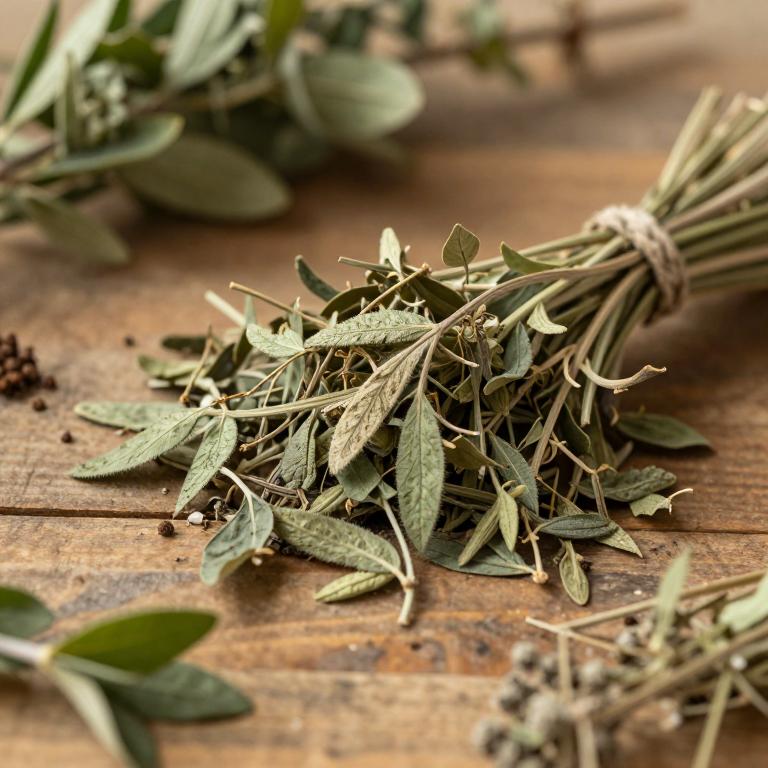
Montane Baliospermum, scientifically known as Baliospermum solanifolium, is a rare medicinal shrub native to high-altitude tropical forests. Renowned for its unique leaf structure, this botanical treasure is valued in traditional healing practices for its potent bioactive compounds, offering significant therapeutic potential in treating various inflammatory and systemic ailments.
- Family
- Euphorbiaceae
- Native range
- Asia-Temperate
- Parts used
- Not available
- Common names
- Montane Baliospermum
- Scientific synonyms
- Croton Roxburghii · Jatropha Montana · 12 more
Names and Synonyms
Common Names
- Montane Baliospermum
Scientific Names
Accepted name
Baliospermum solanifoliumSynonyms
- Croton roxburghii
- Jatropha montana
- Ricinus montanus
- Baliospermum montanum
- Baliospermum moritzianum
- Croton solanifolius
- Baliospermum axillare var. dioicum
- Baliospermum indicum
- Baliospermum montanum var. dioicum
- Baliospermum pendulinum
- Baliospermum montanum var. heterophyllum
- Baliospermum raziana
- Baliospermum angulare
- Baliospermum axillare
Sources: Wikidata, Catalogue of Life
Taxonomical Classification
This plant, Baliospermum solanifolium, belongs to the kingdom Plantae and is classified under the phylum Streptophyta. Within the class Equisetopsida and subclass Magnoliidae, it is organized under the order Malpighiales. Finally, it is a member of the family Euphorbiaceae within the genus Baliospermum.
| Rank | Classification |
|---|---|
| Kingdom | Plantae |
| Phylum | Streptophyta |
| Class | Equisetopsida |
| Subclass | Magnoliidae |
| Order | Malpighiales |
| Family | Euphorbiaceae |
| Genus | Baliospermum |
Sources: The World Checklist of Vascular Plants (WCVP)
Distribution
This plant exhibits a specific geographical range that spans across parts of East and South Asia. Within China, its presence is primarily documented in the South-Central region. Moving into the Indian Subcontinent, it can be found in diverse locations such as Assam and throughout India. Furthermore, the species is distributed across Bangladesh and the East Himalaya region. These varied locations highlight its localized presence across several distinct ecological zones.
| Region | Area |
|---|---|
| China | China South-Central |
| Indian Subcontinent | Assam |
| Indian Subcontinent | Bangladesh |
| Indian Subcontinent | East Himalaya |
| Indian Subcontinent | India |
| Indian Subcontinent | Nepal |
| Indian Subcontinent | West Himalaya |
| Indo-China | Cambodia |
| Indo-China | Laos |
| Indo-China | Myanmar |
Sources: The World Checklist of Vascular Plants (WCVP)
Botanical Identification
Life history
The life history of Baliospermum solanifolium is characterized by a perennial lifecycle, allowing the plant to persist through multiple growing seasons and establish a stable presence within its ecological niche. In terms of its structural growth strategy, the species exhibits a chamaephyte life form, meaning its perennially produced buds are located close to the soil surface, often protected by a layer of leaf litter or substrate. This combination of a long-lived perennial nature and a low-growing, chamaephyte habit enables the plant to maintain consistent vegetative structures and reproductive potential over extended periods.
- Life form :
- chamaephyte
- Lifecycle :
- perennial
Morphology
The morphology of Baliospermum solanifolium is characterized by a versatile growth habit that can manifest as a shrub or a tree, displaying variable woodiness in its structural development. This species exhibits a flexible climbing nature, functioning as a self-supporting liana, vine, or facultative climber. In terms of stature, the plant's height is recorded with a maximum of 0.9 m, though it can reach a mean height of approximately 2 m under certain conditions. It is a terrestrial organism that grows independently, rather than acting as a parasite or an epiphyte.
- Climber :
- self-supporting
- Epiphyte :
- terrestrial
- Growth form :
- shrub
- Growth form :
- tree
- Parasite :
- independent
- Plant height max:
- 0.9 m
- Plant height mean:
- 2 m
- Woodiness :
- variable
Physiology
The physiology of Baliospermum solanifolium is characterized by complex metabolic processes adapted to its specific ecological niche, primarily focusing on nutrient acquisition and energy production through photosynthesis. As a member of the Rubiaceae family, its physiological framework involves efficient gas exchange and transpiration regulation to maintain turgor pressure and facilitate nutrient transport through its vascular system. Regarding its nutrient cycling capabilities, the plant does not possess the specialized symbiotic mechanisms required for biological nitrogen fixation; therefore, it is classified as a non-nitrogen fixer, meaning it lacks the ability to convert atmospheric nitrogen into usable forms through root nodules or similar associations. Instead, it relies on the uptake of mineral nitrogen, such as nitrates and ammonium, from the soil solution via its root system to support protein synthesis and various enzymatic functions essential for its growth and development.
- Nitrogen fixer :
- no
Sources: Global Inventory of Floras and Traits (GIFT)
Chemicals
Baliospermum solanifolium has 5 reported phytochemicals identified across 0 scientific publications and several other databases. The most consistently reported chemicals include Flavonoids, Phenols, Saponins, Terpenoids, ascorbic acid.
| Chemical | Supporting sources | Consensus |
|---|---|---|
| Flavonoids | 1 supporting sources | ★☆☆☆☆ |
| Phenols | 1 supporting sources | ★☆☆☆☆ |
| Saponins | 1 supporting sources | ★☆☆☆☆ |
| Terpenoids | 1 supporting sources | ★☆☆☆☆ |
| ascorbic acid | 1 supporting sources | ★☆☆☆☆ |
Flavonoids
- Analytical biochemistry
Phenols
- Analytical biochemistry
Saponins
- Analytical biochemistry
Terpenoids
- Analytical biochemistry
ascorbic acid
- Indian journal of microbiology
Activities
Baliospermum solanifolium has 2 reported activities identified across 0 scientific publications and several other databases. The most consistently reported activities include Antibacterial, Antioxidant.
| Activity | Supporting sources | Consensus |
|---|---|---|
| Antibacterial | 1 supporting sources | ★☆☆☆☆ |
| Antioxidant | 1 supporting sources | ★☆☆☆☆ |
Antibacterial
- Indian journal of microbiology
Antioxidant
- Indian journal of microbiology
Conditions
Baliospermum solanifolium has 1 reported investigations on conditions identified across 0 scientific publications and several other databases. The most consistently reported conditions include inflammation.
| Condition | Supporting sources | Consensus |
|---|---|---|
| Inflammation | 1 supporting sources | ★☆☆☆☆ |
Inflammation
- Journal of ethnopharmacology
Preparations
Baliospermum solanifolium has 1 reported preparations identified across 0 scientific publications and several other databases. The most consistently reported preparations include ethanolic extract.
| Preparation | Supporting sources | Consensus |
|---|---|---|
| Ethanolic extract | 1 supporting sources | ★☆☆☆☆ |
Ethanolic extract
- Journal of the Medical Association of Thailand = Chotmaihet thangphaet